Introduction
Contradictions are essential in establishing the truth, whether in daily life, the courtroom, or scientific research. In the present paper, we examine this issue across all categories of data regarding HIV epidemiology: animal research, geographic distribution of HIV, age distribution of HIV, high-risk populations, and progress in HIV prevention.
Animal research data
No animal research has shown that HIV can be transmitted through sexual activities, contradicting the current dogma stating that HIV is primarily transmitted through sexual activity. Animal studies have also explored sexual transmission by using Simian Immunodeficiency Virus (SIV) and found that oral exposure was hundreds to thousands of times riskier than rectal exposure [1]. These SIV data also contradict the guidelines stating that HIV spreads very rarely through the oral route and that anal sex is the riskiest mode of transmission [2].
Geographic Distribution of HIV
Sexual behaviors do not differ worldwide. However, the two most striking observations in HIV epidemiology are: 1) Two thirds of global HIV infections are from Sub-Saharan Africa (SSA), a region known for having the highest rate of mosquito-borne diseases. For example, 90% of global cases of mosquito-borne malaria occur in this region. 2) Outside of SSA, regions with a high abundance of Ae. albopictus mosquitoes consistently show HIV prevalence rates several to more than 10 times higher than neighboring regions [3]. For example, in Spain, infection rates of HIV is much higher in the southern and northeastern coastal regions than in other regions [4], and consistently, the abundance of Ae. albopictus mosquitoes in these two regions is much higher[5].
If two-thirds of global cases of a certain cancer have occurred in a region where most of the world’s coal comes from, and outside of this region, areas mining coal consistently have a prevalence of the cancer several to more than 10 times higher than neighboring areas, does coal not play a role in the incidence of the cancer?
Many would believe that these geographic distribution data are solid and sufficient to determine the primary risk factor. If these data cannot, what data can? However, for HIV, in addition to this solid geographic distribution data, there is also other strong evidence: all other categories of data consistently align with mosquito transmission.
Progress in HIV Prevention
Although great efforts were made to combat HIV using a strategy focusing on preventing sexual transmission in the 1990s, global new HIV infections rapidly increased in the early and mid-1990s. New HIV infections peaked in 1997, and the rapid increase surprisingly stopped in the late 1990s. Notably, unprecedented efforts to combat malaria (mosquitoes) began in 1998, and achieving the malaria MDG target brought together multilateral, governmental, nongovernmental, and private organizations [6,7]. Some individual countries may have started their efforts earlier or later than 1998. Clearly, the trend of new HIV infections in the 1990s contradicted the efforts to combat sexual transmission and aligned with the efforts to combat mosquitoes.
After 2000, extensive efforts were also made worldwide to control HIV using a strategy focusing on preventing sexual transmission. According to the UNAIDS 2017 report, a rapid decline in new HIV infections occurred after 2000 in Eastern/Southern Africa, Western/ Central Africa, Asia/the Pacific, Latin America, and the Caribbean, while new HIV infections did not change in the Middle East/North Africa and rapidly increased in Eastern Europe/Central Asia, with a slight decrease in Western/Central Europe/North America [8]. The former group of regions was all endemic to malaria [9]. In other words, a rapid decline in new HIV infections after 2000 has occurred in regions where unprecedented efforts have been launched to combat mosquitoes, but not in regions where no such efforts were made. The spatial and temporal decline in HIV infections after 2000 exactly aligns with efforts to combat mosquitoes and contradicts efforts to combat sexual transmission.
The outcome is the best test. Are these data not striking and convincing? What does it mean that science relies on evidence?
High Risk Populations
Animal research data, geographic distribution data, and global progress in prevention practices all contradict the theory of sexual transmission. On what data was the theory developed? The four high-risk populations in sexual relationships (sexual partners, people with multiple partners, men who have sex with men (MSM), and sex workers).
However, there are 10 high-risk populations listed in the guidelines. The theory was developed based on only a single category of data: the high-risk populations, and to be precise, a small subset of the highrisk populations, four out of ten. This contradicts common sense, as a theory should be developed based on most of the data in the field.
Let’s look at the four high-risk populations in sexual relationships. If an infectious disease occurs, regardless of whether it spreads through the air, skin contact, vectors (mosquitoes, bed bugs, etc.), or other modes, who will be the easiest to get infected? The person who are in the closest proximity. The four populations in sexual relationships are in the closest proximity. They live together, sleep in the same bed, engage in kissing, share utensils, and have sex (sex workers with clients), and so on. Therefore, high rates of HIV infections among people in sexual relationships only mean there are many possibilities for transmission modes.
Have any studies examined whether, during the period of HIV infection, the four high-risk populations only had sex and were not involved in any other factors, such as no kissing, their sleeping rooms having no vectors, not sharing air in the same room, and so on? No. Without such data, it cannot be determined how HIV is transmitted among these populations. Therefore, the data on the four high-risk populations, the only data the theory of sexual transmission was developed on several decades ago, cannot be used as evidence for sexual transmission.
Two important factors for the theory of mosquito transmission are regular exposure to mosquito bites and sleeping in close proximity. Sleeping in close proximity allows mosquitoes to bite two people within an interval of minutes to transmit fresh blood immediately from one person to the bloodstream of another through contaminated mouthparts. As reported previously, the theory of mosquito transmission can explain not only populations in sexual relationships because they sleep together (sex workers with clients), but also other high-risk populations, including homeless people (often exposed to mosquitoes), fishermen (mosquitoes thrive in humid regions), truck drivers (often exposed to mosquitoes due to sleeping in simple conditions at night when tired), and prisoners (sleeping in close proximity in crowded jails) [3].
Age Distribution of HIV
HIV epidemiology has changed greatly since the 2000s due to various prevention interventions. Therefore, the data collected in the early stages of the epidemic are useful for exploring HIV transmission modes. Researchers in the field are well familiar with the common data from the early stages of the epidemic: there were high rates of infection in young babies and young adults. This was a general statement, or average data worldwide (e.g., Figure 1A) [10]. In fact, there were two very different patterns of age distribution of HIV infection. The pattern in Africa, Asia, and many countries in Southeastern Europe/ Latin America was roughly similar to Figure 1A, while that in Western developed countries was very different.
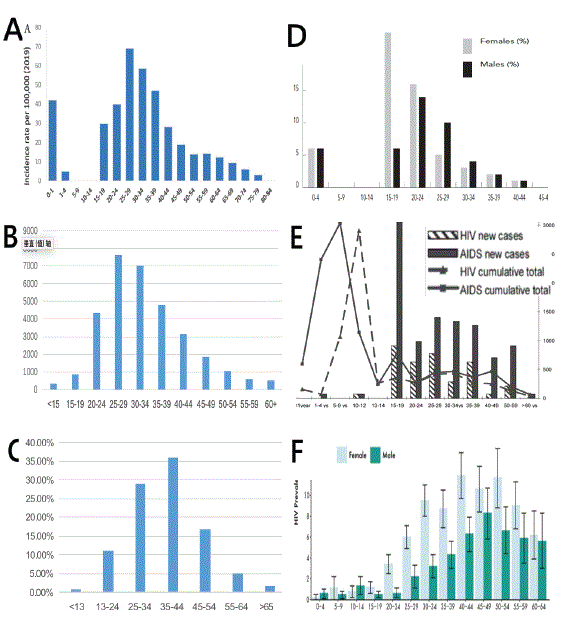
Figure 1: A) Age distribution of HIV infection rates worldwide [10]. B) Distribution of new HIV infections, 1996 or earlier, male and female, UK. This figure was created using the data from Table 6 of the national surveillance report [12]. C) Age distribution of new HIV diagnoses, male and female, United States. This figure was converted from the table in the US CDC report, 1999-2002 [13]. D) Age-distribution of new HIV infections, South Africa 1995-2010 [16]. E) Age-distribution of newly diagnosed HIV or AIDS cases before 1990, Romania [17]. F) HIV prevalence by age, Kenya, 2018 [24].
In Western developed countries, HIV infection rates were low in the age groups 0-4, 5-14, 15-19, gradually increasing thereafter, and peaking in the 25-44 age group [11-15]. For example, Figures 1B and 1C display the age-distribution of HIV infections in the early stage of the epidemic in the United Kingdom and the United States [12,13].
Contradictorily, infection rates were high in the 0-4, 15-19, and 20-24 age groups in Africa, Asia, and many countries in Southeastern Europe/Latin America [11,15-20]. For example, Figures 1D and 1E show high rates of infection in young children and the 15-19 age group. Although reported rates of infection in the 5-14 age group were usually low (similar to those in Western developed countries), actual rates in this age group were unknown because infected children aged 5-14 usually did not develop AIDS in this age range. In the early stages of the epidemic, data were usually collected from clinics. Patients visiting hospitals due to the disease were usually already in the AIDS stage.
The current dogma explains that high rates of infection among babies in Africa, Asia, and many countries in Southeastern Europe/ Latin America are due to perinatal exposure. Babies globally experience similar perinatal exposure (e.g., in utero, during delivery), so why were infection rates low in Western developed countries? The current dogma interprets high rates of infection in the 15-19 age group in the former group of regions as being due to sexual activity. Sexual activity typically begins upon entering adulthood worldwide, so why were infection rates low in the 15-19 age group in Western developed countries? Moreover, sex between two HIV-negative children would not cause HIV transmission. So, how can high rates of infection occur in the 15-19 age group?
The theory of mosquito transmission can explain these data. In Western developed countries, people typically share beds with sexual partners when they enter adulthood. Therefore, if mosquitoes transmit HIV, HIV infection rates should increase gradually after people enter adulthood. This explains why infection rates in these countries was low in the age groups 0-4, 5-14, 15-19, peaking in the 25-44 age group (Figures 1B,1C). However, bed-sharing between children and parents is common in Africa, Asia, and many countries in Southeastern Europe/Latin America [21,22], exposing children to the risk of disease transmission by mosquitoes. This explains why infection rates in the 0-4 age group were high in these regions in the early stages of the epidemic (Figures 1D,1E). Infected children aged 5-14 would usually develop AIDS 10 years later due to a long incubation (median time is 11 years), explaining why reported infection rates were high in the 15-19 and 20-24 age groups in these regions in the early stages of the epidemic.
Some scientists argued why infection rates were low in the 0-4, 5-14, and 15-19 age groups in SSA in the PHIA project [23]. For example, Figure 1F shows such data [24]. The theory of mosquito transmission can explain this issue. The PHIA project started in the mid-2010s and surveyed populations of all ages at the household level. Efforts to combat mosquitoes after 2000 were greatly prioritized for children because they accounted for 90% of total malaria deaths. This explains why HIV infection rates among children began to decrease rapidly after 2000, and why infection rates were low among children in the mid-2010s in PHIA data. Antiretroviral Therapy (ART) may also play a role in this change. People aged 15-19 in the mid- and late 2010s were born in 1998, 1999, or later and had received great protection against mosquitoes in their childhood. Two HIV-negative children will not produce a positive infection. This explains the low rate of HIV prevalence in the 15-19 age group in the PHIA project.
Contradictions Within a Country
Contradictions in HIV research are also easily found within a country. Let’s discuss data in the United States and South Africa. Global researchers are encouraged to examine this issue in their countries. The US CDC states that two thirds of HIV infections in the United States occur due to male-male sexual contact [25]. The distribution of the percentage of MSM is roughly similar nationwide (Figure 2A) [26]. Therefore, the distribution of HIV prevalence should be quite even nationwide or vary at a limited level. However, HIV prevalence in the Southeast, especially Eastern Coastal regions, is several to more than 10 times higher compared to other regions (Figure 2B) [27,28]. This is like one paper reporting a>b, and another paper reporting a< b
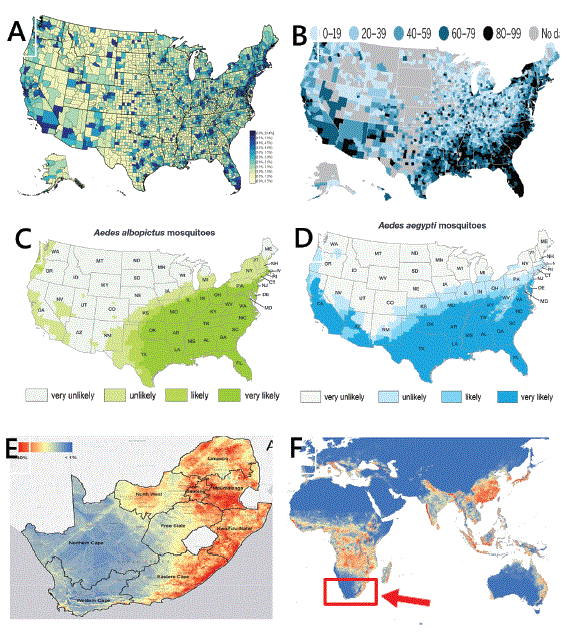
Figure 2: A) Percentage of adult men who had sex with a man, 2009-2013, United States [26]. B) Spatial distribution of HIV prevalence, United States [27]. C) Range of Aedes albopictus, United States [29]. D) Range of Aedes aegypti, United States [29]. E) Spatial distribution of HIV prevalence, male, 2016, South Africa [30]. F) Predicted distribution of Ae. albopictus mosquitoes [5].
A valid theory should be able to explain not only why MSM account for two-thirds of HIV cases in the United States, but also why the Southeast and Eastern coastal regions have HIV prevalence rates several to more than 10 times higher. The theory of mosquito transmission can. Figures 2C and 2D display the much higher prevalence of Ae. albopictus and Ae. aegypti mosquitoes in the Southeast and Eastern coastal regions [29] Moreover, mosquitoes are typically active in humid environments. These facts explain why the HIV prevalence is much higher in the Southeast, especially in Eastern coastal regions (Figure 2B). As discussed previously, mosquito biting characteristics can explain the high rates of transmission among MSM for two reasons [3]. For example, one reason is that men are more attractive to mosquitoes than women, so two men together are more attractive to mosquitoes than a man and a woman together, followed by two women together. Therefore, MSM usually have a much higher prevalence of HIV than other populations nationwide, and each population in the Southeast, especially Eastern Coastal regions, usually has a much higher HIV prevalence compared to the same population in other regions.
We discuss data (Figures 2A, 2B, 2C, 2D) at the county level but not at the state level, because the states in the United States usually have a large land area, which is not good for comparative study on this issue.
In South Africa, HIV prevalence is 50 to 100 times higher in the East than in the West (Figure 2E) [30] and among Blacks (16.6-24.1%) than among Whites (0.2-0.5%) [31]. It is hard to understand that sex activity is so different between the Blacks and Whites, and between the East and West. Everyone fears death. Blacks in South Africa are very fearful of sexual activity because they have experienced the loss of many family members, relatives, and neighbors to HIV. If shaking hands caused 20% of people to die, handshaking would be greatly reduced. Blacks are expected to greatly reduce sexual activity and be very cautious about it. Therefore, HIV prevalence among Blacks should have been quickly reduced to a low level. Why haven’t these occurred? The theory of mosquito transmission can easily explain the data. The abundance of Ae. albopictus mosquitoes is much higher in the East than in the West (red rectangle in Figure 2F), [5] explaining the much higher HIV prevalence in the East. Around 31% of Black families live in homes with 1 to 2 rooms, compared to only 4% of White families [32], indicating that sharing sleeping rooms is common among Black families, exposing them to the risk of disease transmission by mosquitoes.
Research Requires Open Minds
If results from an experiment are contradictory, they are not reliable. If a research paper reports data that contradict each other, the research cannot reach a conclusion. As discussed above, contradictions are common between the theory of sexual transmission of HIV and global data. However, when using the theory of mosquito transmission to explain data, contradictions are resolved, and the data are beautifully consistent.
ART is commonly interpreted as a critical reason for the decline in new HIV infections. However, in the late 1990s, with the exception of limited coverage of ART in Western developed countries and Latin America, few received ART in Africa, Asia, and other regions. This data cannot explain why the rapid increase in global new HIV infections stopped in the late 1990s. From 2000 to 2006, there was substantial coverage of ART in Western developed countries, but low coverage (almost at a negligible level) in Africa, Asia, and other regions [8]. These data contradict the fact that a rapid decline in new HIV infections before 2006 occurred in the latter regions but not in the former regions. Similar observations were evident in various data [8]. For example, the rapid decline in new HIV infections among children in SSA before 2007 did not match the number of pregnant women receiving ART for the prevention of mother-to-child transmission (Figure 4A of the reference) [3]. Therefore, ART may have played a role in reducing HIV transmission, but it alone is insufficient to explain the decline in new HIV infections.
In contrast, the theory of mosquito transmission alone can explain not only the decline of new HIV infections but also all other categories of data; for example, why regions with mosquitoes have much higher rates of HIV prevalence, and why people sleeping in close proximity or regularly exposed to mosquito bites have higher rates of HIV prevalence, among others.
Many transmission theories can explain a portion of epidemiological data for an infectious disease, but only the theory that incorporates the primary transmission mode can explain most of the data. As I reported previously, there are rare data that cannot be consistently explained by the theory of mosquito transmission [33]. Conversely, if the transmission theory regarding the primary transmission mode is incorrect, using the theory to explain the data will reasonably encounter many contradictions. This explains why there are so many contradictions in HIV research.
Mosquito biological transmission of HIV is not possible because HIV cannot proliferate in mosquito cells, cannot survive in the mosquito body, and cannot enter saliva glands. However, mechanical transmission through contaminated mosquito mouthparts does not require these abilities. The two important factors for animal studies exploring the mechanical transmission are that the animals should be highly susceptible to HIV, and studies should be conducted to mimic the scenario where mosquitoes bite two humans sleeping in close proximity within an interval of minutes. However, thus far, no such studies have been reported. As reported previously, evolution endows life with a powerful ability to digest food, and HIVs will quickly lose viability and infectivity in mosquito mouthparts due to many digestive enzymes [33]. Allowing mosquitoes to bite two animals within an interval of a few minutes can transfer fresh blood from one animal to the bloodstream of another.
Some animal studies exploring the mechanical transmission of HIV were conducted by simulating mosquito biting. Mosquitoes were fed with HIV-containing blood (or artificial blood) first and then allowed to feed on non-HIV-containing blood (or artificial blood). Thereafter, the researchers tested whether there were HIV molecules in the latter blood. However, mosquito biting in simulation studies is very different from biting humans. During biting humans, mosquitoes use the gutter-shaped labrum to search for and pierce blood vessels. Once a vessel is pierced, the needle-like hypopharynx covers the top of the gutter-shaped labrum to form a straw through which the mosquito draws blood [34,35].
The searching vessel step is a key factor for mechanical transmission because during searching, the labrum moves left, right, forward, and backward. HIVs inside the gutter shape of the labrum will diffuse into the human body. HIVs on the surface of the labrum will be wiped off and enter the human body due to friction. In contrast, in biting simulation studies, mosquitoes do not need to search for blood vessels. Mosquitoes directly cover the hypopharynx on top of the guttershaped labrum to suck blood. HIVs inside the gutter shape of the labrum cannot enter the blood. HIVs on the surface of the labrum will also not enter the blood if the affinity between the labrum and HIVs is high. It is not surprising why these studies reported negative results.
Whether it is a chemical, physical, biomedical, or other experiment, what is most important is whether it was conducted in the right way. Clearly, the reported animal studies exploring the mechanical transmission of HIV were either not conducted correctly or were conducted in a way very different from the reality in vivo. Despite these issues, the literature states that animal studies have shown mosquitoes cannot transmit HIV. Some literature even reported the reasons why mosquitoes cannot transmit HIV. Ironically, although no animal studies have shown that HIV can be transmitted through sexual activity, few mention it. Why do we not apply an equal standard?
Research is about identifying and solving problems, not ignoring or concealing them. The global data on HIV epidemiology is solid and clear about how HIV is transmitted. However, challenging a dogma that involves the interests of many in the field is difficult. Nobel Prizewinning physicist Max Planck stated: “A new scientific truth does not triumph by convincing its opponents and making them see the light, but rather because its opponents eventually die, and a new generation grows up that is familiar with it [36]. This issue is of great concern. We cannot afford a mistake in combating a disease that will continue to kill millions of lives.
Conclusion
Research in HIV epidemiology is full of contradictions. Contradictions are resolved if mosquitoes transmit HIV. Global data consistently and overwhelmingly suggest that a mistake has occurred in our understanding of HIV transmission.
Competing Interests
The author declares no conflict interests.
Authors’ Contribution
The sole author designed, analyzed, interpreted and prepared the manuscript.
Funding
The author received no specific funding for this work.