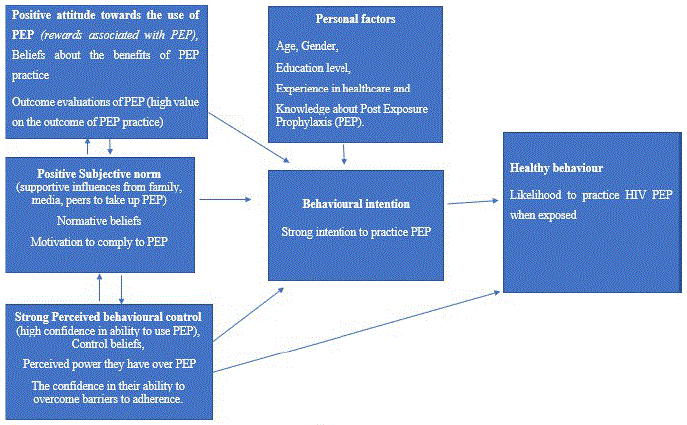
Figure 1: Conceptual model of the intention to practice HIV PEP adapted from Ajzen (1991) [17].


Mabel Worlasi Dzenu1,2* Joyce Komesuor1 Priscilla Emefa Addo1 Clinton Frempong1 Elvis Enowbeyang Tarkang1,3,4
1Department of Population and Behavioural Sciences, Fred N. Binka School of Public Health, University of Health and Allied Sciences, Hohoe, Ghana*Corresponding author: Mabel Worlasi Dzenu, Department of Population and Behavioural Sciences, Fred N. Binka School of Public Health, University of Health and Allied Sciences, Hohoe, Ghana, E-mail: [email protected]
Background: Post-exposure prophylaxis (PEP) is the use of short-term Antiretroviral Therapy (ART) to reduce the risk of acquiring the Human Immunodeficiency Virus (HIV) infection following exposure. Frontline Healthcare Workers (HCWs) are at a higher risk of contracting HIV. This study investigated the factors influencing the intention to practice of HIV-PEP among front line HCWs in the Volta region of Ghana using the theory of planned behavior as the conceptual framework.
Methods: This study adopted a quantitative cross-sectional design in November 2023, collecting data from a multistage sample of 243 participants and analyzing them using STATA version 17 at p<0.05 and 95% confidence interval.
Findings: The intention to practice HIV-PEP was 92.2%, with nurses being 10 times more likely to have the intention than doctors [adjusted odds ratio (aOR)=9.63(1.74-53.49), p=0.010]. Subjective norm was significantly associated with the intention to practice HIV PEP with those who disagreed that important people in their lives would approve of them taking HIV PEP being less likely to use PEP compared to those who agreed [aOR=0.16(CI: 0.29- 0.83), p=0.029], and those who disagreed that they would follow the recommended protocols for PEP being less likely to practice HIV PEP compared to those who agreed [aOR=0.04(CI: 0.00-0.63), p=0.022]. Perceived behavioural control was significantly associated with the intention to practice HIV PEP, with those who disagreed that they were confident to use HIV PEP any time they were exposed to HIV being less likely to have intention to use PEP if exposed [aOR=0.10(CI: 0.01-0.75), p=0.026].
Conclusion: The overall intention to practice HIV PEP was high. Nurses were more likely to have the intention to take PEP for HIV compared to doctors. Strategies to increase the intention to practice HIV PEP should focus on subjective norms and perceived behavioural control and should also target medical doctors.
Intention; HIV; Prophylaxis; Healthcare; Ghana
Globally, the Human Immunodeficiency Virus (HIV) continues to be a major public health issue with 40.1 million [33.6–48.6 million] deaths as a result of HIV-related causes [1]. The WHO African region remains the most severely affected, accounting for more than two-thirds (25.6 million) of the people living with HIV (PLHIV) worldwide [2]. In Ghana, it was estimated that a total of 354,927 people were living with the disease out of which 120,676 (34%) were males and 234,251 (66%) were females. In the first half of 2023, a total of 23,495 new HIV infections were recorded in Ghana [3]. Recently, there has been a surge in infection from 33,000 in 2022 to 49,996 in 2023 residents in the Volta Region are currently living with HIV [4]. However, to end the Acquired Immune Deficiency Syndrome (AIDS) by 2030, there was a new proposed global target of 95-95-95 set by UNAIDS, to diagnose 95% of patients, putting 95% of those diagnosed on treatment and 95% of those on treatment having their viral load suppressed [5]. The African Region continues to be the most severely affected and this includes healthcare workers (HCWs) as well.
Ghana as country have made several efforts to reduce the incidence of HIV/AIDS in the country. These efforts include HIV testing and treatment services in country being free in all government health facilities and some selected private health facilities, awareness campaigns, education on health seeking behaviour etc. Also, HCWs have been trained and supported to provide HIV care and prevention services without stigma and discrimination. In addition, the country is also leveraging advanced approaches in the fight against HIV, including HIV self-testing and pre-exposure prophylaxis have been made available free of charge [6].
Frontline HCWs are vulnerable to HIV [7]; they are occupationally exposed to blood or other infectious material while performing their duties due to needlestick injuries, mucous membrane exposure, thus contact with HIV-infected blood or other body fluids such as semen, vaginal secretions, or breast milk and open wounds or broken skin [8]. Frontline HCWs have frequent face-to-face contact with patients, laboratory, pathology, mortuary, and those working for a subcontracted provider of facility services such as pottering or cleaning, temporary, locum [9]. Nonetheless, post-exposure prophylaxis (PEP) for HIV means taking HIV medicines within 72 hours after exposure to HIV to prevent infection [10]. It is a short-term Antiretroviral Therapy (ART) given to reduce the likelihood of HIV infection after potential occupational [11]. It is recommended to initiate PEP within 6 hours of a suspected exposure, or as soon as possible, even if the laboratory results are not yet available. However, PEP cannot prevent the infection; rather it can limit the virus’ replication by preventing viral Deoxyribonucleic Acid (DNA) from being incorporated into host DNA [12]. The "Treat All" policy was adopted by Ghana to ensure 90% of all PLHIV will know their HIV, to treat 90% of all people diagnosed with HIV with sustained ART, and to have 90% of all people receiving ART recording viral suppression (90-90-90 strategy) by the year 2020 [13]. HIV services were further disrupted during the Coronavirus Disease 2019 (COVID-19) pandemic [14] with a low supply of ART and PEP drugs in Ghana and nationwide [15]. This led to increased HIV incidence [16]. This implies that there is a high likelihood of frontline HCWs in the Volta Region encountering an HIV patient during their routine work. The current study was grounded on the Theory of Planned Behaviour (TPB) to determine the predictors of intention to follow the HIV post-exposure prophylaxis protocol among frontline healthcare workers in the Volta region of Ghana.
The TPB is one of the most widely used conceptual frameworks in health behaviour research to explain change and maintain healthrelated behaviours [17]. The TPB can be used to predict behaviour and intention of individuals and groups of people. The TPB is a social cognition model that constitutes a promising framework for undertaking and predicting behaviour and behavioural intention [18]. The TPB was propounded by Icek Ajzen in 1985 as a revised version of the Theory of Reasoned Action (TRA) that was developed by Martin Fishbein and Icek Ajzen in 1975 [19].
TPB posits that intentions to perform a behaviour are predicted with high accuracy by attitudes toward the behaviour, subjective norms, and perceived behavioural control [19] (Figure 1). The theory posits that people with a positive attitude, supportive subjective norms, high perceived behavioural control, and strong behavioural intention are more likely to perform a particular behaviour.
Figure 1: Conceptual model of the intention to practice HIV PEP adapted from Ajzen (1991) [17].
A facility-based analytical cross-sectional design was adopted to collect quantitative data among eligible respondents in selected health facilities in the Volta region of Ghana. The analytical cross-sectional study design is useful for determining the predictors of an outcome from there presentative sample that was being studied and allows findings to be generalised to a larger target population. Appropriate statistical analysis techniques such as multivariable regression models were used to control for potential confounding variables (age and sex), thus reducing bias and providing more robust and reliable results.
The study was conducted in selected health facilities in the Volta Region, Ghana. The Volta Region is one of Ghana’s sixteen administrative Regions with Ho designated as its capital. It is located west of the Republic of Togo and to the east of Lake Volta. It encompasses a land area of 20,572 square kilometres and extends from the Gulf of Guinea coastline, traversing through all the diverse vegetational zones present in the country. The population of the region according to the 2021 population and housing census stands at 1,649,523 people representing 47.7 percent (786,823) and 52.3 percent (862,701) of males and females respectively. In terms of availability of healthcare services, the Volta Region has 24 Hospitals, 13 Christian Health Association of Ghana (CHAG) facilities, 150 health centres, 331 Community-based Health Planning and Services (CHPS) compounds, 1 Teaching Hospital [4].
However, the Volta Regional Hospital Hohoe, Ketu South Municipal Hospital, Ho Teaching Hospital, Catholic Hospital Battor, and Ho Municipal Hospital were the selected facilities. The Volta Regional Hospital, Hohoe serves the entire region, the Ho Teaching Hospital is a government-owned Ultra-Modern and state-of-the-art Regional Referral Hospital. The Ho Municipal Hospital and The Ketu South Municipal Hospital in Aflao are Ghana Health Service (GHS) facilities that provide healthcare services to the region but have the least number of frontline HCWs in the Region. While the Catholic Hospital in Battor is a healthcare facility affiliated with the Catholic Church and operates based on Catholic values and principles [4].
The study population consisted of frontline HCWs in the Volta region. Frontline HCWs aged 18 years and above in the five sentinel health facilities that provide HIV services and worked for at least a year (they have experience in providing HIV services) were included.
However, any frontline HCWs who fell within the inclusion criteria but were severely sick were excluded from the study. All frontline HCWs who were absent on the day of data collection were excluded from the study and all those who did not consent to the study were excluded from the study.
The sample size for the study was calculated using Cochran's formula for each facility. It considered a level of precision, Confidence Interval (CI), and the P = Prevalence, which was 17.9%=0.179 (17.9%) adherence to PEP based on findings from a study conducted in the Ho Teaching Hospital [19]. A 95% confidence level (z) and a 5% margin of error (e) were used for the calculation. A non-response rate of 5% was added to the calculated sample size to obtain the sample size for the study
Using the formula: n=(z^2*p(1-q))/e2 (Cochrane,1977)
Where n = sample size, z= desired level of confidence, p = prevalence, and e = margin of error. Therefore, n = ((〖1.96〗^2) *0.179(1-0.179))/ 〖0.05〗^2=225.8
Adding 5% non-response rate, n=0.05*225.8=12.2+225.8=238
Therefore, the sample size for the study≈238. But 243 was taken from the five health facilities in the region.
Multistage sampling was used for the study. The five facilities used in the current study were purposively selected because they were the top five facilities with over 1000 HIV active cases since 2018 [4] and provide HIV services in the region. In each selected sentinel facility, the HCWs were stratified into their various cadre; Doctors, Nurses/ Midwives, Lab Sciences, and public health practitioners. A systematic random sampling approach was used to select the respondents from the ultimate strata. With this method, a list was created for all the frontline HCWs by assigning those numbers serially. Pieces of paper of equal sizes were numbered from 1toKth (the last number required to achieve the sample size), placed in a box, and thoroughly shaken to mix. A piece of paper was blindly selected from the box to determine the starting point on the list for selecting participants for the study. The randomly selected number (Nth) between 1 and Kth was the starting point from which every Kth HCW on the list was selected until the required sample size for that facility was reached. Any HCW selected was interviewed if they met the inclusion criteria and gave consent. If a person selected declined to participate, the next person was selected to meet the sample size for that facility.
A standardized structured questionnaire adapted from similar studies [20-23] was used for the study. The questionnaire had three sections. The first section was the demographic characteristics of the respondents, the second was the knowledge of PEP and the last was the intention to practice PEP. The knowledge of the PEP section helped to measure whether they had knowledge of the guidelines on PEP and whether they were aware of protocols being made available to practice PEP. The intention to practice the PEP section included questions on attitudes towards PEP, subjective norms, and perceived behavioural control over PEP. Kobo collect was used to collect the data from the HCWs. The data collection was done in a language that the participants understood, it was done in both English, Twi and Ewe. In each facility, the questionnaire was administered to HCWs that were available at facilities in the units and department that fit in to the inclusion criteria using tablets till the sample size was reached using the sampling technique. Five (5) trained Research Assistants were used for the data and the data was collected individually among the HCWs. It was one-on-one data collection, involving a Research Assistant and a HCW. The data was collected inadequate environment ensure privacy and for avoidance of social desirability effect.
The average score of each section was used as a guide ingenerating the scores. To generate the composite intention score, all ‘No’ and ‘Don’t Know’ responses were combined as ‘NO’. Therefore, respondents who scored below the average were considered to have no intention and those who scored the average and above were considered to have intention to practice PEP. For the intention to practice PEP, 3 questions were asked, and each was rated ‘have intention’ and’ do not have intention’. Two options were used, ‘yes’ as 1and 0 as 'no'; so, respondents who answered 'yes' to any of the items were said to have the intention to practice PEP while those who answered 'no' were considered to not to have any the intention of practicing PEP protocol.
Additionally, composite scores were computed for the constructs of TPB. Four items were used to assess the subjective norms of the respondents with response options as ‘Strongly agree’, ‘Agree’, ‘Disagree’ and ‘Strongly disagree’. Also, four items were used to assess the respondent's attitude towards the intention to practice PEP. Four items were also used to assess the behavioural control of the respondents. To get the composite score, 'Disagree' and ‘Strongly disagree’ the items were combined to be ‘Disagree’ while’ Agree ‘and’ Strongly agree 'were combined as 'agree'. The response options were coded ‘1’ for agree and ‘0’ for disagree. Participants who scored 2 and above were rated to be high and all those who scored below 2 were rated low for attitude towards PEP and subjective norm PEP. However, with the construct perceived behavioural control, the 4 questions were also scored '1' and '0' where '1' was agree and '0' was disagree. All the participants who scored 3 and above were rated to be high and all those who scored below 3 were rated low.
The Cronbach Alpha’s coefficients of the study variables were good to very good internal consistency across the constructs. The score of subjective norms has an Alpha of 0.7313, which has a good reliable measurement. Similarly, the score for perceived behavioural control has an Alpha of 0.7264, indicating good consistency. The overall total scale Alpha of 0.9332 is exceptionally high, reflecting that the combined items reliably measure the underlying constructs related to intentions to practice HIV PEP.
STATA version 17 at the 0.05 level of significance was used for the analysis. Where necessary, appropriate measures of centrality (mean, median, and mode) and dispersion (standard deviation and ranges) were calculated. Bivariate analysis including Pearson’s Chi-square was used to determine the association between the dependent and independent variables. Multivariate analysis using suitable logistic regression model analysis was used to determine the strength of the association between the dependent and independent variables and to adjust for confounders.
As research rigor is rightfully valued, we tried to ensure confirmability and reliability. The results could be transferred and validated because them ethodology of the study was explained in detail. The quality of the data was determined before beginning the analysis. This includes checking for any missing data or errors that may affect the results. The appropriate statistical methods were used for the data analysis. This includes selecting the appropriate statistical tests ensuring that the data meets the assumptions of the tests and correctly interpreting the results. We ensured that the study’s findings were reliable and valid. The sample was representative of the population being studied controlling for extraneous variables that affect the results and using appropriate measures and instruments.
Ethical approval was obtained from the University of Health and Allied Sciences Research Ethics Committee (UHAS-REC) with approval number UHAS-REC [A.1 [82] 23-24, Ho before the start of the study. Institutional permission was granted by the Volta Regional Health Directorate and all five facilities before the data collection began. Participants were assured of anonymity and confidentiality. All the study procedures were clearly explained to the participants in the language they understood best, and their written consent obtained before data collection began.
About 51% of the respondents were between the ages of 25 and 34 years and the majority (60.1%) were female. The most common job cadre was nurses/midwives (39.1%); 45.7% had a bachelor’s degree and 26% had 11-15 years of work experience. The majority (50.6%) were widowed/widower and most (96.3%) were Christians. About 30% of the respondents were working in the paediatrics department (Table 1). HCWs with 6 to10 years of experience were 76% times less likely to intend to practice HIV PEP compared to health care workers with1 to 5 years of experience [cOR=0.21(0.05-0.83),p=0.025]. Respondents who were nurses were 10 times more likely to have the intention to take PEP for HIV than those who were doctors [aOR=9.63(1.74- 53.49), p=0.010] (Tables 2,3).
| Variables | Frequency (n=243) | Percentage (%) |
| Age | ||
| ≤ 24 | 37 | 15.2 |
| 25-34 | 124 | 51.1 |
| 35-44 | 62 | 25.5 |
| 45+ | 20 | 8.2 |
| Sex | ||
| female | 146 | 60.1 |
| male | 97 | 39.9 |
| Cadre | ||
| Doctor | 18 | 7.4 |
| Nurse | 95 | 39.1 |
| Midwife | 46 | 18.9 |
| Lab technician | 53 | 21.8 |
| Others | 31 | 12.8 |
| Department | ||
| Medical Ward | 40 | 16.5 |
| Paediatrics | 73 | 30 |
| Public Health Unit | 62 | 25.5 |
| Laboratory | 42 | 17.3 |
| OPD | 26 | 10.7 |
| Educational level | ||
| Certifi ate | 42 | 17.3 |
| Diploma | 90 | 37 |
| Bachelor’s degree | 111 | 45.67 |
| Years of experience fully ears | ||
| 1 to 5 years | 67 | 27.6 |
| 6 to 10 years | 26 | 10.7 |
| 11 to 15 years | 64 | 26.3 |
| 16 to 20 years | 55 | 22.6 |
| 21years and above | 31 | 12.8 |
| Married | 109 | 44.9 |
| Widow/Widower | 123 | 50.6 |
| Others | 11 | 4.5 |
| Religion | ||
| Christi | 234 | 96.3 |
| Others | 9 | 3.7 |
Table 1: Demographic characteristics of respondents.
| Variables | Frequency (n=243) | Percentage (%) |
| Occupationally exposed to HIV during your work |
||
| Yes | 141 | 58 |
| No | 102 | 42.0 |
| Ever practiced HIVPEP before | ||
| Yes | 198 | 81.5 |
| No | 45 | 18.5 |
| Intenti to practi HIV PEP If you are occupati exposed | ||
| No | 19 | 7.8 |
| Yes | 224 | 92.2 |
Table 2: Intention to practice HIV PEP.
| Variables | cOR(95%C.I), p-value | aOR(95%C.I), p-value |
| Years of experience full years | ||
| 1 to 5 years | Ref | Ref |
| 6 to 10 years | 0.21(0.05-0.83),0.025 | 0.25(0.06-1.06),0.060 |
| 11 to 15 years | 0.95(0.23-3.98),0.947 | 1.09(0.24-4.90),0.910 |
| 16 to 20 years | 1.68(0.30-9.55),0.557 | 2.42(0.38-15.40),0.350 |
| 21years and above | 0.59(0.12-2.82),0.511 | 1.00(0.19-5.32),0.995 |
| Cadre | ||
| Doctor | Ref | Ref |
| Nurse | 8.76(1.77-43.36),0.008 | 9.63(1.74-53.49),0.010 |
| Midwife | 4.10(0.82-20.57),0.087 | 4.65(0.81-26.75),0.085 |
| Lab technician | 4.76(0.95-23.82),0.057 | 5.69(0.97-33.37),0.054 |
| Others | 1.19(2.29-4.95),0.810 | 1.27(0.27-6.02),0.766 |
Table 3: Statistically significant associations between socio-demographic factors and the intention to practice HIV PEP
| Items | Obs | Sign | Item-test correlati | Item-test correlati | Average inter item correlati | Alpha |
| Sub_norm_ score | 243 | + | 0.7756 | 0.1925 | 0.0105545 | 0.7313 |
| PBS_1 | 243 | + | 0.5949 | 0.1565 | 0.0083722 | 0.7264 |
| Total scale | 0.0131222 | 0.9332 |
Most promisingly, 92.2% said they intended to practice HIVPEP if occupationally exposed in the future. About 58% reported being occupationally exposed to HIV during their work. Additionally, most respondents (81.5%) said they had practiced PEP before (Table 3).
Concerning the constructs of the TPB: the majority (94.2%) agreed that important people in their lives would approve of them taking PEP if exposed. Additionally, 91.4% agreed that their colleagues/peers practice PEP when exposed while the majority (59.7%) disagree with media influencing their intention to practice PEP (subjective norms). Regarding attitudes towards PEP practice, most (97.9%) agreed that PEP can effectively prevent HIV infection and 51.9% agreed that PEP could prevent them from acquiring HIV infection if exposed. About 41% agreed that not using PEP would definitively lead to acquiring HIV. Concerning perceived behavioural control, 80.7% agreed that they could confidently obtain PEP from the hospital pharmacies if exposed while 94.7% agreed that they felt confident to use PEP if exposed (Table 4).
| Variables | Frequency (n=243) | Percentage |
| Subjective Norms | ||
| Most people who are important to me approve of my taking PEP | ||
| HIV if I am exposed | ||
| Agree | 229 | 94.2 |
| Disagree | 14 | 5.8 |
| My peers and my colleagues practice PEP any time they are | ||
| exposed | ||
| Agree | 222 | 91.4 |
| Disagree | 21 | 8.6 |
| Social media, television, radio, news papers affect my decision towards PEP practice | ||
| Agree | 98 | 40.3 |
| Disagree | 145 | 59.7 |
| I follow their commended protocols for PEP | ||
| Agree | 238 | 97.9 |
| Disagree | 5 | 2.1 |
| SUBJECTIVE NORM SCORE | ||
| High | 221 | 90.9 |
| Low | 22 | 9.1 |
| Attitude towards Behaviour | ||
| HIV PEP use can effectively prevent HIV infection | ||
| Agree | 233 | 95.9 |
| Disagree | 10 | 4.1 |
| HIVPEP can be used to prevent me from getting HIV if I | ||
| Am exposed | ||
| Agree | 222 | 91.4 |
| Disagree | 21 | 8.6 |
| I will acquire HIV if I do not use PEP after I am exposed | ||
| Agree | 99 | 40.7 |
| Disagree | 144 | 59.3 |
| My family, friends and colleagues will stigmatize against | ||
| Me if they know I am on HIVPEP | ||
| Agree | 125 | 51.4 |
| Disagree | 118 | 48.6 |
| ATTITUDE SCORE | ||
| High | 125 | 51.4 |
| Low | 118 | 48.6 |
| Perceived Behavioural Control | ||
| I sometimes convince my colleague to use HIVPEP whenever they are exposed | ||
| Agree | 219 | 90.1 |
| Disagree | 24 | 9.9 |
| I am confident to go to the pharmacy to get HIV PEP drugs in the hospital anytime I am exposed | ||
| Agree | 196 | 80.7 |
| Disagree | 47 | 19.3 |
| I feel confident that HIV PEP drugs can help reduce my risk of getting HIV | ||
| Agree | 230 | 94.6 |
| Disagree | 13 | 5.4 |
| I am confident to use HIV PEP anytime I am exposed | ||
| Agree | 232 | 42.4 |
| Disagree | 11 | 4.5 |
| PERCEIVED BEHAVIORAL CONTROL SCORE | ||
| High | 178 | 73.3 |
| Low | 65 | 26.7 |
Table 4: Factors that may influence the intention to practice HIVPEP based on the constructs of the TPB.
Concerning subjective norms, those who disagreed that important people in their lives would approve of them taking PEP were less likely to use PEP if exposed compared to those who agreed [aOR=0.16(95%CI:0.29-0.83),p=0.029)]. While, respondents who disagreed that they would follow the recommended protocols for PEP were less likely to practice HIV PEP compared to those who agreed [aOR=0.04(95%CI: 0.00-0.63),p=0.022)] and with regards to perceived behavioural, with those who disagreed that they were confident to use HIV PEP anytime they were exposed to HIV being 93% less likely to have intentions to use PEP if exposed [aOR=0.10(CI: 0.01-0.75), p=0.026] (Table 5).
| Variables | cOR(95% C.I), p-value | aOR(95%C.I), p-value |
| Attitude towards the Behaviour | ||
| HIVPEP use can effectively prevent HIV infection | ||
| Agree | Ref | Ref |
| Disagree | 0.06(0.02-0.25),<0.001 | 0.28(0.032.71),0.272 |
| HIV PEP can be used to prevent me from getting HIV if I am exposed | ||
| Agree | Ref | Ref |
| Disagree | 0.22(0.07-0.67),0.008 | 0.35(0.062.02),0.242 |
| ATTITUDE SCORE | ||
| High | Ref | |
| Low | 1.05(0.40-2.77),0.924 | |
| Subjective Norms | ||
| Most people who are important to me approve of my taking PEP HIV if I am exposed | ||
| Agree | Ref | Ref |
| Disagree | 0.12(0.03-0.40),0.001 | 0.16(0.290.83),0.029 |
| I follow their commended protocols for | ||
| PEP | ||
| Agree | Ref | Ref |
| Disagree | 0.02(0.00-0.16),<0.001 | 0.04(0.000.63),0.022 |
| SUBJECTIVE NORM SCORE | ||
| High | Ref | |
| Low | 0.33(0.10-1.09),0.069 | |
| Perceived Behavioural Control | ||
| I feel confident that HIVPEP drugs can help reduce my risk of getting HIV | ||
| Agree | Ref | Ref |
| Disagree | 0.16(0.04-0.57),0.005 | 1.01(0.128.44),0.994 |
| I am confident to use HIV PEP any time | ||
| I am exposed | ||
| Agree | Ref | Ref |
| Disagree | 0.08(0.02-0.28),<0.001 | 0.10(0.010.75),0.026 |
| PERCEIVED BEHAVIORAL | ||
| CONTROL SCORE | ||
| High | Ref | Ref |
| Low | 0.37(0,14-0.96),0.040 | 0.74(0.222.51),0.633 |
Table 5: Statistically significant associations between the constructs of the TPB and the intentions to practice PEP
The intention to practice HIV PEP among frontline HCWs in the Volta region was 92.2%, indicating that there is a recognition of the importance of PEP in reducing the risk of HIV transmission among HCWs. This finding may be because 58% reported being occupationally exposed to HIV during their work, of which 81.5% said they had practiced PEP before. This indicates that a considerable proportion of HCWs in the study population have already been proactive in seeking and utilising PEP following potential HIV exposure.
This finding is consistent with those of studies that have reported a positive intention to use PEP among HCWs in South India [24], Singapore [25], in Saudi Arabia [26] and Nigeria [27]. This demonstrates a strong commitment and motivation among the HCWs to adhere to the recommended PEP protocols. This could lead to improved occupational safety, enhanced health delivery, and reduced HIV transmission among HCWs.
This study found that nurses were 10 times more likely to have the intention to use PEP than medical doctors. This could be because nurses often have direct and frequent contacts with patients compared to medical doctors, which may increase their risk of being exposed to HIV. In this study, the most common job cadre was nurses (39.1%), which could be due to the fact that nurses constitute the most common job cadre for frontline roles in health care delivery. The current finding aligns with a study in Nigeria by Umoh, et al., [27], and Darko, et al., [28] in Ghana. In contrast, a study in Nigeria by Adeola, et al. [29] found that physician shada higher intention to practice HIV. The current finding may lead to lower incidence and prevalence rate of HIV infection among HCWs in general since nurses form the majority of frontline HCWs. This implies that healthcare organizations and policymakers should highlight the need to address different cadres of frontline HCWs when it comes to programme implementation. Therefore, interventions targeting frontline HCWs should focus on providing appropriate training, education, and support to enhance their intention to practice HIV PEP, especially among those who are not nurses.
Work experience was found to be a factor that influences the intention to practice HIV-PEP among HCWs in the current study. HCWs with 6to10years of work experience are less likely to intend to practice HIV PEP compared to HCWs with 1 to5 years of work experience. This finding is similar to that of a study conducted in India [24]. This finding suggests that HCWs with more work experience might have developed complacency with adherence to the PEP protocol. This finding calls for targeted reminder cues among HCWs with more work experience to motivate them to develop the intention to practice HIV-PEP. These cues could include providing updated information on the importance, efficacy and guidelines of HIV-PEP.
Subjective norm is a construct of the TPB that deals with the social influence surrounding the individual. It refers to a person’s belief about what the most important persons in his or her life think concerning the performance of a behaviour [4]. The current study found that individuals who disagreed that important people in their lives would approve of them taking PEP were less likely to use PEP if exposed to HIV compared to those who agreed. This current finding suggests that social influences and perceived approval from significant others play a role in the decision to use HIVPEP. This finding aligns with a study by Thomas, et al. [30], which found that the importance of social support and health care provider’s recommendations is highly associated with promoting intention. Subjective norm is shaped by normative belief, thus how significant people in his or her life would like him or her to behave and motivation to comply thus the degree to which a person wants to act per the perceived wishes of significant others in his or her life [4]. People may be influenced by the opinions and attitudes of those close to them, and if they perceived is approval, they may be less likely to act such as using HIV-PEP. Therefore, it is important to consider significant others when you want to influence behaviour; hence health facility management should design intervention strategies to include significant others.
Attitude towards the behaviour, another construct of the TPB is shaped by behavioural belief thus the belief that performing a particular behaviour will lead to a certain outcome and outcome evaluation thus the value an individual places on each outcome resulting from the performance of a behaviour [4]. But despite the fact other studies found otherwise, the current study reported that there is no association between attitude towards PEP practice and intention to practice HIV-PEP. This indicates that no matter the attitude frontline HCWs have towards PEP, either positive or negative, does not influence their intention to practice PEP. With majority reporting that they have the intention to practice HIV PEP when exposed means they will practice PEP regardless of their attitude towards it.
Perceived behavioural control refers to how much a person feels he or she has command in enacting a particular behavior [4]. The current study found that individuals who disagreed that they are confident to use HIV-PEP anytime they are exposed to HIV are less likely to have the intention to use PEP compared to those who agreed. This suggests that individuals who lack confidence in their ability to use PEP are likely not to have the intention to use it. It means that individual's perceived self-efficacy and confidence influence their ability to performa behavior in line with the tenets of the TPB [4]. When individuals feel confident in their ability to carry out a behaviour, in this case, the use of HIV-PEP, they may have the intention to engage in that behaviour when the need arises. This finding aligns with other studies by Wong, et al., [31] in Hong Kong, Yang, et al., [32] in China, and Razali, et al., [33] in Malaysia.
Individual control beliefs are thus the belief about internal and external factors that inhibit or facilitate the performance of the perceived behaviour, and perceived power thus a person’s perception of how easy or difficult it is to perform the behaviour in each condition identified in that person’s control beliefs make up perceived behavioural control [4]. Although the majority of the respondents reported having the intention to practice HIV PEP if they are occupationally exposed, individuals who disagree that they are confident to use HIV-PEP anytime they are exposed will not practice PEP, hence their perceived power towards HIV- PEP is low. This will increase the incidence rate of HIV among frontline HCWs hence the prevalence will also increase. Therefore, workshops and training on HIV-PEP should be organised for HCWs to boost their self-efficacy to practice HIV-PEP when they are exposed.
Although the research method used in this study ensured ethical and scientific soundness, the study had limitations. There may be recall bias from the respondents and social desirability bias on the requested data. Some participants might have felt uncomfortable in responding to some of the questions due to the sensitive nature of the topic. Also, the study was conducted in the Volta Region of Ghana, which may limit the generalisability of the findings to other Regions of Ghana. Although efforts were made to ensure there presentativeness of the sample, there may still be potential selection bias due to the use of purposive sampling to select the health facilities and the exclusion of certain healthcare facilities. These limitations should be taken into consideration when interpreting and applying the findings of this study.
The intention to practice HIV-PEP among front line HCWs was high. Nurses were more likely to have the intention to take PEP for HIV compared to doctors. This indicates that frontline HCWs in the Volta Region are aware of the importance of PEP in preventing HIV infection after exposure. The significant predictors of intention to practice HIV PEP based on the TPB were the subjective norm (those who disagreed that important people in their lives would approve of them taking PEP and those who disagreed that they follow the recommended protocols for PEP), and perceived behavioural control (those who disagreed that they were confident to use HIV PEP anytime they were exposed).
MWD developed the manuscript, MWD and PEA collected data for the project. CF did the data analysis for the study while EET supervised and shaped the manuscript. However, JK proofread the manuscript.
There was no source of funding for this project. The project was self-funded by the leading author.
I would also like to extend my gratitude to Dr. Mark K. Ananga, Benjamin Sena Dzameshie (MD) and Dr. Michael Boachie for the support they gave me during my data collection. Thanks to Clinton Sekyere Frempong for the analysis, I am grateful. I give special thanks to my supervisors, Professor Elvis Enowbeyang Tarkang and Dr. Joyce Komesu or for their immense support and guidance throughout this study, God bless you.
Download Provisional PDF Here
Article Type: RESEARCH ARTICLE
Citation: Dzenu MW, Komesuor J, Addo PE, Frempong C, Tarkang EE (2025) Influence of Subjective Norm and Perceived Behavioural Control on the Intention to Practice HIV Post-Exposure Prophylaxis among Frontline Healthcare Workers in the Volta Region of Ghana. J HIV AIDS 9(1): dx.doi. org/10.16966/2380-5536.197
Copyright: ©2025 Dzenu MW, et al. This is an open-access article distributed under the terms of the Creative Commons Attribution License, which permits unrestricted use, distribution, and reproduction in any medium, provided the original author and source are credited.
Publication history:
All Sci Forschen Journals are Open Access