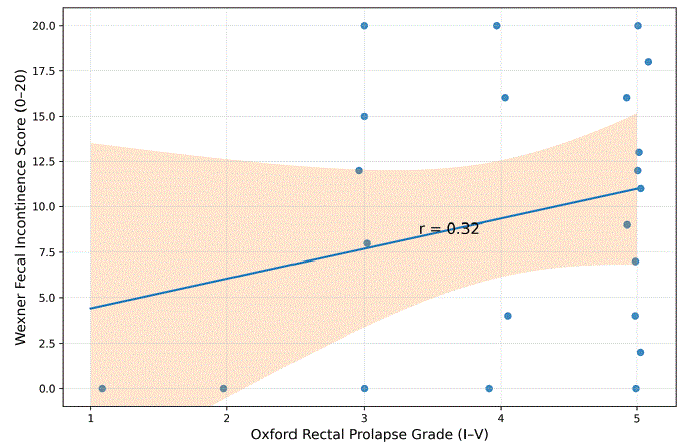
Figure 1: Correlation between Oxford prolapse grade (I-V) and Wexner fecal incontinence score (0-20).


Hugo Enrique Estrada González1* Billy Jiménez Bobadilla2 Gerardo Joel Maya Vacío2 Karla Angélica Becerra Cabrera1 Eduardo David Cruz Mendoza1 Diana Areli González Rodríguez1 Jorge Luis De León Rendón2
1Instituto Mexicano del Seguro Social, Surgery Department, Coloproctology Manager, Mexico*Corresponding author: Hugo Enrique Estrada González, Instituto Mexicano del Seguro Social, Surgery Department, Coloproctology Manager, Mexico, E-mail: [email protected]
Introduction: Rectal prolapse (RP) is an uncommon condition with a significant impact on patients’ quality of life. Treatment is surgical, and multiple approaches have been described, each associated with different recurrence rates. The aim of this study was to describe the demographic and clinical characteristics, surgical management, and outcomes of patients with RP treated at the Hospital General de México “Dr. Eduardo Liceaga”.
Materials and methods: A retrospective, relational, and analytical study was conducted in patients diagnosed with RP who were consecutively treated between January 2017 and December 2021. Demographic, clinical, and surgical variables, as well as recurrence and need for reintervention, were analyzed. RP severity was classified using the Oxford grading scale, and fecal incontinence severity was assessed using the Wexner score.
Results: A total of 47 patients with RP were included, representing 0.88% of hospital admissions to the service during the study period. Eighty-five percent of patients were female. The overall recurrence rate was 23.4%, and only two patients required reintervention during the same hospitalization. No association was identified between age, smoking status, or comorbidities and either RP grade or recurrence. A positive correlation was observed between RP grade and Wexner score (r=0.32, p=0.02). Additionally, significant differences were found between the surgical procedure performed and RP recurrence (p=0.002), with the Delorme procedure being the most frequently associated with recurrence.
Conclusions: Rectal prolapse was primarily associated with fecal incontinence and constipation. The severity of fecal incontinence correlated with RP grade. Laparoscopic posterior rectopexy demonstrated lower recurrence rates, whereas the Delorme procedure was associated with higher recurrence.
Rectal prolapse; Rectopexy; Recurrence; Colorectal surgery; Perineal procedures; Surgical outcomes
Rectal prolapse (RP) is an uncommon condition characterized by protrusion of the rectum through the anal canal, with a significant impact on patients’ quality of life. It predominantly affects older women, with a female-to-male ratio of up to 6:1; however, it may occur in both sexes and across all age groups [1-3]. The most common clinical manifestations include fecal incontinence, constipation, and the sensation of a rectal foreign body [4].
The pathophysiology of RP remains incompletely understood; nevertheless, it has been associated with anatomical and functional alterations of the pelvic floor. Parks described the so-called descending perineum syndrome, characterized by rectocele with or without enterocele, internal RP, and pelvic floor weakness [5]. Additionally, factors such as female pelvic anatomy and obstetric history may explain the higher incidence observed in women [6].
Treatment of RP is surgical and may improve both anatomy and bowel function [7]. Multiple surgical techniques have been described, and the optimal approach remains controversial [8]. Perineal procedures are generally preferred in elderly patients or those with high surgical risk because of their lower morbidity and mortality; however, they are associated with higher recurrence rates. In contrast, abdominal approaches are associated with lower recurrence rates and are typically indicated in younger patients with fewer comorbidities [9].
The present study provides information regarding the clinical characteristics and surgical outcomes of RP in the Mexican population, a topic that has been scarcely reported in the national literature [10].
A retrospective, observational, and analytical study was conducted including 47 patients diagnosed with rectal prolapse who were consecutively treated at the Coloproctology Department of Hospital General de México Dr. Eduardo Liceaga between January 2017 and December 2021.
Clinical and demographic characteristics were collected from medical records, including sex, age, comorbidities, smoking status, constipation, and fecal incontinence. Surgical procedures performed for rectal prolapse correction, surgical reinterventions, and recurrence rates were also documented.
The degree of rectal prolapse was classified according to the Oxford Rectal Prolapse Grade (ORPG), which categorizes prolapse severity from grade I to grade V based on the extent of rectal prolapse and associated pelvic floor descent. Fecal incontinence severity was assessed using the Wexner score (Tables 1,2)[11].
| Type of FI | Never | Rarely (>1 time/ month) | Sometimes (>1 time/month and <1 time/week) | Usually (>1 time/week and <1 time/day) | Always (>1 time/day) |
| Gas | 0 | 1 | 2 | 3 | 4 |
| Liquid | 0 | 1 | 2 | 3 | 4 |
| Solid | 0 | 1 | 2 | 3 | 4 |
| Pad use | 0 | 1 | 2 | 3 | 4 |
| Lifestyle alteration | 0 | 1 | 2 | 3 | 4 |
Table 1: Wexner Fecal Incontinence Score.
FI: Fecal Iincontinence
| RP Grade | Radiological characteristics of RP | ||
| Internal RP | Recto-rectal intussusception | I (high rectal) | Descent not exceeding the proximal limit of the rectocele |
| II (low rectal) | Descent to the level of the rectocele, but not into the anal canal |
||
| Recto-anal intussusception | III (high anal) | Descent into the anal canal, including the anal sphincter | |
| IV (low anal) | Descent into the anal canal, including the anal sphincter | ||
| External RP | External RP | V (evident external prolapse) | Protrusion through the anus |
Table 2: Oxford Classification of Rectal Prolapse.
RP: Rectal Prolapse
Statistical analysis was performed using SPSS version 26 (IBM Corp., Armonk, NY, USA). Postoperative recurrence was assessed through outpatient follow-up records available during the next five year of each patient. Recurrence was defined as the reappearance of full-thickness rectal prolapse documented during postoperative clinical evaluation. Follow-up assessments were performed during subsequent outpatient visits when available, rather than at predetermined fixed intervals.
Categorical variables were expressed as frequencies and percentages, whereas continuous variables were expressed as means and standard deviations. Correlations between non-dichotomous variables were assessed using Spearman’s rho non-parametric test.
Due to the retrospective design of the study and the use of anonymized clinical records, the requirement for informed consent was waived by the institutional review board. Patient confidentiality and data anonymization were maintained throughout the study in accordance with institutional ethical standards and the Declaration of Helsinki.
Rectal prolapse accounted for 0.88% of hospitalizations at our institution during the study period (47/5290 hospitalizations). Most patients were female (85%). Patient age ranged from 19 to 93 years, with a mean age of 62 ± 20.04 years. Smoking history was present in 30% of patients.
Comorbidities were identified in 55% of cases, whereas 21 patients had no previous medical conditions. Arterial hypertension was the most frequent comorbidity, present in 32% (15 patients), including three patients with concomitant type 2 diabetes mellitus. Five patients had type 2 diabetes mellitus, two of whom presented it as an isolated disease. Spinal cord injury with paraplegia was identified in 4% of patients. Other isolated comorbidities included schizophrenia, Sjögren syndrome, dementia, anorectal malformation, Ehlers-Danlos syndrome, overactive bladder, and chronic kidney disease.
According to the Oxford classification, grade V rectal prolapse was the most frequent presentation, observed in 60% of patients. Oxford grade III was identified in 21% of cases, whereas grade IV represented 10% of patients. Three patients presented grade II prolapse, and only one patient had grade I disease. Fecal incontinence severity, assessed using the Wexner score, showed a median value of 9 points (range 0-16). Preoperative demographic and clinical characteristics are summarized in table 3.
| Variable | N= 47 |
| Sex-n (%) Female |
40 (85.1) |
| Age-years ± SD Range |
62 ± 20.04 19 - 93 |
| Comorbidities-n (%) No comorbidities Hypertension Type 2 diabetes + hypertension Type 2 diabetes Spinal cord injury Chronic kidney disease Overactive bladder Anorrectal malformation Dementia Sjögren syndrome Schizophrenia Ehlers-Danlos syndrome |
21 (44.7) 12 (25.5) 03 (06.4) 02 (04.3) 02 (04.3) 01 (02.1) 01 (02.1) 01 (02.1) 01 (02.1) 01 (02.1) 01 (02.1) 01 (02.1) |
| Smoking history-n (%) | 14 (29.8) |
| Oxford classification system for rectal prolapse-n (%) I II III IV V |
01 (02.1) 03 (06.4) 10 (21.3) 05 (10.6) 28 (59.6) |
| Constipation – n (%) Present Absent |
14 (29.8) 33 (70.2) |
| Fecal incontinence Present Absent |
37 (78.7) 10 (21.3) |
| Wexner fecal incontinence score | 09 (0-16)* |
Table 3: Preoperative demographic and clinical characteristics of patients
with rectal prolapse.
Abbreviations: SD: Standard Deviation
*Values expressed as median and range
All 47 patients underwent surgical treatment. Laparoscopic posterior rectopexy was the most commonly performed procedure (25%). Other minimally invasive procedures included ventral rectopexy in six patients and colporectopexy in one patient. Among conventional abdominal approaches, open ventral rectopexy was the most frequent procedure (17%), followed by colporectopexy (6%). Regarding perineal procedures, Delorme’s procedure was performed in 15% of patients, Altemeier’s procedure in 13%, and the Thiersch procedure in one patient. Mucosectomy alone was performed in one case; the cardiovascular clinical conditions, age and personal patient decision was the items that was include to the surgical approach; elderly older than 75 years, not balanced general anesthesia accepted and high risk cardiovascular conditions helped to make the decision to did perineal procedure.
Two patients required surgical reintervention during the same hospitalization. Rectal prolapse recurrence occurred in 23.4% (11 patients). Recurrence data were obtained from postoperative follow-up records available within the study period, with some patients reaching follow-up periods of up to three years after surgical treatment.
The length of postoperative stay depended by the surgical procedure, the patient who underwent to a resection and anal anastomoses must stayed more days, they had to keep two or three day without solid diet and that was a more length stay criteria, the postoperative stay of this group was 4-7 days range, 10 patients stayed 5 days, one were hospitalized 7 postoperative days and three patients stayed 3 postoperative days. Most of the patients to underwent to an abdominal procedure by laparoscopic approach stay two days, only three of the 19 stayed one day after the surgery; about the open approach all the patients stayed three postoperative days, the patient who underwent to mucosectomy stayed one day after the surgery
A statistically significant association was identified between the surgical approach and recurrence rate, with Delorme’s procedure showing the highest recurrence rate, occurring in 85.7% of patients undergoing this procedure (p = 0.002). Surgical characteristics are summarized in table 4. No association was found between age, smoking status, or comorbidities and the severity of rectal prolapse. However, a positive correlation was identified between Oxford prolapse grade and fecal incontinence severity (r = 0.32, p = 0.02) (Figure 1). For association analysis between surgical procedure and recurrence we used Fisher´s exact test. No association was identified between age, smoking status, comorbidities, or prolapse severity and rectal prolapse recurrence.
Figure 1: Correlation between Oxford prolapse grade (I-V) and Wexner fecal incontinence score (0-20).
| Surgical approach | Procedure | Patients, n (%) | Recurrence, n (%) |
| Open abdominal | Ventral rectopexy | 8 (17.0) | 0 (0) |
| Posterior rectopexy | 2 (4.3) | 0 (0) | |
| Colporectopexy | 3 (6.4) | 1 (33.3) | |
| Laparoscopic | Posterior rectopexy | 12 (25.5) | 1 (8.3) |
| Ventral rectopexy | 6 (12.8) | 2 (33.3) | |
| Colporectopexy | 1 (2.1) | 0 (0) | |
| Perineal | Delorme procedure | 7 (14.9) | 6 (85.7) |
| Altemeier procedure | 6 (12.8) | 0 (0) | |
| Thiersch procedure | 1 (2.1) | 0 (0) | |
| Other | Mucosectomy | 1 (2.1) | 1 (100) |
Table 4: Surgical procedures and recurrence rates in patients with rectal prolapse.
Abbreviations: n: number of patients
The enhancement of initial clinical conditions (faecal incontinence or constipation) were documented by the external consulting followup, all the patients was treated with Plantago psyllium fiber supplement and they mentioned better stools conditions.
Rectal prolapse predominantly affects older women, which is consistent with the findings of our study, in which 85% of patients were female, with a mean age of 62 years [2,3,12,13]. Although the literature reports a high prevalence of comorbidities among patients with RP, our series did not identify a statistically significant association between chronic diseases or smoking status and the development of the condition.
The functional symptoms most frequently associated with RP are fecal incontinence and constipation [14] According to the guidelines of the American Society of Colon and Rectal Surgeons (ASCRS), between 50% and 75% of patients present some degree of fecal incontinence, while 25% to 50% report constipation [3] In our study, approximately 30% of patients presented constipation, whereas only 20% showed no alterations in fecal continence. The Wexner score was 9 points (range 0-16), which is comparable to that reported by Smedberg et al., where scores ranged from 10 to 15 points [15,16].
The Oxford Rectal Prolapse Grade (ORPG) has proven useful for classifying RP severity and evaluating its association with other pelvic floor disorders [16]. In our study, a positive correlation was observed between the degree of rectal prolapse according to the Oxford scale and the Wexner score for fecal incontinence (r=0.32, p=0.02), suggesting greater severity of functional symptoms as the grade of RP increases.
Regarding surgical treatment, perineal approaches have demonstrated higher recurrence rates compared with abdominal procedures [17]. In our series, the Delorme procedure showed the highest recurrence rate, with recurrence observed in six of the seven patients treated using this technique. In contrast, no recurrence was identified among patients treated with the Altemeier procedure during the available follow-up period; however, this finding should be interpreted cautiously given the limited sample size and retrospective design. These findings are partially consistent with those reported in the literature, where recurrence rates for perineal approaches may reach up to 50-58% at three years [17,18].
Laparoscopic posterior rectopexy was the most frequently performed procedure in this study and was associated with recurrence in only one of the twelve operated patients. These results are similar to those described in the Cochrane review published by Tou et al., in which recurrence rates ranged from 10% to 15% for different fixation methods [19,20]. The lower recurrence observed with abdominal approaches may be related to better anatomical fixation and correction of the pelvic defect compared with perineal techniques.
Psychiatric disorders and intellectual disability have been associated with a higher probability of recurrence because of the inability to reduce excessive straining during the postoperative period [21]. In our cohort, one patient had a diagnosis of schizophrenia and, to date, has not presented RP recurrence.
These findings should be interpreted with caution, particularly when comparing recurrence rates between different surgical approaches. One of the main limitations of this study is its retrospective design and the heterogeneity of postoperative follow-up among patients, which may affect the interpretation of recurrence rates across surgical techniques. Additionally, the relatively small sample size limits the ability to draw definitive conclusions regarding the superiority of any specific surgical procedure.
We consider that the clinical conditions follow-up was not consistent because the Wexner´s score were not well documented in all the patients with preoperative faecal incontinence that is significant weak item of this study. All the patients with preoperative constipations coursed with clinical enhancement always supported with fiber supplement.
Rectal prolapse is an uncommon condition that predominantly affects women and is associated with functional disorders such as fecal incontinence and constipation. In our series, the severity of fecal incontinence correlated with the degree of RP. Laparoscopic posterior rectopexy was the most frequently performed procedure and demonstrated low recurrence rates compared with perineal approaches. Furthermore, the type of surgical procedure was significantly associated with RP recurrence, with the Delorme procedure being the technique most frequently associated with recurrence in our population.
Download PDF Here
Article Type: RESEARCH ARTICLE
Citation: Estrada González HE, Jiménez Bobadilla B, Maya Vacío GJ, Becerra Cabrera KA, Cruz Mendoza ED, et al. (2026) Clinical Characteristics, Surgical Management, and Outcomes of Rectal Prolapse: A Retrospective Study from a Tertiary Referral Center. J Surg Open Access 10(2): dx.doi.org/10.16966/2470-0991.278
Copyright: © 2026 Estrada González HE, et al. This is an open-access article distributed under the terms of the Creative Commons Attribution License, which permits unrestricted use, distribution, and reproduction in any medium, provided the original author and source are credited.
Publication history:
All Sci Forschen Journals are Open Access