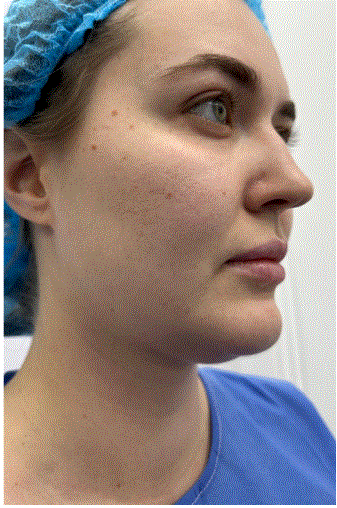
Figure 1: Right Oblique View: Submental fullness, soft mandibular border definition, mild photodamage, uneven tone, residual acne scarring and enlarged pores.


Sotirios Foutsizoglou*
1Consultant Plastic and Reconstructive Surgeon, Private practice in London, UK*Corresponding author: Sotirios Foutsizoglou MBBS, FRCS (Eng), FEBOPRAS, BSc(Hons), MSc(Biostats), PGDip (Micro),Consultant Plastic and Reconstructive Surgeon, Private practice in London, UK, E-mail: [email protected]
Submental fullness, commonly referred to as a “double chin”, is a frequent aesthetic concern among patients. In the 2021 American Society for Dermatologic Surgery Consumer Survey, 70% of respondents reported being bothered by excess fat beneath the chin [1].In another survey approximately half of the participants felt that their lives were negatively impacted by submental fullness to the point of them avoiding video calls and their pictures being taken [2].
Submental convexity can be due to a number of factors, most commonly weight gain resulting in excess preplatysmal fat, but also ligamentous laxity, poor skeletal support (e.g. micro/retrogenia, mandibular hypoplasia or short mandibular body, low hyoid bone), age-related elastin degradation, collagen loss, and bone resorption as well as changes in fat compartment volume and distribution. Patientspecific variables such as genetics, age, skin quality, Fitzpatrick phototype, systemic health, previous scars and concomitant medications influence the capacity of the soft tissues to retract after surgery. Additional factors including hormonal influences, chronic photodamage, structural changes of the SMAS–platysma complex (e.g. platysmal diastasis or banding), submandibular gland prominence or ptosis, digastric muscle hypertrophy, subplatysmal fat and excess skin can further blunt the cervicomental angle and compromise submental contour [3]. Taken together, these factors render the management of submental fullness complex and often necessitate a combined or staged approach.
This complex aetiology is also reflected in the wide range of available treatments (Table 1); yet no single modality reliably addresses all components of submental fullness. Although submental liposuction is a well-established treatment for submental adiposity, liposuction alone can actually exacerbate the aesthetic problem in selected patients—particularly when performed overly superficially or aggressively, which may damage the dermal matrix increasing the risk of contour irregularities and inadequate skin retraction [4,5]. In addition, reduction of the preplatysmal fat layer may unmask or accentuate platysmal banding or highlight other non-fat contributors to submental convexity (e.g. submandibular gland prominence), leading to a less favourable result [6].
| Non-Surgical Treatments | Surgical Procedures |
| Injection Lipolysis (e.g. deoxycholic acid, phosphatidylcholine) | Liposuction |
| Laser Lipolysis | Alloplastic augmentation (e.g. chin implants) |
| Cryolipolysis | Osseous genioplasty |
| Mesotherapy (i.e. L-Carnitine, artichoke extracts) | Mandibular silicone implants (e.g. Implantech Lateral Mandibular Angle™ Implants) |
| Collagen stimulators (e.g. poly-L-lactic acid) | Fat grafting to restore volume deficiencies |
| PDO threads | Orthognathic surgery |
| Calcium hydroxylapatite (CaHA) or hyaluronic acid (HA) fillers for jawline definition and chin enhancement (e.g. Radiesse, Juvederm Volux, etc) | Minimally invasive skin tightening (e.g. Renuvion, FaceTite) |
| HIFU (High-Intensity Focused Ultrasound) | Neck lift including platysmaplasty and resuspension +/- Lower face lift |
| Ultherapy | |
| RF Microneedling (e.g. Morpheus8) | |
| Jaw exercises and lifestyle changes (e.g. Lion’s roar, diet) | |
| Weight management with GIP/GLP1 receptor agonists |
Table 1: Surgical Procedures and Non-Surgical Treatments for Submental Fullness.
In my practice, consistent and durable outcomes in the treatment of submental fullness are achieved by combining conservative ultrasound-assisted liposuction (UAL) of the submental region, lower face and anterior neck with Renuvion® (Apyx Medical, Clearwater, FL) to enhance skin retraction in patients with mild to moderate laxity. Renuvion® has received FDA clearance for use as an adjunct to liposuction and for improving the appearance of lax skin in challenging anatomical regions, such as the neck, submental region, lower face, arms, abdomen, inner thighs, and knees.
Renuvion (or J-Plasma) is an energy-based device that combines radiofrequency with helium plasma to deliver controlled thermal energy to collagen-rich subcutaneous tissues [7]. This produces contraction of connective tissue of the stromal matrix and, over time, remodelling through neocollagenesis and some neoelastogenesis, resulting in progressive skin tightening [8].
A 32-year-old woman first presented in January 2024 with a primary complaint of submental fullness (“double chin”), which had persisted despite multiple non-surgical interventions over several years, including injectable lipolytics and collagen-stimulating therapies such as PDO mesothreads. Her past medical history was unremarkable apart from a questionable penicillin allergy. She was a non-smoker, consumed alcohol socially, and was taking only overthe-counter vitamin supplements. She had no history of previous surgery. Her body mass index (BMI) was 20 kg/m2, within the healthy weight range, and her weight had remained stable.
Although the degree of submental convexity was objectively mild, it was a significant source of anxiety and dissatisfaction with her facial appearance. This prompted formal screening for body dysmorphic disorder (BDD) using the validated Body Dysmorphic Disorder Questionnaire–Dermatology Version (BDDQ-DV) which was negative. BDD is considered an absolute contraindication to elective cosmetic surgery, as research has demonstrated that nearly 98% of individuals with BDD derived no benefit from aesthetic interventions, and approximately 16% reported a perceived worsening of their appearance postoperatively [9,10].
The patient had Fitzpatrick skin phototype II with mild photodamage, several benign lentiginous macules, uneven pigmentation tone, residual acne scarring and enlarged pores, for which resurfacing options (e.g. TCA chemical peel, fractional CO2 laser) were discussed (Figure 1).
Figure 1: Right Oblique View: Submental fullness, soft mandibular border definition, mild photodamage, uneven tone, residual acne scarring and enlarged pores.
Examination revealed obvious submental fullness due to adiposity (pinch thickness 2.8 cm) with a less acute cervicomental angle, moderate skin laxity, apparent bilateral mandibular hypoplasia and a mild chin under-projection (microgenia) - as assessed by Riedel’s line (or plane)-contributing to a slightly more convex profile (Figure 2). However, her micrognathia was not associated with malocclusion or facial asymmetry, and there was no indication for orthodontic or orthognathic intervention. The patient also reported that “double chin” was a long-standing concern among several female first-degree relatives (i.e. mother, maternal grandmother and aunt), supporting a genetic component.
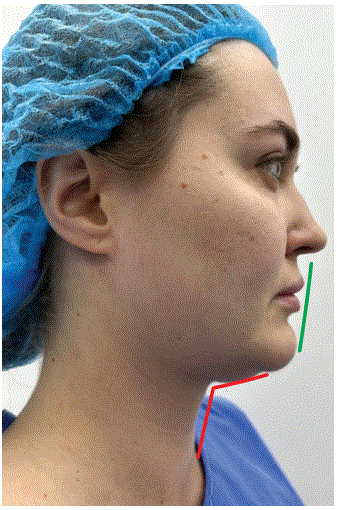
Figure 2: Right Lateral View: Submental fullness, moderate skin laxity, micrognathia and deficient mental protuberance as evidenced by Riedel’s line. Her measured cervicomental angle is 135° .
At a second consultation in early February 2024, non-surgical and surgical options were reviewed in detail, including expected benefits, limitations, potential complications, anaesthetic requirements, downtime and aftercare. In view of her lifestyle, expectations and desire for a long-term solution, a combined approach was selected: conservative ultrasound-assisted liposuction (VASER) of the submental region, lower face and anterior neck, followed by skin tightening using the Renuvion® APR (Apyx RF/helium plasma) device. Renuvion® has received FDA clearance for use as an adjunct to liposuction and for improving the appearance of lax skin in the neck and submental region in patients with Fitzpatrick skin phototypes I–III. Liposuction alone was deemed insufficient to address her skin laxity.
The patient was advised that noticeable skin tightening would occur over a period of 3–6 months, with continued remodelling for up to 12 months. Published clinical studies of Renuvion and related RF energybased devices demonstrate progressive improvement in skin elasticity and tightening over the first 3–6 months, with collagen remodelling and maturation continuing for up to 12 months post-treatment [11,12]. Following a cooling-off period, the patient made the informed decision of proceeding with the proposed treatment plan.
Renuvion® is an energy-based device that combines radiofrequency (RF) and helium plasma. RF energy is delivered from the generator to the handpiece and used to energise the electrode; when helium gas is passed over the energised electrode, some helium atoms are ionised, generating a focused helium plasma. Helium is readily ionised and has low mass and low specific heat, making it an efficient medium for RF plasma generation: the plasma delivers brief, highly localised heating to the surrounding tissue and cools rapidly once RF delivery ceases [13]. This focused, rapidly cooling plasma stream provides controlled thermal energy to the subcutaneous septal network, resulting in protein coagulation and contraction of connective tissue within the stromal matrix [14]. Subsequent wound-healing responses include fibroblast activation, neocollagenesis and remodelling of existing collagen bundles, with some contribution from neoelastogenesis, leading to progressive soft-tissue tightening in the months following treatment [15]. Both the acute (thermal contraction) and delayed (remodelling) effects contribute to the observed improvement in contour and skin laxity.
The Renuvion® APR (Apyx Plasma/RF) handpiece is a sterile, single-use, monopolar electrosurgical device intended for the percutaneous delivery of RF energy and helium plasma in conjunction with compatible generators (Figure 3). These generators operate at an adjustable power output of up to 40 W, expressed on the user interface as 0–100%, where a setting of 100% corresponds to 40 W at the handpiece [16]. Helium gas flow is independently adjustable within a range of 1-5 L/min.
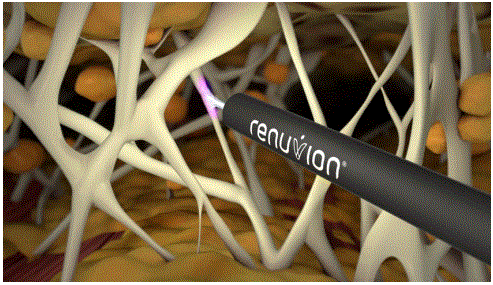
Figure 3: The Renuvion® APR (Apyx Plasma/RF) handpiece
The APR handpiece incorporates a non-extendable internal electrode that generates helium plasma at its distal tip. In aesthetic practice, the most commonly used configurations are the 3-mm diameter twin-port handpieces in 15-cm and 27-cm lengths, the former typically used for treatments of the face and neck, and the latter for the trunk and extremities. Additional handpieces-not currently available in the UK market-include the Pistol Grip Handpieces (5mm diameter) and Precise Open Handpieces.
Preoperative markings, including insertion sites for the Renuvion® APR handpiece and planned liposuction areas, were made with the patient seated, using indelible skin markers in different colours. Zones of maximal fat removal, as well as pre-existing depressions or ‘valleys’, were carefully identified, marked and documented. The patient was then given a final opportunity to review the markings in a mirror, and the key aspects of the procedure—including its aims, expected downtime, and potential complications—were reiterated before written informed consent was obtained.
The patient was then comfortably positioned supine on the operating table with her neck slightly extended. Proper grounding of the patient via a disposable split grounding pad (neutral electrode) was applied to ensure safe use as with any monopolar electrosurgery devices.
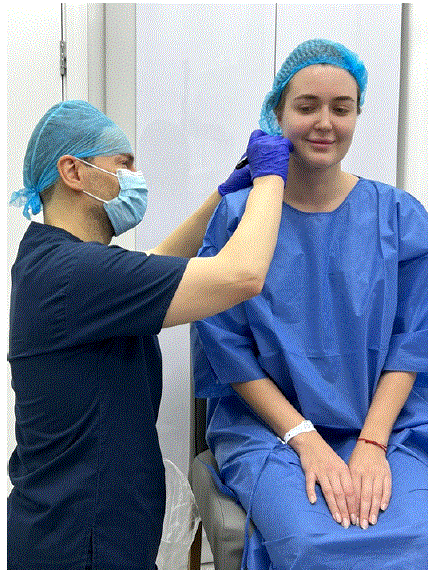
Figure 4: Treatment areas are being marked.
The procedure was performed under oral anxiolysis with diazepam and tumescent local anaesthesia, using three small incisions (one submental and two postauricular) for both liposuction and Renuvion. Following conservative liposuction of the submental region, lower face and anterior neck, and before introducing the 15-cm twin-port Renuvion APR handpiece (APYX-15-TP) through the same access sites, a liposuction cannula-without suction-was passed to create subcutaneous tunnels interconnecting the incisions to allow for gas egress. Gas build-up within the soft tissues can result in pain and transient crepitus. It is important to note that the Renuvion handpiece is not rigid enough and can be damaged if used for blunt dissection or creation of tissue planes.
The patient’s cervicofacial soft tissues had already been exposed to ultrasound energy and mechanical trauma during ultrasoundassisted liposuction. To minimise any risk of thermal injury, the lowest recommended generator settings were therefore selected for the Renuvion phase: 60% power (corresponding to 24 W at the handpiece) and a helium gas flow rate of 1.5 L/min (Figure 5). Power settings above 80% and helium flow rates below 1.5 L/min or above 3.0 L/min have not been systematically evaluated for safety and should be avoided [18].
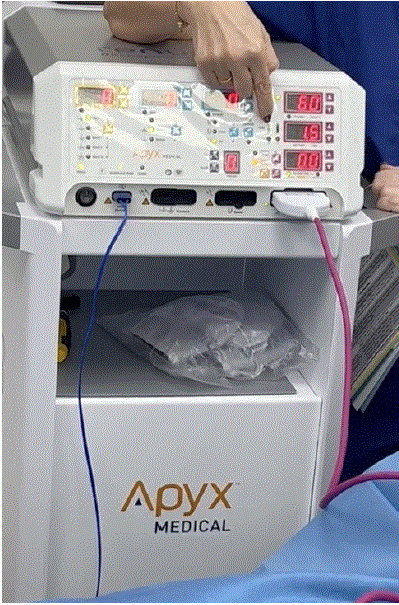
Figure 5: Renuvion settings.
From each incision site, the Renuvion APR (Apyx Plasma/RF) handpiece was advanced using continuous strokes in a fanning pattern, spaced approximately 2-3 cm apart, in both antegrade and retrograde directions, at a speed of 3 cm/sec (Figure 6). The recommended treatment speeds are 1-3cm/sec depending on the anatomical area, tissue thickness, number of passes, and desired clinical endpoint. Thinner tissue can heat faster and is more susceptible to full thickness burn, scarring and delayed healing time. At higher speed, the tissue may not receive sufficient thermal exposure to achieve maximal contraction, whereas slower than 1cm/sec increases the risk of overheating [15].
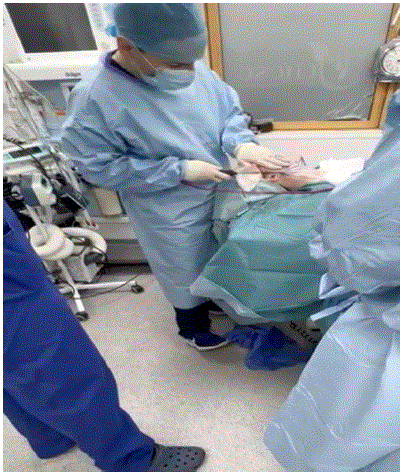
Figure 6: Following preoperative marking of the submental and anterior neck regions, the APYX-15-TP handpiece was used to deliver treatment in a fanning pattern. Strokes should be 2-3 cm apart to avoid overtreatment.
The handpiece was maintained in constant linear motion during activation, while avoiding swirling, kinking, tenting, or pausing. Multiple planes between SMAS/Platysma and skin were treated in order to effectively treat the Fibral Septal Network (FSN). Overlapping or crosshatching adjacent treatment areas without allowing sufficient time for thermal relaxation was deliberately avoided. Overheating can result in burns, scarring, permanent pigmentary change and an unacceptable aesthetic result, while overtreatment particularly in the superficial plane (i.e. <5 mm below the dermis) may lead to fibrosis, contour depressions and a wrinkly skin [15].
Because treatment strokes converge at the access incisions, the device was deactivated as soon as the proximal white “tip distance indicator” line on the shaft became visible at the incision site, to avoid local overtreatment (Figure 7).
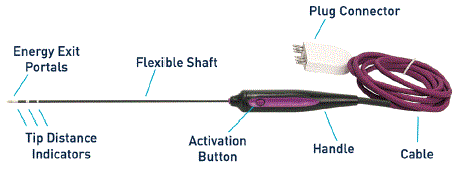
Figure 7: Renuvion® APR Handpiece.
At the conclusion of the procedure, any residual gas trapped within the soft tissues was milked towards the access sites, and each incision was closed with one or two interrupted 5-0 non-absorbable sutures. The patient was then observed in recovery for three hours and experienced an uneventful immediate postoperative course.
Postoperative care consisted of cold compresses for the first 24-48 hours, head elevation, and regular oral analgesia (paracetamol ± NSAID as tolerated). Prophylactic antibiotics were prescribed according to local protocol and allergy status. The patient was instructed to avoid strenuous exercise, heavy lifting, sauna/steam rooms, and alcohol for the first 7-10 days. A submental/neck compression garment was applied immediately post-procedure and worn continuously for the first 48- 72 hours, then nightly for a further 1-2 weeks. Lymphatic drainage massage was introduced after the first week. Wounds were kept clean and dry for 24 hours, and then washes with a 4% chlorhexidine antimicrobial skin cleanser were encouraged twice daily with suture
removal at 5-7 days. The patient was counselled on expected swelling and sensory change and was given explicit red-flag advice (worsening pain, blistering/signs of thermal injury, increasing erythema, fever, expanding crepitus, dyspnoea/dysphagia). Follow-up was scheduled at 1 week, 6 weeks, and 3 months (and thereafter as required).
At the 3-month review, submental fullness had resolved, with satisfactory skin retraction, an improved cervicomental angle, and enhanced jawline definition (Figure 8). The patient additionally demonstrated a more uniform skin tone, reduced apparent pore size, and an improved appearance of acne scarring. The incisions were inconspicuous, and the patient reported high satisfaction with a tighter and smoother overall appearance. No serious adverse events occurred. Early subcutaneous emphysema and local inflammation resolved spontaneously without intervention.
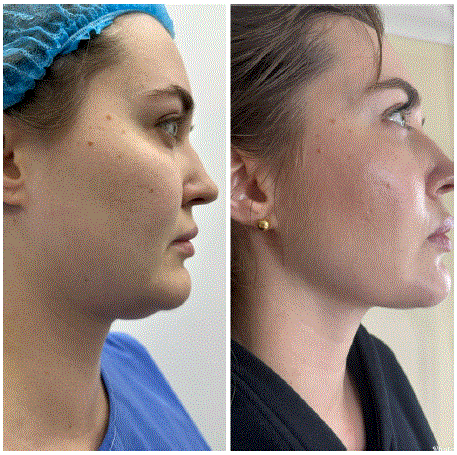
Figure 8: Elimination of submental fullness, enhanced jawline definition, adequate skin retraction, uniform skin tone, diminished pore size, and reduction in acne scarring.
In this case, conservative liposuction with adjunctive J-Plasma (Renuvion APR) was associated with improved cervicomental contour and perceived skin quality at early follow-up, with high satisfaction and no serious adverse events.
From a biophysical standpoint, collagen fibres contract when exposed to heat, with higher peak temperatures producing greater and more rapid tissue contraction. Effective subdermal tissue contraction generally requires tissue temperatures of at least 60-65°C [19]. Experimental and ex vivo data suggest that more pronounced contraction occurs as tissue temperatures approach 80-85°C, a range that RF platforms cannot reach without risking excessive surface heating [20]. In contrast, Renuvion’s helium plasma mediated energy delivery has been shown to produce brief bursts of subdermal temperatures in this higher range while allowing tissue to cool back towards baseline within fractions of a second [11]. This rapid heating and cooling cycle permits efficient collagen contraction with a steep thermal gradient, thereby limiting heat diffusion towards the skin surface and reducing overall application time.
The magnitude and distribution of the thermal effect are critically dependent on the total amount of energy delivered to the target tissue. Higher cumulative energy is associated with more extensive tissue coagulation, but also with an increased risk of thermal injury, scarring and delayed healing [15]. Thin tissues heat more rapidly and are particularly susceptible to full-thickness injury if inappropriately high risk settings, planes or techniques are used. Additional caution is warranted when sequentially treating the same anatomical region with multiple energy-based devices such as combining ultrasound-assisted liposuction (VASER) with Renuvion because cumulative heating can result in superficial and, occasionally, deep burns if adequate thermal relaxation is not allowed [21].
As with all energy-based devices, the use of Renuvion is associated with a spectrum of potential adverse effects. Expected, usually transient, effects include discomfort or pain, oedema, erythema, ecchymosis, hypoesthesia and temporary numbness or paraesthesia. More significant risks include superficial or deep burns, particularly in thin skin when a very superficial treatment plane is used or high power settings (e.g. >80%) are selected, gas build-up within the soft tissues, fibrosis or scarring, seroma formation and post-inflammatory pigmentary change [17,22]. Rare but serious complications may include helium embolism due to inadvertent intravascular gas introduction, peripheral nerve injury and infection [22,23]. Careful patient selection, adherence to the recommended power and gas flow settings, and meticulous technique are therefore essential to optimise outcomes and minimise complications [8,23].
This report has several important limitations. First, it describes a single patient, and the observed outcome may reflect individual anatomical factors (eg, baseline skin elasticity, facial skeleton, and degree of preplatysmal adiposity) that limit generalisability to broader populations, including older patients, those with greater laxity, subplatysmal fat, marked platysmal banding, prior energy-based treatments or face and neck surgery.
Second, the follow-up period is short (3 months). Although early contour improvement is clinically meaningful, collagen remodelling and scar maturation continues for many months. Longer follow-up is needed to evaluate durability of outcome and to detect any potential late sequelae, such as fibrosis, contour irregularities/depressions, textural change, sensory disturbance, pigmentary changes (PIH/ hypopigmentation), and recurrent laxity.
Outcomes were primarily qualitative and based on clinical assessment, photography, and patient-reported satisfaction. The study did not employ validated outcome measures (eg, GAIS or other validated laxity scales, FACE-Q modules, or standardised patient-reported outcome measures), nor did it include blinded or independent rater assessment. In addition, photographic comparisons can be influenced by variations in lighting, camera distance, lens focal length, head position, and cervical extension, all of which can affect perceived cervicomental angle and jawline definition.
There were no objective quantitative endpoints (e.g., standardised cervicomental angle measurements, 3D stereophotogrammetry/ volumetric change, ultrasound-based contraction metrics, or cutometry/biomechanical skin assessments). Consequently, the magnitude of tissue contraction cannot be precisely estimated.
This case report is multimodal (UAL plus Renuvion), making it difficult to quantify the incremental tightening of Renuvion. Perioperative factors including compression garment use, postoperative swelling, weight stability, after care and the patient's individual healing and tissue remodelling response may also contribute to the observed aesthetic endpoint.
Appropriate patient selection is critical because submental convexity frequently reflects a mixed aetiology (amount of adiposity, skin laxity, sub-platysmal fat, skeletal support, and submandibular gland prominence). In general, liposuction alone is most suitable for patients with predominantly pre-platysmal adiposity, good skin elasticity, and minimal platysmal laxity/banding, in whom skin redraping can be expected after conservative fat removal. Conversely, patients are more likely to benefit from combined modalities (e.g., liposuction and adjunctive energy-based tightening) when, in addition to superficial adiposity, there is moderate skin laxity, obtuse cervicomental angle or unfavourable neck contour (sub-platysmal fat, submandibular gland ptosis, low hyoid position, anterior digastric muscle prominence), or risk factors for inadequate retraction (age, photodamage, elastosis).
Criteria that can help stratify patients include: (i) submental pinch thickness, (ii) cervicomental angle measured on standardised lateral photography (with a “youthful/ideal” range commonly cited at 105°-120°), (iii) clinical assessment of skin recoil/elasticity (pinch and snap-back tests), (iv) presence of platysmal banding at rest and on animation, and (v) other contributors (e.g., submandibular gland prominence/ptosis, digastric hypertrophy, or subplatysmal fat), which may limit the benefit of liposuction alone.
Device-based outcomes and complications are highly techniquedependent. Parameters such as power, helium flow, stroke speed, number of passes, plane of treatment, spacing, and overlapping can vary between operators and centres. This report reflects the technique of a single operator, and results may not be reproducible without comparable training, appropriate case selection, and adherence to conservative energy-delivery parametres particularly in thin cervicofacial tissues.
Finally, case reports are inherently limited in their capacity to characterize safety. The absence of serious adverse events in one patient does not exclude low-frequency but clinically important complications (including thermal injury, fibrosis/irregularity, pigmentary change, or gas-related events).
Future directions should include prospective studies with standardised parameters, longer follow-up, validated clinician- and patient-reported outcomes, objective assessment (e.g., 3D imaging and/or ultrasound), and comparative study designs to measure the incremental tightening achieved by Renuvion when used adjunctively to liposuction in the submental region.
This case indicates that, in carefully selected patients with mild-tomoderate skin laxity and submental preplatysmal adiposity, a combined minimally invasive approach using conservative ultrasound-assisted liposuction and helium-based plasma radiofrequency (RF; Renuvion, Apyx Medical) can achieve noticeable improvement in submental fullness, cervicomental contour, jawline definition, and perceived skin contraction at 3 months, with high patient satisfaction and no serious adverse events.
Given the thermal energy delivered to subcutaneous tissue by Renuvion, safe and effective use requires adherence to recommended indications and device settings, appropriate and adequate training, meticulous gas management, avoidance of overlap/cross-hatching, and respect for anatomical planes, particularly in thin tissues, to minimise overheating and thermal injury while optimising contraction.
As this is a single case with short follow-up and predominantly qualitative outcome assessment, larger prospective studies with longer follow-up, objective measurements, validated patient-reported outcomes, and comparative designs are required to determine durability, quantify benefit over liposuction alone, and further assess safety in the submental and neck region.
Patient’s consent for the use of photographic material has been obtained both verbally and in writing.
Nil.
There are no conflicts of interest.
Download PDF Here
Article Type: CASE REPORT
Citation: Foutsizoglou S (2026) Using Renuvion as an Adjunct to Liposuction for the Treatment of Double Chin. J Surg Open Access 10(1): dx.doi.org/10.16966/2470-0991.276
Copyright: © 2026 Foutsizoglou S. This is an open-access article distributed under the terms of the Creative Commons Attribution License, which permits unrestricted use, distribution, and reproduction in any medium, provided the original author and source are credited.
Publication history:
All Sci Forschen Journals are Open Access