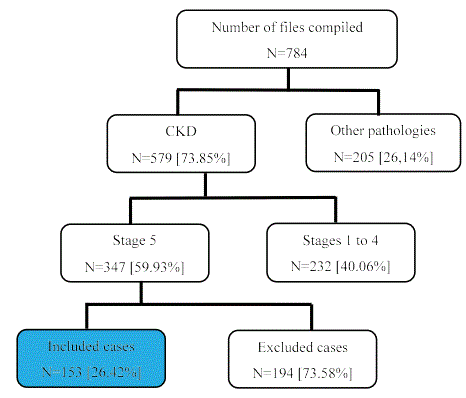
Figure 1: Patient distribution by flow chart.


Fousseny Diakite1,2* Aly Traoré1,2 Moussa Traoré1,2 Mahamat Djibrine Djibrine3 Nadine Aikou2 Aminata Diallo2 Mamadou Saliou Balde1,2 Mohamed Lamine Kaba1,2
1Gamal Abdel Nasser University, Conakry, Guinea*Corresponding author: Fousseny Diakite, Gamal Abdel Nasser University, Conakry, Guinea, Tel: +224620213469; E-mail: [email protected]
Introduction: Knowledge of the determinants of the rate of decline of renal function can be influenced by factors predictive of dialysis and are very important in delaying disease progression. The aim was to determine the prevalence of chronic end-stage renal failure at the Donka national hemodialysis center and the factors predictive of patients going on dialysis.
Patients and methods: This was a retrospective descriptive study of 4.5 years duration that included all records of patients with a GFR ≤ 15 ml/ minute regardless of etiology during the study period. Our study variables were quantitative and qualitative, divided into epidemiological, clinical, therapeutic and evolutionary data. Our data were analyzed using jamovi software.
Results: We reviewed 784 medical records and identified 579 cases of Chronic Kidney Disease (CKD) across all stages, of which 153 were at stage 5, representing 26.42%. The mean age of the patients was 42.57 ± 16.45 years. Predictive factors included, among others: diabetes, anuria, and a moderate decrease in Glomerular Filtration Rate (GFR) below 5 mL/min/1.73 m2 at the first observation.
Conclusion: Knowledge of the factors predictive of dialysis in patients with stage 5 chronic kidney disease may influence the course of the disease, hence the need to implement a follow-up strategy for these patients.
Predictive factors; Chronic kidney disease; Prevalence
According to Kidney Disease Improving Global Outcomes (KDIGO), stage 5 Chronic Kidney Disease (CKD) is defined as a Glomerular Filtration Rate (GFR) of less than 15 ml/min [1]. In this last stage of the disease, the failing kidneys are unable to perform the necessary functions. This can lead to complications such as hypertension, anemia, bone weakness and nerve damage [2,3]. Progression to stage 5 can be influenced by both modifiable and non-modifiable factors [3]. In addition to hypertension, proteinuria, hyperlipidemia and metabolic syndrome have also been recognized as important risk factors in stage 5 patients [4]. Treatments for stage 5 CKD are costly and represent an increasing burden on healthcare systems; therefore, adequate management to slow progression and factors predictive of dialysis represent a considerable challenge for developing countries. Controlling factors predictive of dialysis can reduce complications and improve patients’ quality of life [5].
Worldwide, its prevalence has risen from 10% to over 12% in two decades [6]. It is expected to be the 5th leading cause of death by 2030 [7].
In the United States: in 2019, its incidence was around 2043 per 1 million inhabitants [8].
In Australia: 2 million hospital admissions were recorded as CKD diagnoses between 2020 and 2021 (17%) of all hospital admissions [9].
Germany: in 2022, the prevalence of CKD was around 10% among adults [10].
In South Africa: by 2022, Biljon GV [3] had diagnosed 126 cases of stage 5 CKD.
The true extent of CKD in sub-Saharan Africa remains unknown due to a lack of national registries [11].
In Burkina Faso: in 2020, the incidence was 123 per 10000 inhabitants [12].
In Guinea: Kaba M [13] in 2015, 45% of patients had a glomerular filtration rate calculated by MDRD of less than 5mL/min at the Donka national hemodialysis center in conakry.
Knowledge of the determinants of the rate of decline of renal function can be influenced by factors predictive of dialysis, and are very important in delaying disease progression. To date, many studies have focused on end-stage renal disease. To examine these issues and highlight the importance of managing CKD, as well as the factors predictive of dialysis, we initiated this study. The aim of the study was to determine the prevalence of end-stage renal disease at the Donka national hemodialysis center, as well as the factors predictive of patients going on dialysis.
All records of patients hospitalized with stage 5 chronic kidney disease were used as study material.
This was a retrospective descriptive study lasting 4 and a half years, which began on January 1, 2018 and ended on June 30, 2022.
It involved all records of patients hospitalized at the hemodialysis center during the study period.
All patients hospitalized at the hemodialysis center and diagnosed with stage 5 chronic kidney disease during the study period were included.
Inclusion criteria: We included all correctly completed patient records hospitalized at the hemodialysis center with a GFR ≤ 15 ml/ minute, regardless of etiology, during the study period.
Non-inclusion criteria: We did not include all records of patients who could not be processed, chronic dialysis patients who were hospitalized and those who died before their 1st dialysis session during the study period. We carried out exhaustive recruitment of all patient records that met our inclusion criteria during the study period.
Our study variables were quantitative and qualitative, divided into epidemiological, clinical, therapeutic and evolutionary data.
Independent variable: Glomerular filtration rate: corresponds to the volume of plasma filtered by the kidney per unit time according to which patient records were classified into:
- Group 1: moderate decrease in GFR: ˂ 5 ml/min/1.73m2;
- Group 2: rapid decrease in GFR: ≥ 5 ml/min/1.73m2.
According to the GFR value, we had modalities:
- Group 1: ≤ 5 ml/min/1.73m2;
- Group 2: [6-10] ml/min/1.73m2;
- Group 3: [11-15] ml/min/1.73m2.
Dependent variables: Socio-demographic data: prevalence, age, sex and socio-professional categories. Clinical and paraclinical data to identify predictive factors.
Causal nephropathies: were retained in the absence of a renal biopsy performed before stage 5 of chronic kidney disease. We relied on clinical and para-clinical elements such as: arterial hypertension, edema, proteinuria, hypertensive retinopathy and left ventricular hypertrophy.
Vascular: Defined by moderate proteinuria, usually irregular hematuria, constant hypertension, often long-standing and with no symptoms, and small, often irregular kidneys.
Diabetic: Defined by pathological microalbuminuria, whether or not associated with a drop in Glomerular Filtration Rate (GFR), and accompanied by diabetic retinopathy
Glomerular: Defined by abundant proteinuria, microscopic or macroscopic hematuria, more or less significant fluid retention (edema) preceding arterial hypertension, and small, regular, symmetrical kidneys.
Mixed: includes two distinct nephropathies.
Tubulointerstitial: Encompassing a wide variety of pathologies, characterized by a poor nephrological syndrome with possible manifestations of tubular dysfunction, and a relatively slow evolution.
Factors predictive of dialysis in the department: These are events (qualitative or quantitative variables) that can predict the probability of GFR progression in a patient with stage 5 kidney disease, so that he/ she can undergo emergency dialysis. We encountered:
Acute Pulmonary Oedema (APO): Characterized by an abnormal accumulation of fluid in the lungs, it was selected in the presence of orthopnea, diffuse rising-tide rales, cyanosis, cold sweats, cough with frothy sputum. On chest x-ray, pleural effusion is noted.
Severe Hyperkalemia: This was an electrolyte disorder defined by an abnormal rise in blood potassium levels. Normal levels are between 3.5mmol/l and 5mmol/l of blood, while severe hyperkalemia is defined as values in excess of 7mmol/l of blood.
Uremic Coma: A major complication of the very significant increase in blood urea, it is characterized by cheyennes stock dyspnea, loss of consciousness with a Glasgow score ≤ 7/15, uremic breath on a background of end-stage chronic renal failure.
Severe Metabolic Acidosis: A frequent and early biological abnormality in chronic renal failure, it is defined by a drop in blood ph ≤ 7 associated with excessive loss of bicarbonates, with alkaline reserves below 22mmol/l.
Uremic pericarditis: A major complication of Chronic Renal Failure often overlooked because of late diagnosis and inadequate management, this condition was identified by pericardial friction on cardiac auscultation and liquid pericardial effusion on ultrasound.
Uremic Encephalopathy: Alterations to the nervous system manifested by reduced alertness, difficulty sustaining attention and concentration, and drowsiness. These cognitive disorders are linked to the accumulation of uremic toxins, which explains why they improve from the very first dialysis sessions.
Uremic Intoxication: retained in the presence of edema, asthenia, pruritus, uremic breath, vomiting, diarrhea and anorexia.
Factors predictive of dialysis: Events that increase the likelihood of patients undergoing dialysis. In order to study the relationship between the qualitative binary variable (Dialysis or not in patients) and explanatory variables that can be qualitative or quantitative found in the literature.
Our data was collected using the kobocollect application (3-month period), where it was stored in a database and then downloaded as an Excel file.
We used:
- Inpatient files;
- A survey form.
The research protocol was approved by the Chair of Medicine and the Department of Medicine. The head of the department then gave his agreement to proceed with the survey.
Our data were analyzed using jamovi software.
· For qualitative variables, we determined the proportions (prevalence) estimated in percentage (%) with calculation of ratio for sex.
· For quantitative variables, we divided them into classes (brackets), calculating the mean, standard deviation, median and then identifying the minimum and maximum.
· To assess the predictors of dialysis, whatever the cause, we used a logistic regression model with the dependent variable (dialysis patients and non-dialysis patients) and the explanatory variables (socio-demographic characteristics, history, clinic and laboratory tests), with a significant threshold set at 0.05.
Bias: To avoid certain biases, we have remained faithful to the protocol by focusing only on the target population. In any case, there could be confounding bias due to data in certain explanatory variables.
Statistical analysis: Our data were analyzed using jamovi software.
For qualitative variables, we determined the proportions (prevalence) estimated in percentage (%) with calculation of ratio for sex.
For quantitative variables, we reparted them
Data entry: The entry, processing and presentation of the results obtained were carried out using Word, Excel and PowerPoint software from the Pack Office 2013. For bibliographic management, we used Zotero software with Vancouver as our reference system.
Ethical aspects: Data were collected anonymously using an established survey form, and confidentiality was a matter of principle.
Constraints: Poor archiving and completion of records, as well as patients’ low socio-economic status, were the major constraints of our study.
Of the 579 records of patients hospitalized for chronic kidney disease, 347 patients or 59.93% were at stage 5 and among them 26.42% were included (Figure 1).
Figure 1: Patient distribution by flow chart.
This table above shows a frequency observed in patients aged 40 to 55 years (30.06%). The mean age was 42.57 ± 16.45 years with the extremes: 10 and 85 years (Table 1).
| Age range (years) | Number | % |
| [10 – 25] | 26 | 16.99 |
| [25 – 40] | 43 | 28.1 |
| [40 – 55] | 46 | 30.06 |
| [55 – 70] | 30 | 19.6 |
| [70 and over ] | 8 | 5.25 |
| Total | 153 | 100 |
Table 1: Distribution of the 153 patient files according to age.
Average age: 42.57 ± 16.45 years Extremes: 10 and 85 years
Among the presumed causes of chronic kidney disease, glomerular nephropathy accounted for 46.41%, followed by vascular nephropathy 37.25% (Table 3).
In table 2, housewives and traders were the most numerous. A careful reading of this table shows a high frequency among informal sector workers.
| Professional categories | Number | % |
| Housewives | 43 | 28.1 |
| Shopkeepers | 25 | 16.34 |
| Civil Servants | 22 | 14.38 |
| Workers | 22 | 14.38 |
| Farmers | 15 | 9.8 |
| Livestock Farmers | 2 | 1.31 |
| Retirees | 5 | 3.27 |
| Pupils/Students | 19 | 12.42 |
| Total | 153 | 100 |
Table 2: Distribution of the 153 patient files according to socioprofessional categories.
| Causal Nephropathies | Number | % |
| Vascular | 57 | 37.25 |
| Glomerular | 71 | 46.41 |
| Diabetic | 13 | 8.5 |
| Mixed | 10 | 6.54 |
| Interstitial | 2 | 1.31 |
| Total | 153 | 100 |
Table 3: Distribution of the 153 patient files according to the causal nephropathy.
The table 4 shows the prescription of antihypertensives such as Amlodipine 10 mg and Ramipril 10 mg in more than 50% of cases. The loop diuretic Furosemide was prescribed in 113 out of 153 patients. Iron in its various forms was also frequently administered.
| Treatment | Number | % |
| Antihypertensives | ||
| Amlodipine 10 mg | 107 | 69.93 |
| Ramipril 10 mg | 79 | 51.63 |
| Losartan 100 mg | 11 | 7.19 |
| Atenolol 50 mg | 9 | 5.88 |
| Furosemide 500 mg | 113 | 72.53 |
| Adjuvant Treatments | ||
| Iron tablets 200 mg | 147 | 96.08 |
| Omeprazole 40 mg | 124 | 81.05 |
| Vitamin D | 103 | 67.32 |
| Calcium 1000 mg | 90 | 58.82 |
| Erythropoietin 4000 IU | 35 | 22.88 |
| Hemodialysis | 28 | 18.3 |
| All classes of antibiotics | 19 | 12.42 |
| Isosorbide dinitrate 20 mg | 10 | 6.54 |
| Blood transfusion | 6 | 16.34 |
| Antiplatelet agent | 1 | 0.65 |
Table 4: Distribution of the 153 patient files according to treatment.
This table 5 gives analytical results according to which the main predictive factors for patients to be put on dialysis were: sex; marital status; diabetes; taking non-steroidal anti-inflammatory drugs.
| Dialysis patients | No-dialysis patients | OR | RR | p-value | |||
| Facteurs | associés | n (%) | n | Total | |||
| Sex | |||||||
| Male | 7 (8.86) | 72 (91.14) | 79 | 0.24 | 0.31 | 0.001 | |
| Female | 16 (21.62) | 58 (78.38) | 74 | 1,.4 | 1.42 | 0.157 | |
| Marital Status | |||||||
| Married | 12 (11.32) | 94 (88.68) | 106 | 0.24 | 0.33 | 0.001 | |
| Origin | |||||||
| Conakry | 8 (7.14) | 104 (92.86) | 112 | 0.08 | 0.14 | 0.000 | |
| Hors Conakry | 15 (365.9) | 26 (63.41) | 41 | 4.39 | 3.15 | 0.007 | |
| Comorbidities | |||||||
| Diabètes | 21 (70) | 9 (30) | 30 | 36.66 | 12.30 | 0.001 | |
| History | |||||||
| Nonsteroidal anti-inflammatory drug use | 10 (27.03) | 27 (72.97) | 37 | 2.01 | 1.74 | 0.093 | |
| Etat général | |||||||
| Mauvais | 14 (10.45) | 120 (89.55) | 134 | 0.04 | 0.14 | 0.001 | |
| Altéré | 8 (73.73) | 3 (27.27) | 11 | 16.26 | 5.16 | 0.0002 | |
| Bon | 6 (75) | 2 (25) | 8 | 16.77 | 4.94 | 0.102 | |
| Diuresis | |||||||
| Upper 300ml/24h | 16 (16.33) | 82 (83.67) | 98 | 2.66 | 2.39 | 0.019 | |
| low 300ml/24h | 9 (81.82) | 2 (18.18) | 11 | 29.13 | 6.11 | 0.161 | |
| Anurie | 3 (37.50) | 5 (62.50) | 8 | 2.88 | 2.17 | 0.001 | |
| Calcemia(mmol/l) | |||||||
| Hypocalcemia | 15 (15) | 85 (85) | 100 | 0.54 | 0.61 | 0.333 | |
| Normal | 2 (4) | 48 (96) | 50 | 0.12 | 0.15 | 0.200 | |
| Hypercalcemia | 1 (50) | 1 (50) | 2 | 4.59 | 2.76 | 0.079 | |
| Bicarbonates | |||||||
| Acidose | 2 (40) | 3 (60) | 5 | 3.12 | 2.27 | 0.026 | |
| 1irs observation | |||||||
| GFR | |||||||
| Group 1 | 17 (19.32) | 71 (80.68) | 88 | 1.17 | 1.14 | 0.123 | |
| Group 2 | 11 (16.92) | 54 (83.08) | 65 | 0.85 | 0.87 | 0.043 | |
| Kaliémie | |||||||
| Hyperkaliemia | 21 (20.79) | 80 (79.21) | 107 | 1.68 | 1.54 | 0.087 | |
| Bicarbonates | |||||||
| Acidosis | 25 (38.46) | 40 (61.54) | 65 | 17.70 | 11.28 | 0.002 | |
Table 5: Distribution of the 153 patient files monitored for stage 5 CKD at the Donka National Hemodialysis Center in Conakry from January 1, 2018 - June 30, 2022 according to predictive factors for dialysis.
We conducted our survey at the Donka National Hemodialysis Center in Conakry to describe the predictive factors for dialysis in patients with end-stage chronic renal failure. In this study, poor archiving and filling of records as well as the low socioeconomic level of patients were the major constraints. However, the frequency, clinical and therapeutic profile and predictive factors for dialysis of patients were known. The severity of progression of chronic renal failure to dialysis depends on the glomerular filtration rate and proteinuria. Currently, there is no model with high accuracy and high explanatory power that could predict the risk of progression to dialysis in terminally ill patients.
Throughout this study, we reviewed 784 medical records and identified 579 cases of chronic kidney disease across all stages, of which 153 were at stage 5, representing 26.42% (Figure 1). A previous Guinean study by Kaba ML [13] in 2015 reported a frequency of 45% in patients with a glomerular filtration rate calculated by MDRD less than 5 ml/min at the Donka hemodialysis center. The progression of chronic kidney disease represents one of the health concerns both nationally and internationally. To be effective in practice, the strategy to combat the progression of CKD calls for prevention and optimal management of diabetes, hypertension and urinary tract infection. Patients must be well monitored clinically and biologically.
The average age of the patients was 42.57 ± 16.45 years (Table 1). The age group most affected was 40 to 55 years. This is the age group of the most active population which is more exposed to certain factors or lifestyle such as the use of alcohol; tobacco; indigenous products; the consumption of NSAIDs as well as medicinal plants which could promote the progression and occurrence of this disease. Rajaa M [14] in Morocco in 2019 in the Nephrology-Transplantation and Hemodialysis department reported that half of these patients were adults or 54.54%.
Male predominance was noted in the study with a sex ratio equal to 1.05 (Figure 2). This male predominance could be explained on the one hand by the socioeconomic contexts of the country where men have more financial means and on the other hand the progression of chronic kidney disease is faster in men than in women. We encountered a study of non-similarity in the Taiwanese literature carried out by Kao AY [15] in 2022 who noted a female domination within his sample, i.e. 60.4%.
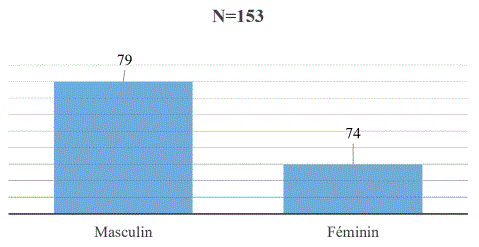
Figure 2: Distribution of the 153 patient records by gender Males accounted for 51.7%.
The most affected socio-professional group was that of housewives and traders (Table 2). In fact, these two groups would neglect the place of sport in their daily well-being.
Ahoui S [16] in 2021 in Benin found that his patients were civil servants, representing a majority of 16.39%.
The major etiologies of nephropathy were vascular and glomerular (Table 3).
This result reflects that hypertension was present (medical history) in all of our patients and was a diagnostic element for vascular nephropathy. A multicenter study by Anteneh H [17] in Ethiopia in 2020 mentioned that hypertension was the most common cause of vascular nephropathy in these patients, i.e., 48%.
In this series, patients received treatment with antihypertensive, antianemic, and dialysis (Table 4). A Cameroonian cross-sectional study conducted by Ba H [18] in 2023 revealed that antihypertensive and corticosteroid drugs were the most frequently used medications at the Garoua Regional Hospital in 87.5 and 45.8%, respectively.
The predictive factors for dialysis determined were (Table 5): gender, comorbidity, namely diabetes, anuria; poor or impaired general health; as well as metabolic acidosis and a moderate decrease in glomerular filtration rate (GFR less than 5 ml/min /1.73m) from the first observation. Van Biljon G [3] in South Africa in 2023 reported that gender (female); anemia; hypertension, and acidosis were the factors associated with dialysis.
Knowledge of predictive factors for dialysis in patients with stage 5 chronic kidney disease can influence the course of the disease. The results showed a high incidence of end-stage chronic kidney disease. The majority of patients were adults. The predictive factors for dialysis identified were GN, VN and Diabetes, followed by anuria; poor general health, acidosis and a moderate decrease in glomerular filtration rate at the first observation. To be effective against the progression of CKD in practice, a patient follow-up strategy should be implemented.
Our sincere thanks to: Moulaye Sangaré, Alpha Oumar Bah, and all the staff of the Nephrology-Hemodialysis Department at Donka National Hospital.
All authors have read and approved the submission of the article to a scientific medical journal.
We have no conflicts of interest related to this work.
Download Provisional PDF Here
Article Type: RESEARCH ARTICLE
Citation: Diakite F, Traor A, Traoré M, Djibrine MD, Aikou N, et al. (2026) Prevalence of Stage 5 Chronic Kidney Disease and Predictive Factors for Putting Patients on Dialysis in a Sub-Saharan African Country. Int J Nephrol Kidney Fail 12(3): dx.doi.org/10.16966/2380-5498.271
Copyright: © 2026 Diakite F, et al. This is an open-access article distributed under the terms of the Creative Commons Attribution License, which permits unrestricted use, distribution, and reproduction in any medium, provided the original author and source are credited.
Publication history:
All Sci Forschen Journals are Open Access