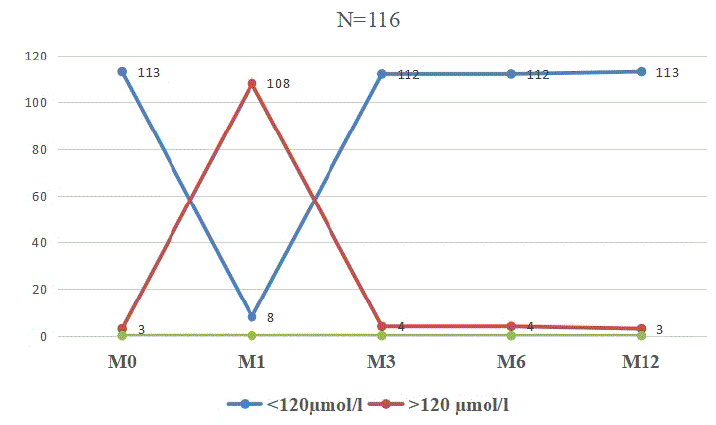
Figure 1: Change in serum creatinine levels over time.


Fousseny Diakite1,2* Ousmane Camara1,3 Namandian Traore1,4
1Faculty of Health Sciences and Technology, Gamal Abdel Nasser University, Conakry, Guinea*Corresponding author: Fousseny Diakite, Faculty of Health Sciences and Technology, Gamal Abdel Nasser University, Conakry, Guinea, Tel: 00224620213469; E-mail: [email protected]
Introduction: The current use of new emerging drugs exposes consumers to risks of acute intoxication, which can sometimes cause kidney damage. The aim of our study was to describe the epidemiological and evolutionary aspects of acute and chronic renal failure observed during acute intoxication related to drug use in Conakry.
Methods: This was a descriptive, multicenter, longitudinal study conducted from January 1 to December 31, 2024. All patients admitted for acute intoxication attributable to narcotics, regardless of dose and mode of admission, and who had a creatinine level greater than or equal to 120 µmol/L during follow-up were included. The parameters studied were epidemiological, clinical, paraclinical, and evolutionary.
Results: Of 125 cases of acute drug poisoning, 116 cases of renal failure were identified, representing a frequency of 92.8%. The subjects were predominantly young people under the age of 40. Fishermen and patients with a secondary school education were the most represented. In addition to neurological and respiratory signs, oliguria was found in 87.06% of patients. Kush users presented with acute renal failure, and those using Chicha progressed to stage 5 chronic kidney disease.
Conclusion: The kidney damage observed in users of the emerging drugs Kush and shisha is a major public health issue in Conakry. Urgent preventive, regulatory, and community awareness measures are needed to limit the scale of this phenomenon.
Kidney damage; Kush drugs; Shisha; Conakry
FR: Full Recovery; PR: Partial Recovery; CKF: Chronic Kidney Failure; PAS: Psychoactive Substance
The use of psychoactive substances is a major public health issue [1]. The abuse of Psychoactive Substances (PAS) has diversified in recent years, both in terms of the populations involved and the products consumed. While addiction and psychiatric disorders linked to the use of these substances are generally well known, somatic complications, particularly urological and nephrological ones, are less so. [2]. The use of these substances has been part of human history since ancient times, initially for therapeutic, ritual, or recreational purposes, before gradually becoming associated with addiction, social marginalization, and organized crime [3]. From the 19th century onwards, the intensification of international trade, advances in transportation, and rapid urbanization have facilitated the transcontinental spread of drugs, transforming localized cultural practices into a global public health phenomenon [4]. This globalization of psychoactive substances has been accompanied by a diversification of the products consumed, including synthetic drugs, adulterated substances, and mixtures with often unknown compositions, thereby increasing the risk of serious and unpredictable acute intoxication [5,6]. Acute intoxication is now a frequent reason for admission to emergency and intensive care units, constituting a significant cause of avoidable morbidity and mortality [7]. Most users are poly-drug users and also consume alcohol, tobacco, cannabis, and/or benzodiazepines. Consequently, it is not always easy to attribute medical complications solely to PAS [8]. Acute Renal Failure (ARF) and Chronic Kidney Disease (CKD) are also significant complications of PAS use. The causes of kidney disease in this population are multiple and cumulative. They include direct nephrotoxicity (acute or chronic) from heroin and cocaine, glomerulonephritis associated with substance use, and nephropathies linked to bacterial or viral infections [9].
Their management is based on a structured clinical approach, founded on the rapid identification of toxidromes, the assessment of vital functions, and the performance of a minimum paraclinical evaluation, including an electrocardiogram, which is essential for detecting conduction or repolarization disorders induced by certain substances [7,10]. In resource-limited settings, this syndromic approach is often the only diagnostic option available in the absence of specialized toxicological analyses [11]. Globally, an estimated 230 million people have used an illicit drug at least once in their lifetime, with nearly 200,000 deaths annually attributable mainly to so-called “hard” drugs such as opioids, amphetamines, and cocaine [12]. These figures, which are constantly rising, reflect the scale of a phenomenon that goes far beyond the health sector and has major social, economic, and security implications [13]. In sub-Saharan Africa, the drug problem is evolving in a worrying way, marked by an increase in consumption among adolescents and young adults, a population that is particularly vulnerable due to unemployment, social insecurity, and uncontrolled urbanization [14,15]. Several studies highlight an increase in poisonings linked to local or artisanal substances, often poorly documented, whose toxic effects can be severe or even lethal [16]. In Guinea, since 2022, a new drug known as KUSH has been responsible for a growing number of severe acute poisonings, frequently observed in emergency departments in Conakry. This substance, mainly consumed by inhalation, is believed to be composed of a heterogeneous mixture of synthetic cannabinoids, toxic additives, and sometimes diverted pharmaceutical products, making its toxicological profile particularly unpredictable [17,18]. In Guinea, since 2022, new drugs known as KUSH and Chicha have been responsible for a growing number of severe acute drug poisonings, which are frequently seen in emergency departments in Conakry. We therefore considered it appropriate to conduct this study with the aim of documenting the epidemiological and evolutionary aspects of acute and chronic renal failure observed during acute poisoning related to drug use in Conakry.
Our study was a descriptive longitudinal study conducted over a period of twelve (12) months, from January 1 to December 31, 2024.
The study was conducted in the emergency department of the Ignace Deen University Hospital, the forensic medicine department of the Conakry Regional Hospital, and the outpatient follow-up department of the Donka National Hemodialysis Center.
The study population consisted of all patients admitted to the emergency department for acute poisoning following the consumption of kush and shisha narcotics during the study period.
All patients admitted to the emergency department for acute intoxication attributed to drug use who agreed to participate in the study were included. All patients who had a serum creatinine level ≥ 120 µmol/L within 48 hours of admission or during the follow-up period.
Patients who refused to participate in the study and those who did not have elevated serum creatinine levels after three monthly checks were excluded.
Recruitment was exhaustive, including patients admitted for acute intoxication due to psychoactive substance use.
The variables analyzed were qualitative and quantitative, divided into epidemiological data (age, gender, occupation, marital status, level of education); clinical (reasons for admission, previous use of psychoactive substances and their nature, medical history and complete physical examination, urine test strip) and paraclinical (complete blood count, blood urea, creatinine, calcium, and renal ultrasound).
Acute intoxication: administration of a psychoactive substance, regardless of the dose and method of use, followed immediately or within 24 hours by the appearance of functional signs.
Renal impairment: we included all patients who presented with impaired renal function either within 48 hours and/or during nephrological follow-up.
Included when serum creatinine was ≥ 120µmol/l either 48 hours after admission or during follow-up. Renal function should be normal during follow-up, with no anemia or hypocalcemia, and kidneys of normal size with no signs of chronicity.
Any patient whose renal function did not normalize during followup and who, at the last check-up, showed signs of chronicity in laboratory tests and ultrasound.
This was defined as normalization of renal function during followup.
During follow-up, recovery was not complete or sometimes progressed to the dialysis stage.
Patients were admitted to the emergency department and forensic medicine department for emergency care. After obtaining consent from either the patient or their legal guardian, a form was completed for follow-up. Paraclinical tests were performed within 48 hours of admission. Any patient with a creatinine level ≥ 120 micromoles/ liter or two subsequent checks underwent a renal ultrasound to assess size. Patients with impaired renal function were referred to the Donka National Hemodialysis Center for nephrological follow-up.
Data were collected from patients’ medical records, then entered and analyzed using Epi Info™ software, version 7.1.3.3. The analysis was primarily descriptive. Results were expressed as frequencies and percentages, and presented using tables and figures where necessary.
The study was conducted in accordance with the ethical principles of biomedical research. Informed consent was obtained from each patient or their legal guardian prior to inclusion. The anonymity of the participants and the confidentiality of the information collected were strictly maintained throughout the data collection and analysis process.
Among patients admitted for acute poisoning, 92.8% exhibited kidney damage; men accounted for the largest proportion at 82.7%, and patients under 40 years of age made up 97% of the total (Table 1).
| Variables | Number | % |
| Frequency | ||
| Patients included | 116 | 92.8 |
| Patients not included | 9 | 7.2 |
| Gender | ||
| Male | 96 | 82.7 |
| Female | 20 | 17.3 |
| Age (years) | ||
| <20 | 11 | 10 |
| 20-29 | 70 | 60 |
| 30-39 | 31 | 27 |
| ≥ 40 | 4 | 3 |
| Socio-professional categories | ||
| Fishermen | 50 | 43 |
| Unemployed | 23 | 20 |
| Laborers | 21 | 18 |
| Pupils/students | 16 | 14 |
| Security guards | 6 | 5 |
| Level of education | ||
| Primary | 7 | 6 |
| Secondary | 73 | 63 |
| University | 19 | 16 |
| None | 17 | 15 |
Table 1: Distribution of patients according to socio-demographic characteristics.
The most common reasons for admission were: oliguria (87.06%), a sensation of the tongue falling (62.06%), and hypersalivation (52.58%). More than 78% had not previously used drugs (Table 2).
| Variables | Number | % |
| Reasons for admission | ||
| Vomiting | 26 | 22.41 |
| Loss of consciousness | 21 | 18.1 |
| Seizure | 8 | 6.89 |
| Psychomotor agitation | 54 | 46.55 |
| Feeling of tongue falling back | 72 | 62.06 |
| Exertional dyspnea | 41 | 35.34 |
| Hypersalivation | 61 | 52.58 |
| Epigastric pain | 19 | 16.37 |
| Headache | 25 | 21.25 |
| Physical asthenia | 8 | 6.89 |
| Dizziness | 32 | 27.58 |
| Oliguria | 101 | 87.06 |
| Previous drug use | ||
| Yes | 25 | 21.55 |
| No | 91 | 78.45 |
| Medical history | ||
| High blood pressure | 9 | 7.7 |
| Diabetes | 1 | 0.86 |
| Herbal medicine | 11 | 9.48 |
| Urinalysis strip | ||
| Normal proteinuria | 113 | 97.4 |
| Trace proteinuria | 3 | 2.6 |
Table 2: Distribution of patients according to general characteristics.
At baseline, 113 of 116 patients had normal renal function. After 1 month of follow-up, 108 of 116 patients had serum creatinine levels above 120 µmol/L (Figure 1). Three months later, 4 of 116 patients continued to have elevated serum creatinine levels, which persisted through the 12th month. According to the recovery curve, 112 out of 116 patients made a full recovery, while 4 developed chronic conditions. Depending on the psychoactive substance used, all patients who used the narcotic kush made a full recovery, while chronic kidney disease and one death were observed among patients who used shisha (Figure 2).
Figure 1: Change in serum creatinine levels over time.
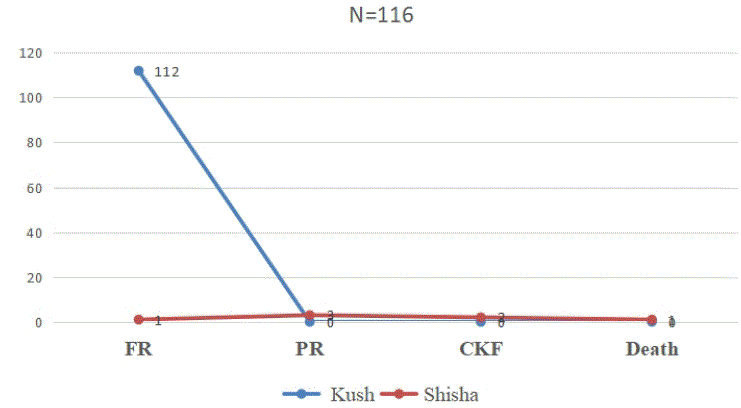
Figure 2: Evolution according to the type of narcotic consumed.
In a country with limited resources, where blood testing for toxic substances and renal biopsy are not possible (technical bias) and questioning based on users’ statements (strategic bias) pose a challenge in data analysis, we were nevertheless able to collect and analyze data during the study period.
During the period, out of 125 cases of acute intoxication with psychoactive substances, 116 patients had impaired renal function during follow-up, i.e., 92.8%. This proportion is comparable to hospital data on emerging drugs, where prevalence remains low but is associated with high morbidity [5,16]. According to Euro-DEN Plus – European Network of Drug-Related Emergencies, cocaine is the second most common substance, after cannabis, and heroin the third most common substance responsible for emergency room visits for acute drug toxicity (21% and 18%, respectively). The incidence of ARF is not mentioned [20].
A clear male predominance was observed (82.7%), with the majority of patients under the age of 40 (97%). This distribution is consistent with international data reporting an overrepresentation of males in acute intoxications related to psychoactive substances [5,19]. In terms of age, our results are consistent with data identifying young adults as the main group at risk of acute intoxication [5,16]. Similar age profiles are reported for emerging drugs, particularly synthetic cannabinoids [6]. The average age of first use for these substances is around 23 years [20].
This vulnerability is also described in sub-Saharan Africa [18]. Fishermen accounted for 43%, and pupils and students for 14%. More than 63% of consumers had only completed secondary education. The unemployed (33.93%) and those without employment (25.0%) were the most represented groups. Some studies report an overrepresentation of populations with low socioeconomic status in cases of poisoning related to psychoactive substances [5,16]. Studies report a high frequency of poisoning among subjects with intermediate levels of education [5,16,19]. In a country with a low socioeconomic level, young people without income are attracted by their peers to consume these PAS. The state will have to create jobs for young people and strengthen surveillance of the importation of psychoactive substances. The main reasons for admission were neurological and respiratory symptoms and abnormalities in urine output, such as oliguria (87.06%). This profile is consistent with a central toxidrome frequently described in cases of poisoning with emerging drugs [6,14]. Consumers of cannabis or synthetic cannabinoids present with a syndrome that generally manifests as vomiting and abdominal pain, which is usually relieved by taking hot showers. Diaphoresis and diarrhea may also occur and contribute to increased fluid loss [21,22]. These data highlight a variability in signs that could be related to the type of PAS and/or the dose administered. Toxicological tests, if performed, could establish the diagnosis, and a renal biopsy could specify the type of lesion. Of the 116 patients who presented with impaired renal function, 78% were first-time users, meaning they had not previously consumed any psychoactive substances. Indeed, some studies report that nearly 49% of users report consuming almost daily, and in 38% of cases, intravenously. Daily cocaine use is less common (25%), with only 3% using intravenous drugs [20].
Only 3% had trace proteinuria on urine dipstick testing, compared with 97% who were normal. In our study, limited resources prevented us from determining the type of nephropathy. However, other authors have described glomerular nephropathies associated with intravenous drug use [23]. During the period, 112 (96.5%) patients reported being Kush users and 4 (3.5%) reported being Shisha users. However, according to some authors, Acute Renal Failure (ARF) and Chronic Kidney Disease (CKD) are also significant complications of drug use [23].
Follow-up of patients showed that 113 (97.4%) patients initially had creatinine levels below 120 µmol/L, while during the first month, 108 (93.1%) had creatinine levels above 120 µmol/L. Between the first month and the end of the sixth month, four patients progressed to end-stage chronic kidney disease. According to the progression curve based on the psychoactive substance consumed, patients who used the narcotic kush all recovered completely, while chronic kidney disease and death were observed in patients who used hookah.
Acute drug poisoning is a major public health issue in Conakry, where resources are limited. It mainly affects patients under the age of 40, a population particularly prone to risky behavior. The use of psychoactive substances such as kush and shisha should be considered a risk factor for developing acute renal failure and/or chronic kidney disease. Screening for chronic kidney disease through blood and urine tests in this category of patients is useful. Optimal patient care requires excellent collaboration between primary care physicians, nephrologists, infectious disease specialists, and other specialists. Further studies including toxicological tests to determine the direct toxicity of narcotics and renal biopsy would provide more clear information on this subject.
The authors declare that they have no conflicts of interest related to this work.
All authors read and made corrections prior to submission.
Download Provisional PDF Here
Article Type: RESEARCH ARTICLE
Citation: Diakite F, Camara O, Traore N (2026) Kidney Damage Observed in Users of New Emerging Psychoactive Substances in a Resource-Limited Country. Int J Nephrol Kidney Fail 12(2): dx.doi.org/10.16966/2380-5498.267
Copyright: © 2026 Diakite F, et al. This is an open-access article distributed under the terms of the Creative Commons Attribution License, which permits unrestricted use, distribution, and reproduction in any medium, provided the original author and source are credited.
Publication history:
All Sci Forschen Journals are Open Access