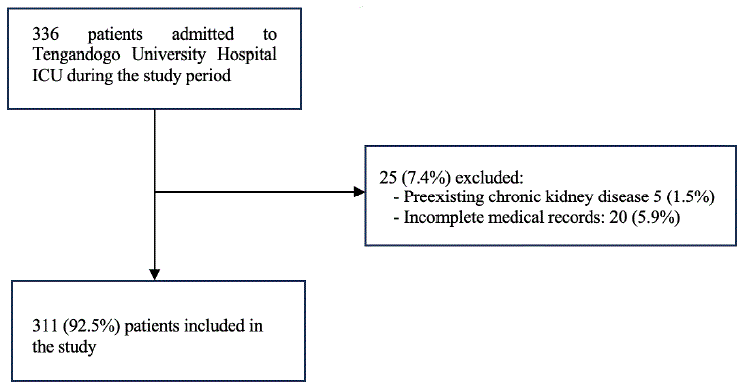
Figure 1: Flow diagram of patients included in the study.


Lengani Habin Yabama Aïda1,2* Balde Mamadou Saliou3,4 Kissou Pegdebamba François1,2 Ouedraogo Mitibmanegda Talato2 Zigani Stéphane5 Yanogo Moussa2 Diallo Fatimata1,2 Kabore R Armel Flavien1,5 Coulibaly Gérard1,6
1Joseph KI-ZERBO University, Ouagadougou, Burkina Faso*Corresponding author: Lengani Habin Yabama Aïda, Tengandogo University Hospital, Ouagadougou, Burkina Faso, E-mail: aidalengani@ yahoo.fr
Background: Acute Kidney Injury (AKI) is a common and serious complication in Intensive Care Units (ICUs), with particularly high mortality rates in low-income countries. Data on AKI in ICUs are scarce in Burkina Faso.
Objective: To determine the prevalence, associated factors and impact on in-hospital mortality of AKI in the ICU of Tengandogo University Hospital in Burkina Faso.
Methods: We conducted a retrospective study from January 1, 2019, to May 31, 2022, in the general ICU of Tengandogo University Hospital, including all adults without pre-existing Chronic Kidney Disease (CKD). AKI was defined according to the Kidney Disease: Improving Global Outcomes (KDIGO) criteria. Multivariate logistic regression analysis was used to identify factors independently associated with AKI and mortality.
Results: Of the 311 patients included in the study (median age: 46 years [interquartile range (IQR): 32-61]), AKI occurred in 202 (64.9%). AKI was present on admission in 75.2% of cases and was severe, stage 3 in 49.5%. Factors independently associated with AKI were age ≥ 50 years (p=0.046; OR: 1.7 [95% CI: 1-2.9]) and mechanical ventilation (p=0.001; OR: 2.6 [95% CI: 1.5-4.5]).
Overall in-hospital mortality was 90%, rising to 95.5% in the AKI subgroup. More than half of patients who survived the ICU subsequently died on general wards. Independent predictors of in-hospital mortality were arterial hypertension (p=0.045; OR: 8.9 [95% CI: 1-76.6]), sepsis (p=0.029; OR: 3.5 [95% CI: 1.1-10.7]), and AKI (p=0.001; OR: 4.4 [95% CI: 1.8-10.7]).
Conclusion: AKI is highly prevalent, often severe and independently associated with high in-hospital mortality. The significant difference in mortality rates between the ICU and wards highlights the need for intermediate care facilities to improve survival rates in settings with limited resources.
Acute Kidney Injury; Intensive Care Unit; Mortality; Burkina Faso; West-Africa
The incidence of Acute Kidney Injury (AKI) is increasing worldwide [1]. However, the burden of this disease is heavier in low- and middleincome countries, where mortality rates remain high [1]. AKI affects one in five hospitalized patients and 30 to 60% of patients in intensive care unit (ICUs) [1-3]. The majority of patients in ICUs present with a complex interplay of multiple risk factors, comorbidities, and diagnostic or therapeutic interventions that contribute to the onset of AKI. Several, sometimes intertwined, mechanisms-including systemic or intrarenal hemodynamic alterations, intrinsic renal injury, inflammation, and the action of nephrotoxic substanceslead to a decrease in glomerular filtration rate [3]. AKI has a major prognostic impact in the Intensive Care Unit (ICU). It is associated with increased morbidity and mortality and also influences the longterm prognosis of patients [3]. Thus, the risk of mortality is five times higher in ICU patients with AKI [4]. The mortality rate for AKI in the ICU was 30.8% in high-income countries and 54.8% in low- and middle-income countries [5]. In some sub-Saharan African studies, this rate approached 80% [6,7]. This excess mortality is explained by several factors: a critical lack of infrastructure, equipment, and personnel to manage critically ill patients; difficulties in accessing care; and delayed presentation to healthcare facilities [2,7,8]. In subSaharan Africa, there are approximately 0.3 ICU beds per 100,000 inhabitants, compared to 20 to 32 beds per 100,000 inhabitants in other regions of the world [7]. Given the paucity of data on AKI in ICUs in Burkina Faso, this study aimed to determine its prevalence, associated factors and impact on in-hospital mortality at Tengandogo University Hospital.
We conducted a retrospective study covering the period from January 1, 2019, to May 31, 2022 (41 months) in the mixed medicalsurgical ICU of Tengandogo University Hospital, Ouagadougou, Burkina Faso.
This 12-bed unit admits patients from the emergency department, inpatient wards, and operating rooms, as well as referrals from other healthcare facilities. Patients undergoing scheduled surgery are transferred to the ICU immediately after bed reservation.
In most cases, treatment costs are borne by patients, as few have health insurance or mutual coverage. Consequently, ICU transfers are frequently delayed due to bed shortages and limited financial resources, resulting in delayed management.
The ICU lacks on-site hemodialysis, requiring patient transfers to the nephrology unit. Following ICU discharge, patients are transferred to general wards, as the hospital has no high-dependency unit.
We included all patients aged 18 years or older admitted to the ICU during the study period. Patients with pre-existing chronic kidney disease and those with incomplete medical records were excluded.
Data were collected from the ICU patient registry, clinical files, and treatment charts using a specifically designed survey form. We recorded:
- Sociodemographic variables: age, sex;
- Clinical data: comorbidities (arterial hypertension, diabetes mellitus, chronic obstructive lung disease, chronic heart disease, chronic liver disease, sickle cell disease, HIV infection, malignancy), referring discipline (medical or surgical), primary reason for admission to the ICU;
- Laboratory parameters: hemoglobin, urea, creatinine, sodium, potassium, chloride, calcium, phosphate, magnesium, bicarbonates;
- Therapeutic interventions: renin-angiotensin-aldosterone system blockers, diuretics, non-steroidal anti-inflammatory drugs, nephrotoxic antibiotic therapy, mechanical ventilation, vasopressor use, hemodialysis;
- Outcomes: ICU mortality, in-hospital mortality.
AKI was defined and staged according to the Kidney Disease: Improving Global Outcomes (KDIGO) [9] criteria: an increase in serum creatinine by ≥ 26.5 μmol/L ( ≥ 0.3 mg/dL) within 48 hours, or an increase in serum creatinine to ≥ 1.5 times the baseline value within the prior seven days, or a urine output of <0.5 mL/kg/hour for six hours.
For patients with unknown baseline creatinine level, it was estimated by back-calculation using the simplified Modification of Diet in Renal Disease (MDRD) formula, assuming a reference glomerular filtration rate of 75 mL/min/1.73 m2 [9,10] . AKI was classified into three stages of increasing severity:
- Stage 1: Serum creatinine increase ≥ 0.3 mg/dL ( ≥ 26.5 μmol/L) or increase to 1.5- to 1.9-fold from baseline, and/or urine output <0.5 mL/kg/h for 6-12 hours.
- Stage 2: Serum creatinine increase 2- to 2.9-fold from baseline, and/or urine output <0.5 mL/kg/h for ≥ 12 hours.
- Stage 3: Serum creatinine increase >3-fold from baseline, or serum creatinine ≥ 4.0 mg/dL ( ≥ 354 μmol/L), or initiation of renal replacement therapy, and/or urine output <0.3 mL/kg/h for 24 hours or anuria for ≥ 12 hours [9].
Organ failures were defined using the criteria established by Fagon, et al. [11].
Statistical analyses were performed using SPSS software, version 21. Categorical variables were expressed as counts and percentages. The normality of continuous variables was assessed using Q-Q plots and the Shapiro-Wilk test. Continuous variables were expressed as mean ± standard deviation or median (Interquartile Range [IQR]) based on distribution. Patients were divided into two subgroups: those with and without AKI, and subsequently into survivors and non-survivors. The Chi-square and Fisher’s exact tests were used to compare categorical variables, with the latter applied when expected cell counts were less than five. Student’s t-test and the Mann-Whitney U test were used to compare normally and non-normally distributed continuous variables, respectively. Variables with a p-value <0.1 were included in logistic regression models to identify factors independently associated with AKI and with in-hospital mortality. A p-value <0.05 was considered statistically significant.
During the study period, 336 patients records were reviewed; 25 (7.4%) were excluded (Figure 1).
Figure 1: Flow diagram of patients included in the study.
A total of 311 patients were included. The median age was 46 years (32-61), with 167 patients (53.7%) aged <50. Males comprised 171 patients (55%). The most frequent comorbidities were hypertension (24.7%) and diabetes mellitus (13.2%) (Table 1). The main reasons for ICU admission were sepsis (43.1%), postoperative care (14.1%), and obstetric complications (9.9%) (Table 1). Medical admissions accounted for 53.7% of cases.
| Parameters | All patients | AKI | p-value | ||
| (N=311) | Yes (202) | No (109) | |||
| Age (years), median (IQR) | 46 (32-61) | 50.5 (34-64) | 41 (28-57) | 0.002 | |
| Age (years) | |||||
| <50 | 167 (53.7) | 96 (47.5) | 71 (65.1) | ||
| ≥ 50 | 144 (46.3) | 106 (52.5) | 38 (34.9) | 0.002 | |
| Gender | |||||
| Male | 171 (55) | 111 (55) | 60 (55) | 0.98 | |
| Female | 140 (45) | 91 (45) | 49 (45) | ||
| Comorbid conditions | |||||
| Hypertension | 77 (24.7) | 54 (26.7) | 23 (21.1) | 0.272 | |
| Diabetes mellitus | 41 (13.2) | 32 (15.8) | 9 (8.3) | 0.059 | |
| Chronic heart disease | 13 (4.2) | 10 (4.9) | 3 (2.7) | 0.272 | |
| Malignancy | 13 (4.2) | 7 (3.5) | 6 (5.5) | 0.391 | |
| Chronic liver disease | 12 (3.8) | 9 (4.5) | 3 (2.7) | 0.342 | |
| Chronic obstructive lung disease | 11 (3.5) | 7 (3.5) | 4 (3.7) | 0.669 | |
| HIV | 6 (1.9) | 4 (2) | 2 (1.8) | 0.718 | |
| Sickle cell disease | 5 (1.6) | 3 (1.5) | 2 (1.8) | 0.574 | |
| Referring discipline | |||||
| Medical | 167 (53.7) | 121 (59.9) | 46 (42.2) | 0.002 | |
| Surgical | 144 (46.3) | 81 (40.1) | 63 (57.8) | ||
| Primary reason for admittance to the ICU | |||||
| Sepsis | 134 (43.1) | 99 (49) | 35 (32.1) | 0.004 | |
| Covid-19 | 44 (14.1) | 32 (15.8) | 12 (11) | 0.243 | |
| Obstetrical | 31 (9.9) | 21 (10.4) | 10 (9.2) | 0.731 | |
| Post-operative | 44 (14.1) | 29 (14.3) | 15 (13.8) | 0.886 | |
| Trauma | 27 (8.7) | 11 (5.4) | 16 (14.7) | 0.006 | |
| Burn | 17 (5.5) | 6 (3) | 11 (10.1) | 0.008 | |
| Neurologic | 28 (9) | 16 (7.9) | 12 (11) | 0.364 | |
| Cardiovascular | 17 (5.5) | 12 (5.9) | 5 (4.6) | 0.616 | |
| Respiratory | 7 (2.2) | 6 (3) | 1 (0.9) | 0.428 | |
| Shock at admission | 78 (25.1) | 53 (26.2) | 25 (22.9) | 0.41 | |
| Radiocontrast use | 29 (9.3) | 17 (8.4) | 12 (11) | 0.453 | |
| Treatment | |||||
| Nephrotoxic drug utilization | |||||
| RAAS Blockers | 5 (1.6) | 2 (1) | 3 (2.7) | 0.234 | |
| Loop diuretics | 26 (8.3) | 17 (8.4) | 9 (8.3) | 0.961 | |
| NSAIDs | 3 (0.9) | 1 (0.5) | 2 (1.8) | 0.958 | |
| Nephrotoxic antibiotics | 122 (39.2) | 89 (44) | 33 (30.3) | 0.018 | |
| Chemotherapy | 2 (0.6) | 1 (0.5) | 1 (0.9) | >0.999 | |
| Mechanical ventilation | 224 (72) | 161 (79.7) | 63 (57.8) | <0.001 | |
| Vasopressor use | 179 (57.6) | 129 (63.8) | 50 (45.9) | 0.002 | |
| Hemodialysis | 28 (9) | 28 (13.8) | 0 (0) | - | |
| Outcomes | |||||
| Length of ICU stay (days), median (IQR) | 4 (1-9) | 5 (1-10) | 3 (1-7) | 0.138 | |
| ICU mortality | 238 (76.5) | 159 (78.7) | 79 (72.5) | 0.216 | |
| In-hospital mortality | 280 (90) | 193 (95.5) | 87 (79.8) | <0.001 |
Table 1: Flow diagram of patients included in the study
AKI: acute kidney injury; HIV: Human Immunodeficiency Virus; ICU: Intensive Care Unit; IQR: Interquartile Range; NSAIDs: Non-Steroïdal AntiInflammatory Drugs; RAAS: Renin-Angiotensin-Aldosterone System
During hospitalisation in ICU, nephrotoxic antibiotics were administered to 122 (39.2%) patients. Mechanical ventilation and vasopressors were required in 224 (72%) and 179 (57.6%) patients, respectively. Hemodialysis was performed in 28 patients (9%). The median hospital length of stay was 4 days (1-9 days) (Table 1).
Median blood urea and serum creatinine levels were 8.2 mmol/L (4.8-18 mmol/L) and 121.1 μmol/L (74.1-248 μmol/L), respectively (Table 2).
| Laboratory data | All patients | AKI | p-value | ||
| (N=311) | Yes | No | |||
| Hemoglobin (g/dL) (n=284) | 11.1 ± 3.5 | 10.95 ± 3.6 | 11.28 ± 3.5 | 0.449 | |
| Urea (mmol/L) (n=197) | 8.2 (4.8-18) | 10.5 (5.9-21.5) | 5.1 (3.8-8.2) | <0.001 | |
| Creatinine (μmol/L) (n=311) | 121.1 (74.1-248) | 183.9 (108.9-347.6) | 77.3 (62.9-99.4) | <0.001 | |
| Sodium (mmol/L) (n=242) | 138 (133-142) | 137 (132-142.2) | 138 (136-142) | 0.113 | |
| Potassium (mmol/L) (n=244) | 4.3 (3.6- 5.3) | 4.5 (3.8-5.4) | 3.9 (3.5-4.5) | <0.001 | |
| Chloride (mmol/L) (n=223) | 103 (97.7-109) | 102.4 (96.7-108.4) | 106 (99.4-109.1) | 0.073 | |
| Calcium (mmol/L)(n=235) | 1.9 ± 0.39 | 1.9 ± 0.3 | 2.1 ± 0.41 | 0.006 | |
| Phosphates (mmol/L) (n=152) | 1.6 (1.2-2.4) | 1.8 (1.3-2.6) | 1.3 (0.9-1.6) | <0.001 | |
| Magnesium (mmol/L)(n=201) | 0.8 (0.6-0.98) | 0.8 (0.7-1) | 0.7 (0.62-0.9) | 0.015 | |
| Bicarbonates (mmol/L) (n=163) | 19.8 ± 7.4 | 18.5 ± 7.4 | 21.9 ± 7.2 | 0.005 |
Table 2: Baseline laboratory characteristics of patients with and without AKI.
AKI occurred in 202 patients (64.9%). It was severe (stage 3) in nearly half of cases (49.5%) (Table 2). AKI was present at admission in 152 patients (75.2%), and diagnosed after admission in 50 patients (24.8%).
In univariate analysis, age 50 years (p=0.002), medical referring discipline (p=0.002), sepsis (p=0.004), trauma (p=0.006), burns (p=0.008), nephrotoxic antibiotics use (p=0.018), mechanical ventilation (p<0.001) and vasopressors use (p=0.002) were significantly associated with AKI (Table 1).
Patients with AKI had significantly higher serum levels of potassium (p<0.001), phosphate (p<0.001), and magnesium (p=0.015), and lower levels of calcium (p=0.006) and bicarbonate (p=0.005) compared to patients without AKI (Table 2).
In multivariate analysis, age ≥ 50 years (p=0.046; OR: 1.7 [95% CI: 1-2.9]) and mechanical ventilation (p=0.001; OR: 2.6 [95% CI: 1.5- 4.5]) were independently associated with AKI (Table 3).
| Parameters | p-value | OR 95%CI |
| Age ≥ 50 years | 0.046 | 1.7 (1-2.9) |
| Sepsis | 0.838 | |
| Trauma | 0.081 | |
| Burn | 0.297 | |
| Nephrotoxic antibiotics | 0.076 | |
| Mechanical ventilation | 0.001 | 2.6 (1.5-4.5) |
| Vasopressor use | 0.066 |
Table 3: Multivariable logistic regression analysis of factors associated with acute kidney injury.
ICU mortality was 76.5%. Among the 73 patients discharged from the ICU, 42 (57.5%) died on general wards, yielding an overall in-hospital mortality rate of 90%. In the AKI sub-group, ICU mortality was 78.7% and overall in-hospital mortality reached 95.5% (Table 1).
In-hospital mortality was significantly associated with age ≥ 50 years (p=0.016), arterial hypertension (p=0.001), diabetes mellitus (p=0.022), medical (vs. surgical) referring discipline (p=0.003), sepsis (p<0.001), AKI (p<0.001), and the need for mechanical ventilation (p=0.002) or vasopressors (p=0.025) (Table 4).
| Parameters | All patients | In-hospital mortality | p-value | |
| (N=311) | Yes (n=280) | No (n=31) | ||
| Age (years), median (IQR) | 46 (32-61) | 48 (32-62.3) | 34 (23-46) | 0.001 |
| <50 | 167 (53.7) | 144 (51.4) | 23 (74.2) | 0.016 |
| ≥ 50 years | 144 (46.3) | 136 (48.6) | 8 (25.8) | |
| Gender | ||||
| Male | 171 (55) | 157 (56.1) | 14 (45.2) | 0.247 |
| Female | 140 (45) | 123 (43.9) | 17 (54.8) | |
| Comorbid conditions | ||||
| Hypertension | 77 (24.7) | 76 (27.1) | 1 (3.2) | 0.001 |
| Diabetes mellitus | 41 (13.2) | 41 (14.6) | 0 (0) | 0.022 |
| Chronic heart disease | 13 (4.2) | 12 (4.3) | 1 (3.2) | 0.621 |
| Malignancy | 13 (4.2) | 8 (2.8) | 5 (16.1) | 0.99 |
| Chronic liver disease | 12 (3.8) | 11 (3.9) | 1 (3.2) | 0.66 |
| Chronic obstructive lung disease | 11 (3.5) | 8 (2.8) | 3 (9.7) | 0.085 |
| HIV | 6 (1.9) | 5 (1.8) | 1 (3.2) | 0.88 |
| Sickle cell disease | 5 (1.6) | 5 (1.8) | 0 (0) | 1 |
| Referring discipline | ||||
| Medical | 167 (53.7) | 158 (56.4) | 9 (29) | 0.003 |
| Surgical | 144 (46.3) | 122 (43.6) | 22 (71) | |
| Primary reason for admittance to the ICU | ||||
| Sepsis | 134 (43.1) | 130 (46.4) | 4 (12.9) | <0.001 |
| Obstetrical | 31 (9.9) | 25 (8.9) | 6 (19.3) | 0.066 |
| Post-operative | 44 (14.1) | 33 (11.8) | 11 (35.5) | <0.001 |
| Trauma | 27 (8.7) | 22 (7.8) | 5 (16.1) | 0.121 |
| Burn | 17 (5.5) | 16 (5.7) | 1 (3.2) | 0.563 |
| Neurologic | 28 (9) | 27 (9.6) | 1 (3.2) | 0.203 |
| Cardiovascular | 17 (5.5) | 15 (5.3) | 2 (6.4) | 0.799 |
| Respiratory | 7 (2.2) | 7 (2.5) | 0 (0) | 0.476 |
| Shock at admission | 78 (25.1) | 71 (25.3) | 7 (22.6) | 0.115 |
| AKI | 202 (64.9) | 193 (68.9) | 9 (29) | <0.001 |
| AKI stages (n=202) | ||||
| 1 | 65 (32.2) | 63 (32.6) | 2 (22.2) | 0.171 |
| 2 | 37 (18.3) | 37 (19.2) | 0 (0) | |
| 3 | 100 (49.5) | 93 (48.2) | 7 (77.8) | |
| Other associated organ failures | ||||
| Respiratory | 233 (74.9) | 223 (79.6) | 10 (32.2) | <0.001 |
| Cardiovascular | 194 (62.4) | 186 (66.4) | 8 (25.8) | 0.008 |
| Neurological | 67 (21.5) | 63 (22.5) | 4 (12.9) | 0.574 |
| Hematological | 51 (16.4) | 50 (17.8) | 1 (3.2) | 0.476 |
| Hepatic | 33 (10.6) | 33 (11.8) | 0 (0) | 0.448 |
| Treatment | ||||
| Mechanical ventilation | 224 (72) | 209 (74.6) | 15 (48.4) | 0.002 |
| Vasopressor use | 179 (57.6) | 167 (59.6) | 12 (38.7) | 0.025 |
| Hemodialysis | 28 (9) | 26 (9.28) | 2 (6.4) | 0.6 |
Table 4: Factors associated with in-hospital mortality in intensive care unit patients.
In multivariate analysis, arterial hypertension (p=0.045; OR: 8.9 [95% CI: 1-76.6]), sepsis (p=0.029; OR: 3.5 [95% CI: 1.1-10.7]), and AKI (p=0.001; OR: 4.4 [95% CI: 1.8-10.7]) were independently associated with in-hospital mortality (Table 5).
| Parameters | p-value | OR 95%CI |
| Age 50 years | 0.072 | |
| Hypertension | 0.045 | 8.9 (1-76.6) |
| Diabetes mellitus | 0.998 | |
| Sepsis | 0.029 | 3.5 (1.1-10.7) |
| Mechanical ventilation | 0.216 | |
| Vasopressor use | 0.448 | |
| AKI | 0.001 | 4.4 (1.8-10.7) |
Table 5: Multivariable logistic regression analysis of factors associated
with in-hospital mortality.
AKI: Acute Kidney Injury.
This study provides data on AKI in a sub-Saharan African ICU, revealing three major findings: a high prevalence of AKI (64.9%), often present on admission (75.2%) and frequently severe (49.5% stage 3); an extremely high overall in-hospital mortality (95.5% among AKI patients); and the identification of AKI, sepsis and arterial hypertension as independent predictors of mortality.
AKI occurs in over 50% of patients admitted to the ICU [1,12,13]. Consistent with this, the prevalence found in the present study is similar to that reported in other low- and middle-income countries such as South Africa (66.9%) and Argentina (61.3%) [14,15].
The majority of patients (75.2%) presented with AKI upon admission to the ICU. This finding is consistent with observations from other resource-limited countries [14,15] and can be attributed to specific contextual factors, including delayed presentation to healthcare facilities, insufficient ICU bed capacity, and a shortage of qualified personnel [7,8]. These factors likely explain the high proportion of severe AKI in our cohort, with nearly half (49.5%) of patients presenting with stage 3 AKI.
The relatively young age of our AKI population (median 50.5 years) contrasts with developed countries, where AKI typically affects older patients with multiple comorbidities [16-18]. This reflects the different epidemiology in low-income countries, where community-acquired infections, trauma and obstetric complications, which affect a younger population are the main causes of AKI [6,7,19].
Patients with AKI were significantly older than those without [12,14,15,18]. In our study, age 50 years was independently associated with AKI, reflecting age-related vulnerability and greater comorbidity burden [20].
In the ICU, sepsis is the leading cause of AKI, accounting for 40-50% of cases through mechanisms such as microcirculatory disturbances and abnormal inflammatory response [21].
In our sub-Saharan African setting, obstetric AKI remains a significant contributor to morbidity in the ICU [22,23]. The lower incidence of AKI among patients with burns and trauma was unexpected, as both are recognized risk factors. This may be explained by the rapid, protocolized resuscitation these patients received from emergency services, which could have mitigated renal hypoperfusion [8,24].
While mechanical ventilation can significantly improve survival in patients with respiratory failure, it is also an independent risk factor for AKI [25,26]. This increased risk is due to the severity of the underlying condition that requires mechanical ventilation, which may induce AKI itself, as well as the direct deleterious effects of mechanical ventilation on the kidneys, which are caused by haemodynamic alterations and the release of inflammatory mediators [25,26].
In sub-Saharan Africa, ICU mortality rates for patients with AKI are high, ranging from 74.1% to 87.8% [6,7,27]. The most striking finding of our study is the dramatic disparity between ICU mortality (78.7%) and overall in-hospital mortality (95.5%) among AKI patients. More than half of patients who survived the ICU subsequently died on general wards. While Birri, et al. [15] reported a similar discrepancy in Argentina (24.5% ICU mortality vs 38.7% overall in-hospital mortality), the magnitude in our setting is concerning. We hypothesize that this excess mortality is attributable to the absence of a step-down level of care. In our hospital, patients are transferred directly from the ICU to medical or surgical wards, where monitoring is less frequent and the nurse-to-patient ratio is lower. The lack of a high-dependency unit creates a “care gap” for patients who are no longer critically ill but remain at risk of deterioration. This structural deficit likely exposes them to undetected complications and delayed intervention, contributing to the high post-ICU mortality.
The high mortality rate associated with AKI is also linked to patient comorbidities, the severity of the underlying illness and AKIspecific complications [28]. AKI is an independent risk factor for ICU mortality [2], with the risk increasing proportionally to its severity [12,13]. Sepsis increases the risk of death in the ICU six to eightfold [1]. Arterial hypertension was independently associated with the risk of death, consistent with the findings of Yeo, et al. [29]. In their study, mortality was higher among hypertensive patients, despite an earlier response to vasopressors [29]. Hypertensive patients are often older, have associated comorbidities that increase their frailty. Mechanical ventilation and vasopressor use have also been associated with death, a finding consistent with that of other studies [6,7].
Their use reflects greater clinical severity, which likely explains their role as poor prognostic markers in AKI. In our cohort, AKI was severe (stage 3) in nearly half of cases. In contrast, a lower mortality rate (22.5%) was reported in an Egyptian study of 532 ICU patients; 72% of these patients had stage 1 or 2 AKI [30].
Access to optimal renal replacement therapy in resourcelimited settings remains a challenge [8]. Only 9% of our patients received intermittent hemodialysis, which did not improve survival. Sometimes, hemodialysis can be detrimental by inducing ischemic insults [7]. Continuous renal replacement therapy is the modality of choice in critically ill patients due to better hemodynamic and electrolyte control; however, it is unavailable in our setting, due to high cost. Promoting lower-cost alternatives like sustained low-efficiency dialysis could be beneficial in these settings [7].
This study has several limitations. First, its retrospective design does not allow us to establish a causal relationship between paraclinical parameters, AKI, and mortality. Second, the unavailability of arterial blood gas analysis and bilirubin measurements prevented the use of severity scores, such as APACHE II (Acute Physiology and Chronic Health Evaluation II) and SOFA (Sequential Organ Failure Assessment), although we used the validated criteria developed by Fagon, et al. [11]. Third, the wide confidence interval for hypertension as a mortality predictor could reflect the small number of survivors in this subgroup and warrants cautious interpretation. Finally, the absence of a high-dependency unit at our hospital limits the generalizability to centers with intermediate care facilities. Despite these limitations, this study provides crucial data on AKI epidemiology in a West-African ICU and highlights actionable targets for intervention.
AKI is a frequent and severe complication among patients admitted to the intensive care unit in Burkina Faso affecting nearly two-thirds of patients, with a high in-hospital mortality rate of 95.5%. Sepsis, age ≥ 50 years, and mechanical ventilation were independently associated with AKI.
This study reveals a disparity between ICU and ward mortality, highlighting a critical weakness in the continuity of post-ICU care, underscoring the urgent need for intermediate care facilities in resource-limited settings. These findings also highlight the necessity of improving access to renal replacement therapy and implementing targeted prevention strategies for high-risk patients. Future research should focus on prospective multicenter studies to confirm these findings and evaluate the impact of high-dependency units on post-ICU survival. Early AKI detection strategies and standardized management protocols are essential for improving outcomes.
None.
Download Provisional PDF Here
Article Type: RESEARCH ARTICLE
Citation: Lengani HYA, Saliou BM, François KP, Talato OM, Stéphane Z, et al. (2026) Prevalence, Associated Factors, and Outcomes of Acute Kidney Injury in an Intensive Care Unit in Burkina Faso, West Africa. Int J Nephrol Kidney Fail 12(2): dx.doi.org/10.16966/2380-5498.265
Copyright: © 2026 Lengani HYA, et al. This is an open-access article distributed under the terms of the Creative Commons Attribution License, which permits unrestricted use, distribution, and reproduction in any medium, provided the original author and source are credited.
Publication history:
All Sci Forschen Journals are Open Access