Introduction
Chronic Kidney Disease (CKD) and diabetes represents a major global and national public health concern, increasing patient mortality and years lived with disability [1,2]. Renal replacement therapies have positively influenced the prognosis and survival of patients with end-stage CDK [3]. Kidney transplantation remains the treatment of choice due to its superior outcomes; however, limited availability of grafts and financial resources restricts access to this option. As a result, HD continues to be the most widely used therapy worldwide [3,4]. VA is fundamental to HD treatment. Prolonged use and repeated manipulation of VA are major risk factors for VAAI and vascular exhaustion [5]. Arteriovenous Fistula (AVF) is the preferred form of VA due to its lower risk of infection compared to CVCs. When AVF placement is not feasible, CVCs are used as a secondline option [6-8]. The growing number of patients requiring renal replacement therapies, advanced age, comorbidities, and peripheral vascular disorders limits AVF placement, increasing the use of CVCs. Currently, over 85% of patients in HD programs use CVC as their primary vascular access [8,9].
There are two principal types of CVCs used in HD patients. NTCVC is typically employed in emergency settings, with recommended use limited to less than 4 weeks and TCVC which is indicated for longterm vascular access [8,10]. Mechanical complications and VAAI limits the lifespan of CVCs, making the infections the most common cause of morbidity and the second leading cause of mortality after cardiovascular complications [11-13]. VAAI rate among NTCVC users ranges from 3.8-6.6 episodes per 1,000 catheter-days, while in TCVC users, ranges from 1.5 to 5.5 episodes per 1,000 catheter-days [3,8,14,15], these data contrast with current KDOQI recommendations that establish VAAI rates <1.5 episodes per 1,000 catheter-days [6]. Manipulation of vascular access is a critical moment that increases the risk of VAAI, despite aseptic technique is intended to mitigate this, the clinical practice guidelines do not provide a clear recommendation of what kind of antiseptic should be use [7], some suggest chlorhexidine for CVC antisepsis, but this carries a low level of evidence [6,16,17] and antiseptics like alcohol and povidone-iodine are discouraged due to the potential for catheter damage, as most CVCs are made from materials like polyurethane or silicone [16,18,19].
There is no existing evidence regarding the use of NaOCl solution as an antiseptic for HD in our setting. However, NaOCl at concentrations of 0.45%-0.5% has been described in burns, wounds, ulcers, and as a dental antiseptic, with an adequate safety and efficacy profile [20- 22]. Preclinical evidence shows that even at low dilutions (0.025%) of NaOCl retains its bactericidal effect without cytotoxicity development [23], modern chlorine-releasing solutions reports inhibition of early biofilm formation with lower cytotoxicity [24], recently WHO recommended the use of hypochlorous acid (HOCl) at 0.015% (or 150 ppm) for wound care [25] and a systemic review with network metaanalysis determined that the combination of NaOCl and HOCl shows improved wound healing outcomes in diverse clinical scenarios [26].
The product sheet of Anasept® refers that it contains 0.057% NaOCl in an isotonic, stabilized, antimicrobial and non-cytotoxic solution, are primarily indicated for the management of infected wounds [27] and FDA 510k specifies that is very capable inhibiting bacterial growth, reducing high-level concentrations (10⁷/gram of product) of microorganisms to undetectable levels [28]. These properties was consider favorable in the prevention of VAAI and safe to apply in the HD catheters, because Anasept® solution also has been recently tested to chemical resistance testing by an external laboratory specialized in materials science (InMateriis), using ASTM D543-14 standards and demonstrating a good resistance of polyurethane and silicone materials across various immersion times (30 seconds, 1 minute, 5 minutes, and 24 hours) [D. Gil, personal communication, Jan 14, 2026. Data in process of publication]. The objective is to describe the favorable low rates of VAAI observed in HD unit at General Zone Hospital No. 83 of the Mexican Social Security Institute [Instituto Mexicano del Seguro Social] which, since its inauguration (May 11, 2022) HD has been working with only one difference from the standard protocol: the use of a different antiseptic solution “0.057% NaOCl isotonic, stabilized, antimicrobial and non-cytotoxic solution (Anasept®)” instead of routinely antiseptics (e.g. chlorhexidine, iodine solutions and alcohol). It’s important to mention that the resulting hospital antiseptic solution designation from Anasept® was based in previous favorable results for infection control in other services and was done before HD unit inauguration and independently from HD unit staff [D. Gil, personal communication, Jan 14, 2026].
Methods
The requested appropriate institutional approval was summited to the corresponding internal ethics and research committees, those who granted the institutional registration number R-2025-1602-034. A retrospective cross-sectional study in patients with end-stage CKD undergoing renal replacement therapy with HD at the hemodialysis unit of General Zone Hospital No. 83, from Mexican Social Security Institute [Instituto Mexicano del Seguro Social] in Morelia, Michoacán, México. A convenience sampling method with inclusion and exclusion criteria was used, inclusion criteria were patients aged over 18 years, on HD throughout 2024, and using either an NTCVC or a TCVC; exclusion criteria were patients on temporary HD, those who switched modalities to peritoneal dialysis or underwent kidney transplantation, patients with less than one year of follow-up in the unit, those lost to follow-up, and patients using AVF. Information was obtained from clinical records. All evaluated patients had used the following 3 steps local protocol antiseptic technique 1.- Antisepsis of the HD catheter exit site according to the local standard protocol methodology using only 0.057% NaOCl isotonic, stabilized, antimicrobial and noncytotoxic solution (Anasept®); 2.- Cleaning of HD catheter ports before and after the connection and disconnection using only 0.057% NaOCl isotonic, stabilized, antimicrobial and non-cytotoxic solution (Anasept®) and 3.- Placement of a dressing (a sterile cotton gauzed) moistened using only 0.057% NaOCl isotonic, stabilized, antimicrobial and non-cytotoxic solution (Anasept®) in the HD catheter exit site and HD catheter ports during the HD session. The follow up was from January 1, 2024, to December 31, 2024 and underwent clinical and biochemical measurements at baseline, midyear (6 months), and at the end of follow-up (12 months). VAAI was defined as the presence of signs and symptoms of bacteremia such as fever and chills confirmed by positive blood culture results. Microorganism antimicrobial susceptibility was also analyzed. High sensitivity was defined as susceptibility to more than 90% of antibiotics on the test strip; intermediate or low sensitivity was defined as susceptibility between 20%-90%; and a microorganism was considered resistant if susceptibility was below 20% or if it tested positive for ExtendedSpectrum Beta-Lactamase (ESBL) production. Number of VAAI episodes during the follow-up period was quantified, according to this patient were divided in two groups: those who experienced VAAI (VAAI) and those who did not experienced (NoVAAI). The infection rate within the unit was calculated by dividing the number of VAAI episodes by the total number of catheter-days, expressed per 1,000 catheter-days. A secondary endpoint was the need for VA replacement. The statistical analysis for dimensional variables included means, medians, and standard deviations; nominal variables were presented as counts or percentages. Variable comparisons were performed using Student’s T-test or Chi-squared test. IBM SPSS Statistics Version 27 was used for data analysis.
Results
Key demographics. 102 patients with CVC VA were included, 62% were male, 44% had diabetes history, etiology of CKD was diabetes in 42%, undetermined in 42%, Polycystic Kidney Disease in 6%, kidney hypoplasia in 3% and other in 7%. The average time since CKD diagnosis was 8.96 ± 6.2 years. Half of the patients had previously undergone peritoneal dialysis, and 8% had received a kidney transplant prior to returning to HD. The mean duration of current HD treatment was 55.9 ± 44 months. In 31% of patients, the VA was a NTCVC, with a mean duration of use of 18.8 ± 15 months, and in 69%, a TCVC was used, with an average use time of 33.4 ± 23.2 months. The principal anatomical sites for CVC insertion were the internal jugular vein in 82%, the femoral vein in 11%, the subclavian vein in 5%, the transcaval route in 1%, and intra-atrial placement in 1% (Table 1).
|
Variables |
Total |
VAAI |
NoVAAI |
| n = 102 |
n = 45 |
n = 57 |
| Age (years) |
50.6 ± 15 |
47.2 ± 15.5 |
53.4± 15.7* |
| Sex |
Total |
VAAI |
No VAAI |
| Male |
62% |
69% |
56% |
| Female |
38% |
31% |
44% |
| Diabetes |
44% |
44% |
42% |
| Duration of CKD (years) |
8.96 ± 6.2 |
9.3 ± 6.2 |
8.6± 6.3 |
| Cause of CKD |
Total |
VAAI |
No VAAI |
| Unknown |
42% |
40% |
44% |
| Diabetes |
42% |
40% |
44% |
| Polycystic kidney disease |
6% |
7% |
4% |
| Kidney hypoplasia |
3% |
0% |
3% |
| Other |
7% |
13% |
2% |
| Peritoneal dialysis |
50% |
48% |
53% |
| Kidney Transplant |
8% |
16%* |
2% |
| Time on HD (months) |
55.9 ± 44 |
55.5 ± 32.7 |
56 ± 52 |
| Type of VA |
Total |
VAAI |
No VAAI |
| NTCVC |
31% |
28% |
72% |
| TCVC |
69% |
51%* |
49% |
| Catheter Insertion Time (months) |
28.4 ± 22 |
34 ± 26* |
24 ± 16 |
Table 1: Demographic Characteristics by VAAI Status.
*Statistically significant difference (p < 0.05). Source: Hemodialysis unit clinical records, General Zone Hospital No. 83, from 01/Jan/2024 to 31/ Dec/2024.
VAAI rates. 44% (45/102) experienced at least 1 episode of VAAI during the follow-up. Key demographic characteristics are presented in table 1. A statistically significant difference was observed in patient age: 47.2 ± 15.5 years in the VAAI group vs 53.4 ± 15.7 years in the NoVAAI group (p = 0.049). A prior kidney transplant was present in 16% of the VAAI group vs. 2% of the NoVAAI group (p = 0.013). Among TCVC users, 51% experienced VAAI compared to 28% among NTCVC users (p = 0.023). Another significant difference was seen in the duration of catheter use: 34 ± 26 months in the VAAI group vs 24 ± 16 months in the NoVAAI group (p = 0.014) (Table 1).
Microorganism. The clinical VAAI episodes were confirmed via blood cultures. Staphylococcus spp. was isolated in 29% of cultures, followed by polymicrobial infections (16%), Enterobacter cloacae (11%), Aeromonas spp. (9%), Pseudomonas aeruginosa (9%), Acinetobacter spp. (9%), Escherichia coli (7%), Klebsiella spp. (4%), Candida spp. (2%), and other microorganisms (4%). Antimicrobial susceptibility testing of the isolates showed high sensitivity in 84% of cultures, intermediate-to-low sensitivity in 11%, and resistance in 5%.
Reinfection and VAAI Rate. Among patients with VAAI, 42% experienced more than one infection episode during the follow-up year (Figure 1). Specifically, 25% had two episodes, 13% had three, and 4% had four episodes during the year (Figure 1). Based on total infection episodes, the overall VAAI rate was 0.5 episodes per 1,000 catheter-days. Stratifying by catheter type, the VAAI rate was 1.16 episodes per 1,000 catheter-days for NTCVCs and 0.39 episodes per 1,000 catheter-days for TCVCs.
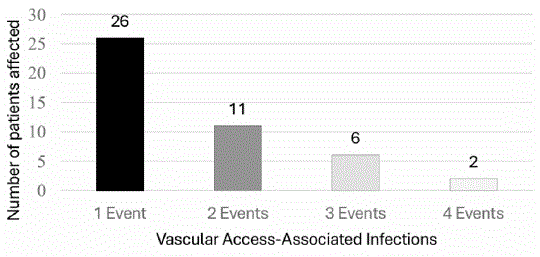
Figure 1: Number of VAAI Events. The figure represents all the Vascular Access-Associated Infections (VAAI) as infection events during the follow-up year. Some patients experimented with more than 1 event during the follow-up year. Source: Hemodialysis unit clinical records, General Zone Hospital No. 83, from 01/Jan/2024 to 31/Dec/2024.
Vascular Access Replacement: Vascular access was replaced in 19% of the patients studied. Among them, 18% in the VAAI group and 19% in the NoVAAI group required replacement, with no statistically significant difference. The indications for access replacement are shown in figure 2: dysfunction was the leading cause (63%), followed by infection (21%). Infection as the sole indication for access replacement represented less than 4% (4/102).
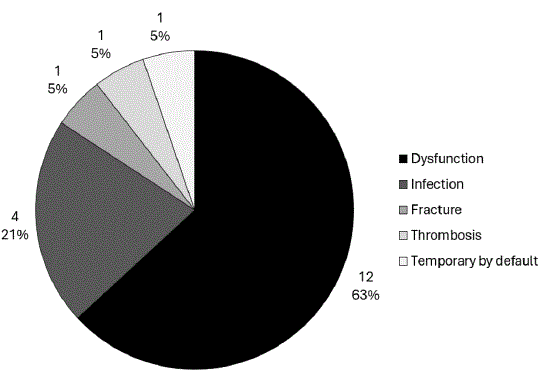
Figure 2: Indication for VA Replacement. All causes for indication of access replacement are listed. Source: Hemodialysis unit clinical records, General Zone Hospital No. 83, from 01/Jan/2024 to 31/ Dec/2024.
Other Variables: Analysis of additional biochemical variables revealed no significant differences in hemoglobin levels at any time point. Baseline hemoglobin levels were 11.48 g/dL in the VAAI group vs 10.75 g/dL in the NoVAAI group; intermediate measurements were 10.7 g/dL vs 10.87 g/dL, respectively; and final measurements were 11.04 g/dL vs 10.54 g/dL. Total leukocyte counts showed no significant differences: baseline counts were 7,220 cells/µL in the VAAI group vs 6,550 cells/µL in the NoVAAI group; intermediate counts were 6,220 cells/µL vs 6,610 cells/µL; and final counts were 6,350 cells/µL vs 6,530 cells/µL. Neutrophil counts were also similar: baseline counts were 4,180 cells/µL in the VAAI group vs 4,690 cells/µL in the NoVAAI group; intermediate counts were 4,010 cells/µL vs 4,380 cells/µL; and final counts were 4,110 cells/µL in both groups. Among all other clinical and biochemical variables, the only statistically significant difference was in baseline serum albumin, which was higher in the VAAI group (4.34 g/dL) compared to the NoVAAI group (4.15 g/dL) (p = 0.039). No other significant differences were observed [29].
Discussion
Although the current recommendation is to place a TCVC when the VA will be used for long-term [30] because TCVC are associated with lower infection rates [31] it’s important to consider that his study was made in a México’s public healthcare system hospital, in that media the prolonged use of NTCVCs is common (due to high demand for HD services and limited resources), in fact Maggiani-Aguilera et al. reports >80% of Mexican HD patients NTCVC are the first VA option and >90% of patients are going to use it for NTCVC for extended periods (>1 month) [32]. Even though a significant part of catheters evaluated do not follow the current recommendations, in the studied patient’s low infection rates are described.
Although the infection complications associated to HD is more frequent in the first year [3,33] in Mexican population is very common extend the use of NTCVC [32] and the use of NTCVC represents a 32-fold increase in the risk of infection vs AVF and 19-fold increase vs TCVC [34]. Despite prolonged use (18.8 ± 15 months) the VAAI rate among NTCVC in the studied patients was only 1.16 episodes per 1,000 catheter-days.
A comparative analysis of the VAAI and NoVAAI groups revealed that patients with VAAI were younger. This may be linked to risk factors associated with VA care and higher levels of physical and socioeconomic activity [5,14], and the fact that history of prior kidney transplantation was more common in VAAI group. Immunosuppression, whether due to prior transplantation or ongoing use of immunosuppressive agents to prevent graft intolerance, increases the risk of VAAI [4,5,14]. Although the VAAI rate was higher in patients with NTCVC, more patients with VAAI were found in the TCVC. This could reflect the greater prevalence of TCVCs in the overall population. These catheters are intended as permanent vascular access and have longer functional lifespans. This is supported by the significantly longer CVC insertion duration in the VAAI group, reinforcing the well-established correlation between catheter dwell time and infection risk [5,14,15].
Among patients in the VAAI group, 42% experienced more than one episode of infection, and 4% (2 patients) had four episodes within a single year. The study population had an average of 7 years on renal replacement therapy and 4.6 years on current HD, representing patients with prolonged exposure to HD and an elevated risk of vascular exhaustion. This underscores the importance of VA preservation and rescue, as these access sites are considered valuable. In patients with recurrent infections, continuous VA replacement is often unfeasible, thereby increasing the risk of reinfection [5,14,15,29]. Only 4% (4/102) required VA replacement due to infection.
The main limitations of this study include are that its descriptive, retrospective, non-interventional, single-center design, the absence of a comparative group with other antiseptics commonly used in VA manipulation, long time evolution in HD treatment and the lack of adherence to internationally established practices (e.g., preferred use of TCVSs) despite these limitations, the findings may be useful in the country where the study was done (México) especially considering the existence of local reports that indicates need to strengthen measures for the prevention of procedure-related infections involving catheter handling by clinical staff [35] and the recent report of a local increasing trend in the increasing need for renal replacement therapies [36].
Compared to previous studies that evaluated the use of another NaOCl different presentations in many clinical settings [36-39], this study have the next advantages: specific analyzes of VAAI rates in HD [36], larger number of patients [37], longer follow-up period [38] and focus in adult population [39], which the main age group of HD unit users in México [40]. Given that Cruz, et al. analyses only NaOCl effects in exit site infection and bacteremia [36]; Forni, et al. included less patients (n = 42) [37]; Drugeon, et al. only analyses results after skin disinfection [38] and Ciccia, et al. focus in neonatal population [39].
Conclusions
In the evaluated group of patients that used 0.057% NaOCl isotonic, stabilized, antimicrobial and non-cytotoxic solution (Anasept®) for antisepsis from the HD catheter exit site, cleaning of HD catheter ports and the placement of a dressing moistened in the HD catheter exit site and HD catheter ports during HD session a low VAAI rate was observed.
The low VAAI were observed in the overall VAAI rate (0.50 episodes per 1,000 catheter-days), but also when VAAI was analized by the type of catheter, also having low VAAI rates for TCVC (0.39 episodes per 1,000 catheter-days) and NTCVC (1.16 episodes per 1,000 catheterdays).
Previous conclusions are more significant because the study was made in México, a country where patients with HD catheters have a high prevalence of VAAI [41] and the highest prevalence of diabetes, obesity, and hypertension in Latin America [42], it’s important to consider that a higher prevalence (diabetes and hypertension) has been reported in patients with HD catheters that develops infection [43] and represents (obesity) an increased risk of developing catheterassociated bloodstream infections [44].
First, it must be considered that future studies consider longitudinal designs, multicenter participation and the use of control group with the purpose of statistically validating the findings described in this study. Second, it would be interesting to assess the rates from dermatological adverse events associated with the use of 0.057% NaOCl isotonic, stabilized, antimicrobial and non-cytotoxic solution (Anasept®) in HD patients and HD staff, skin problems associated to antiseptics use in local HD unit are common for both (patients and staff) [D. Gil, personal communication, Jan 14, 2026] this is consistent with information previously reported (Elmadhoun et al reported in 2022 contact dermatitis in 14.4% of HD patients [45] and since 1980s some studies reports that 57.5% HD staff members have some occupational skin problem) [46]. The dermatological adverse events evaluation wasn’t part of the original objectives of this study; however, anecdotally it was observed that ceased, adequate measurements of this phenomenon could add additional and beneficial information [D. Gil, personal communication, Jan 14, 2026].
Acknowledgments
The author thanks all the people who at some moments were part of this project. This study does not receive any funding. The supplies are routinely used in daily clinical practice.