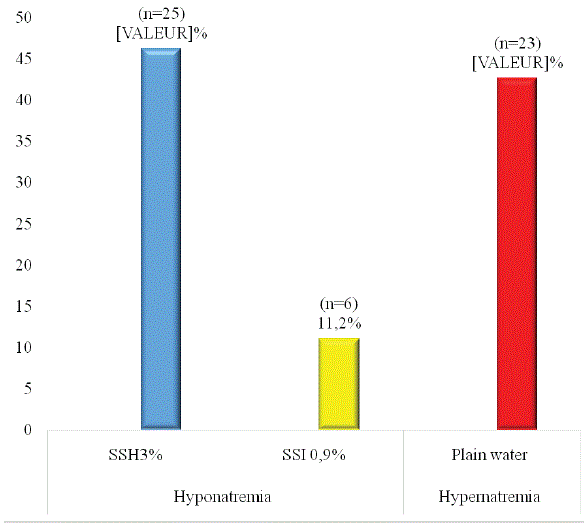
Figure 1: Distribution of patients by treatment.


Mahamat Hissein Ali1* Traore Sory2 Adamou Abbassi Mana2 Ousman Alkheir3 Haoua Youssouf Seid1 Djibrine Mahamat1 Adjoulbo Heber1 Dakole Jérémie1 Dok Vingo Kolona1 Idriss Malloum1 Zalba Mahamat Abderraman Guillaume1*
1Nephrology-Dialysis Department (CHU la Renaissance de N’Djamena-Tchad)*Corresponding author: Mahamat Hissein Ali, Nephrology-Dialysis Department (Renaissance University Hospital, N’Djamena-Chad), Tel: + 235. 66.20.21.65, E-mail: nephrochad@gmail.com
Zalba Mahamat Abderraman Guillaume, Nephrology-Dialysis Department (CHU la Renaissance de N’Djamena-Tchad), E-mail: zalba2001@ yahoo.fr
Introduction: Dysnatremia is a hydro-electrolytic disorder frequently encountered in neuro-resuscitation. Dysnatremia can be a reason for hospitalization in the intensive care unit when it is deep-rooted or rapid-onset, or a complication acquired during hospitalization, which can have an adverse effect on prognosis. The aim of this study was to determine the sociodemographic, clinical and paraclinical characteristics and to analyse the prognosis of dysnatremia occurring in cerebrospinal patients in the Intensive Care Unit of the CHU La Renaissance in N’Djamena.
Methodology: This was a monocentric cross-sectional study with retrospective data collection with descriptive and analytical aims, spread over a 26-month period (April 2022 to May 2024). All brain lesions patients hospitalized in the Intensive Care Unit of the hospital and university Center la Renaissance in N’Djamena (Chad) with dysnatremia were included. Clinical, paraclinical and evolutionary variables were entered on Word 2016 and analysed using SPSS V.25 software. Ethical considerations were taken into account.
Results: The prevalence of dysnatremia was 32.1% (n = 54). The median age was 52 years ±13 with a sex ratio of 3.5. Severe head trauma was the main brain injury diagnosed, accounting for 37% (n = 20). Hypertension and diabetes were the main comorbidities, respectively accounting for 33.3% (n = 18) and 7.4% (n = 4). Vomiting was noted in 25.9% (n = 14). Thirty-six patients (66.6%) had a Glasgow score ≤ 8. All patients received rehydration therapy (hypertonic saline for hyponatremia and plain water for hypernatremia). The outcome was death in 94.4% (n = 51). In multivariate analysis, the rural origin of patients and hypernatremia were the factors correlated with the severity of dysnatremia in cerebrospinal patients (p<0.05, Chi², OR [IC: 95%]).
Conclusion: The prevalence of dysnatremia was high in brain lesions. It is associated with very high mortality.
ACSOS: Secondary Systemic Brain Injury; SIADH: Syndrome of Inappropriate Secretion of Antidiuretic Hormone; SSI: Isotonic Saline Serum
Dysnatremia; Brain Damage; Resuscitation; Mortality; Chad
Disturbances of the internal environment are frequently observed in neuro-resuscitation and can complicate patient outcomes. They most often affect sodium or potassium metabolism [1,2]. Dysnatremia is one of the most frequent hydroelectrolytic disorders. They can be a reason for hospitalization in the intensive care unit when they are deep-rooted or have a rapid onset, or a complication acquired during hospitalization, increasing the prognosis [3]. Sodium and electrolyte abnormalities are likely to worsen the vital prognosis [4]. They are frequently represented by hyponatremia, with a prevalence of around 50% [5]. Dysnatremia is associated with increased morbidity and mortality and longer hospital stays [1]. Among cerebral pathologies, craniocerebral trauma, neoplasia and subarachnoid haemorrhage are associated with significant cases of hyponatremia, reaching 9.6, 15.8 and over 50% respectively, depending on the study [6]. An American study reported a lower prevalence of dysnatremia on admission to intensive care: 11.2% for hyponatremia and 2.5% for hypernatremia [7]. In France, a prospective collection of data from the Outcome Réa cohort found a prevalence of hyponatremia on admission of 27.4% and 7.9% for hypernatremia [8].
In addition to the usual neurological complications, a number of early studies highlighted the association between severe dysnatremia and mortality in hospitalized patients [9] and in intensive care patients. These studies confirmed the deleterious prognostic impact of both hyponatremia and hypernatremia, whether acquired during the stay or present on admission. Moreover, this prognostic association has been found even for dysnatremia considered minimal [10], the prognostic impact of dysnatremia being distributed according to a U-shaped curve centred on normal values [7]. In Mali, a study carried out on hydroelectrolytic disorders in cerebrospinal patients in the intensive care unit of the Gabriel Touré University Hospital reported a frequency of 93.3% on admission [10]. In paediatric intensive care units in sub-Saharan Africa, a significant prevalence of ionic disorders was observed, reaching 57.3%. The most frequent electrolyte disorder, accounting for 68.3%, was hyponatremia [11]. In Africa, research on ionic abnormalities in intensive care patients has revealed a high proportion of dysnatremia. In pediatric intensive care in the subSaharan African region, there was a significant prevalence of ionic disorders, reaching 57.3%. The most common electrolyte disorder, representing 68.3%, was hyponatremia. In Chad, no study has been devoted to ionic disorders in the intensive care unit, particularly in patients with brain lesions, hence the interest of this work, the aim of which was to determine the prevalence of dysnatremia (hyponatremia and hypernatremia), describe the clinical and paraclinical situation and analyse the poor prognostic factors and analyse the prognostic factors of dysnatremia in patients with brain lesions in the intensive care unit of the CHU la Renaissance (CHUR) in N’Djamena, Chad.
This was a cross-sectional with retrospective data collection, monocentric, descriptive and analytical study, spread over a 26-month period, from April 2022 to May 2024. All patients with brain lesions complicated by true hyponatremia (associated with hypo osmolarity) or true hypernatremia (hyperosmolarity) were included in the study. Patients with false hypernatremia, false hyponatremia (normal osmolarity) or pseudo hyponatremia (elevated osmolarity) were excluded from the study. The hospital and university Center la Renaissance in N’Djamena (Chad) is a 240-bed level 3 national referral hospital. True hyponatremia is defined as a natremia of less than 135mmol/L associated with plasma hypoosmolarity (plasma osmolarity of less than 290 mOsm/L). Hyponatremia is said to be mild if the natremia varied between 130 and 134 mmol/l; moderate if the natremia varied between 125-129mmol/l and severe if the natremia was less than 125mmol/l.
Hypernatremia is defined as a natremia above 145mmol/l. It is said to be mild when the natremia varied between 146 and 150mmol/l; moderate for a natremia between 151-159 mmol/l and severe if the natremia was greater than >160 mmol/l.
The variables studied were sociodemographic (age, sex, origin), clinical (history, terrain, blood pressure, Glasgow score, pupil status, digestive and cardiorespiratory signs, diagnosis on admission), paraclinical (blood ionogram, urea, creatininemia, venous glycemia, hemogram and brain scan) and therapeutic (rehydration serum, hypertonic solution, still water). Data were collected on a preestablished survey form, processed, entered and analysed using SPSS V.25 software. The analytical study was a case-control study. The patients control used for comparison were randomly selected from patients hospitalized during the same period in intensive care and who had pathologies affecting other systems other than brain lesions. Odds ratio, chi-square test and relative risk were applied, with p<0.05 as the significance threshold. Results were in the form of tables of figures for quantitative variables and percentages for qualitative variables.
Of the 168 cerebrovascular patients enrolled during the study period, 54 patients with dysnatremia were included, representing a hospital prevalence of 32.1%. The median age was 52 years ±13 [22 to 85], with a sex ratio of 3.5. The 61-70 age group accounted for 18.5% (n = 10). Forty-seven patients (87%) were from urban areas. Comorbidities were dominated by arterial hypertension with 33.3% (n = 18), followed by diabetes with 7.4% (n = 4). Altered consciousness was the main reason for admission, accounting for 61.1% (n = 33), followed by respiratory distress at 12.9% (n = 7). Admission time was greater than 48 hours for 40 patients (n = 74.1%). In terms of digestion, vomiting accounted for 32.2%. Glasgow score ≤ 8 was found in 66.6% (n = 36). Pupils were isocores in 68.5% (n = 37). In cardiorespiratory terms, arterial hypotension, tachypnea and desaturation were noted in 51.9% (n = 28), 74.1% (n = 40) and 46.3% (n = 16) respectively [Table 1].
| Variables | Numbers | Percentage |
| Land/History | ||
| Hypertension | 18 | 33,3 |
| Diabetes | 4 | 7,4 |
| Gout | 2 | 3,7 |
| Blood pressure | ||
| Normal | 8 | 14,8 |
| High blood pressure | 18 | 33,3 |
| Low blood pressure | 28 | 51,9 |
| Digestive signs (Hyponatremia) | ||
| Vomiting | 14 | 25,9 |
| Nausea | 2 | 3,7 |
| Glasgow score | ||
| ≤ 8 | 36 | 66,6 |
| 9-12 | 17 | 31,9 |
| ˃12 | 1 | 1,9 |
| Pupil states (Hypernatremia) | ||
| Isocoria | 37 | 68,5 |
| Mydriasis | 5 | 9,3 |
| Myosis | 4 | 7,4 |
| Anisocoria | 4 | 7,4 |
| Diagnostics of brain lesions | ||
| Severe head trauma | 20 | 37 |
| Ischemic and hemorrhagic stroke | 27 | 50 |
Table 1: Distribution of patients according to history/terrain and clinical data on admission.
Hyponatremia was found in 31 patients (57.4%). Mild, moderate and severe hyponatremia accounted for 3.7% (n = 2); 35.2% (n = 19) and severe 8.5% (n = 10) respectively. Hypernatremia was present in 23 patients (42.6%). Mild, moderate and severe hypernatremia accounted for 3.7% (n = 2); 14.8% (n = 8) and 24.1% (n = 13) respectively.
There were 20 patients (37%) with severe head trauma. Ischemic and haemorrhagic stroke were noted in 24.1% (n = 13) and 25.9% (n = 14) respectively. Therapeutic measures are summarized in figure 1.
Figure 1: Distribution of patients by treatment.
The outcome was marked by a mortality rate of 94.4% (n = 51). In multivariate analysis, rural origin (p <0.03; OR = 1.7; CI95% = [0.6- 4.8]) and severe hypernatremia (p <0.04; OR = 2.34; CI95% = [1.5-33]) were risk factors for poor prognosis in cerebrospinal patients [Table 2].
| Variable | Included Patients n = 54 | % | Control Patients n = 54 | % | P value | OR [IC95%] |
| Male | 42 | 77,7 | 38 | 66,7 | 0,38 | 1,47 [0,6-3,5] |
| Rural residence | 47 | 87 | 11 | 20,4 | 0,30 | 1,7[0,6-4,8] |
| Hypertension | 18 | 33,3 | 21 | 38,8 | 0,5 | 0,78 [0,35-1,72] |
| Diabetes mellitus | 4 | 2,4 | 13 | 24,1 | 0,04* | 0,30 [0,01-0,93] |
| Hyponatremia | 31 | 57,5 | 41 | 76 | 0,04* | 0,42[0,18-0,97] |
| Hypernatremia | 23 | 42,5 | 13 | 24 | 0,04* | 2,34 [1-5,33] |
| Anemia | 18 | 33,3 | 28 | 51,8 | 0,04* | 0,46[0,21-1] |
| Death | 51 | 94,4 | 46 | 85,1 | 0,42 | 0,12[0,63-1,73] |
Table 2: Distribution of patients according to cross-sections in multivariate analysis.
The limitations of the study were the small sample size and the retrospective collection of data as there were files with missing biochemical analyses. The prevalence of dysnatremia in our series was 32.1%. In Côte d’Ivoire, Bédié in 2022 [1] and Madane in Mali in 2020 [12] found lower frequencies at 12% and 16.6% respectively. Ki, et al. in sub-Saharan Africa in 2019 [2], and Chary et al. in India in 2017 [13], report higher frequencies of 57.3% and 53.7% respectively. The discrepancies between these different rates may be explained by the size of the populations studied.
Male predominance is clear, with a sex ratio of 3.5. This result is close to that of Madane et al in Mali in 2020 [12], while Bédié in Côte d’Ivoire [1] found a sex ratio of 2.5. This predominance of males can be explained by the high frequency of head injuries affecting mainly young male populations [14].
In this series, brain lesions with dysnatremia ranged in age from 22 to 85 years (18.5%), with a median of 52. A study carried out at Abidjan University Hospital in 2021 found that ionic disorders predominated in patients aged between 20 and 50 and 50 to 75 years, with respective rates of 49% and 48% [15]. The study by Pin-On et al. [16] found that patients with hypernatremia were older. This may be due to the lower total body water content of elderly patients and women, who are therefore more susceptible to hypernatremia [15]. In the literature, advanced age is a risk factor for developing hypernatremia, due to the decrease in total water depending on the relative proportion of adipose tissue, and to the presence of numerous pathologies that can be encountered in elderly subjects, namely renal, cardiac or metabolic pathologies [17,18].
The comorbidities reported in this study are dominated by arterial hypertension followed by diabetes, which account for 33.3% and 7.4% respectively. These results are related to the emergence of noncommunicable diseases in sub-Saharan countries [19]. Albertine in 2017 in Madagascar [19] reports a higher rate of hypertension at 55.9%, which is higher than other studies. According to WHO [17], recent years have seen a sharp increase in non-communicable diseases such as hypertension, with a prevalence of 27% in Africa, linked to large-scale urbanization, obesity and major changes in lifestyle [20].
Coma patients with a Glasgow score ≤ 8 accounted for 66.6%. In Pelosi’s series, 393 brain injured patients (71%) had a Glasgow score less than or equal to 8 on admission to the Intensive Care Unit [21]. Geng [5] reports a Glasgow score ≤ 8 in 58.9%. These complications would explain the severity of the dysnatremia at the root of the high mortality.
Vomiting predominates at 25.9%, followed by diarrhea at 18.5%. Faye et al. in Senegal in 2015 reported a digestive disorder at 98.5%, with a combination of diarrhea and vomiting at 92.7%. The predominance of hyponatremia is generally reported in acute gastroenteritis but at lower frequencies of less than 25%. This is due to excessive sodium loss through stool or vomit, with sodium losses exceeding those of water [22].
Tachypnea is observed in 74.1%, with hypoxemia in 46.3%. Hypoxemia and arterial hypotension are the most deleterious secondary brain injuries of systemic origin, and their occurrence and duration play a major role in worsening morbidity and mortality after head trauma: a single episode of arterial hypotension lasting more than 5 minutes in the pre-hospital setting of a severe head trauma patient doubles mortality and worsens neurological prognosis [23].
The predominance of hyponatremia is clear, at 57.4%, and constitutes a statistically significant poor prognostic factor with a p<0.04 (OR = 0.42; CI<95%: 0.18-0.97). Central hyponatremia is common in Cerebral Salt Wasting Syndrome (CSWS) and Syndrome of Inappropriate Antidiuretic Hormone Secretion (SIADH) [5]. Hyponatremia can induce cerebral edema, leading to convulsions and worsening the disease. Whether mild, moderate or severe, if not treated in time or correctly, it can even be life-threatening [24]. Our study reports mild hyponatremia in 3.7%, moderate in 35.2% and severe in 18.5%.
Pin-On et al in 2018 [16] in his study reveals that hypernatremia is more common than hyponatremia and that 86.3% of patients with severe traumatic brain injury present with hypernatremia. In this series, hypernatremia is observed in 42.6%, statistically significant (P<0.04; RR = 2.34; CI<95%: 1.02-5.33), which is lower than hyponatremia. Geng, et al. [5] found a similar rate of 36.5%. A study by Royatdost in 2022 [25] found that the majority of patients had mild to moderate dysnatremia. This difference may be due, on the one hand, to management during admission and, on the other, to the fact that hypernatremia occurs much more frequently in the elderly.
The evolution of patients with brain damage is associated with high mortality. The risk of death is significantly higher in patients with dysnatremia than in those with normal sodium levels (OR = 43.5, CI95%: 6.69 to 282.59) [26]. Bédié, et al., in 2022 reported a mortality rate of 75%. According to the study by Stelfox, et al. patients with hypernatremia and associated disorders have a mortality of 85.7%, and the mortality rate for ionic disorders on admission was 73.3%, with 80% of patients who died having a disorder discovered after the 5th day of hospitalization [27].
Dysnatremia is one of the most frequent disorders in intensive care units in patients with brain lesions. They are associated with a significant mortality rate and require early and precise treatment, accompanied by rigorous clinical and biological follow-up, to avoid frequently fatal complications. The hospital prevalence of dysnatremia in patients with brain lesions was high. Severe head trauma was the most common brain injury, followed by stroke. Patients with deep coma were in the majority. Following this study, we recommend increasing the monitoring of the ionogram of patients with brain injuries at least twice a day. This is all the more important since these patients have a delay in treatment and they have diabetes. This will reduce mortality in intensive care units.
The authors declare no conflict of interest regarding the publication of this article.
Download Provisional PDF Here
Article Type: RESEARCH ARTICLE
Citation: Ali MH, Sory T, Mana AA, Alkheir O, Seid HY, et al. (2025) Prognostic Factors of Dysnatremia in Patients with Brain Lesions at Intensive Care Department of Renaissance University Hospital in N’djamena, Chad. Int J Nephrol Kidney Fail 11(1): dx.doi.org/10.16966/2380-5498.250
Copyright: ©2025 Ali MH, et al. This is an open-access article distributed under the terms of the Creative Commons Attribution License, which permits unrestricted use, distribution, and reproduction in any medium, provided the original author and source are credited.
Publication history:
All Sci Forschen Journals are Open Access