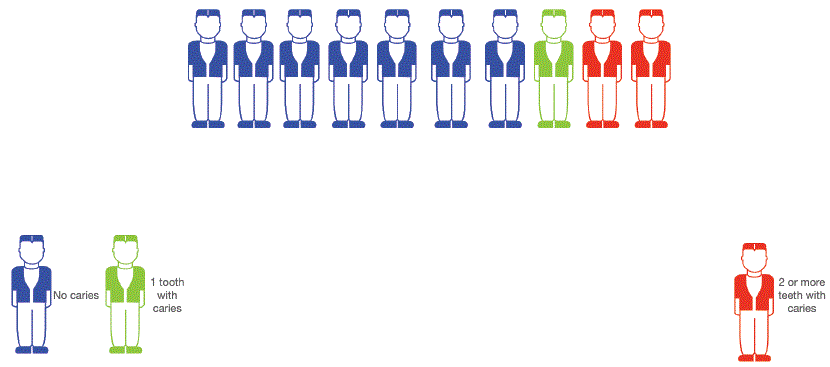
Figure 1: Distribution of caries in 12 year old children in Wales 2016.


Wayne Richards*
University of South Wales, Pontypridd, United Kingdom*Corresponding author: Wayne Richards. BDS MPhil MFGDP, University of South Wales, Pontypridd, United Kingdom, E-mail: way19s@ icloud.com
This paper takes an objective helicopter view of dental services in Wales as one of the countries of the United Kingdom. While the paper focuses on Wales; England, Scotland and Northern Ireland face the same issues in that contract reform is needed to improve health driven services. It is acknowledged that different players will hold different views according to their positions within the oral health care service. A description of how the service has evolved to its present state is presented. An alternative future is presented to facilitate meeting the aims and objectives of the Alliance for a Cavity Free Future in the UK through population coverage [1-3].
Historically dentists have been reimbursed for every intervention of treatment they delivered. This included every examination, filling or other treatment provided. In the UK this system of reward continued until 2006 when a National Health Service (NHS) contract that rewarded care slightly differently was introduced [4]. The 2006 system rewarded according to 3 bands, put simply: band 1 examinations, band 2 filings, band 3 more advanced treatments. Band 2 financial reward remained the same whether the patient needed 1 or 10 fillings.
Publicly funded health services are valued in the UK and this is demonstrated by the presence of the NHS. As a paymaster public funds need to be spent appropriately in order to achieve effective health gains.
In this context did the contract of 2006 achieve outcomes that satisfied all concerned? That is dentists, patients and government. In fact, from a health perspective unintended consequences resulted from the 2006 contract. In order to understand the consequences one has to look at the ‘oral health market’ that is the epidemiology of disease.
Richards et al. analysed 12 year old child data to assess the oral health of the Welsh population [5,6]. This age group was chosen as it is considered to be a good indicator of future population oral health [7]. It was clear that 70% of the 12 year olds were free of disease (dental caries) in 2016. The 30% experiencing disease correlated with deprivation, figure 1. The distribution of disease is such that most of the population do not require as much hands on treatment in the 21st century as they did in the 20th century. However, the sub-section of the population that correlate with deprivation will need historic levels of care that is numerous treatments in caries/disease active mouths. Therefore, it can be seen that attracting patients with true need becomes unattractive to a dentist if he/she gets remunerated the same for 1 or 10 fillings to achieve ‘dental fitness’. Thus the inequality in oral health increases as demonstrated in the most recent national oral health survey [8]. Baelum, et al. suggested that this decline in treatment need had also trickled into adult populations [9]. A more recent survey of 12 year olds in Wales reports 75% are now disease free demonstrating a further reduction in treatment need [10].
Figure 1: Distribution of caries in 12 year old children in Wales 2016.
Many General Dental Practitioners (GDPs) focus their activities now on private dental care having been able to diversify into providing care that is serviced on demand with not only health but aesthetics and consumer wants. This explains the underspend in England on the NHS budget of £900 million for a two year period, England being one of the countries of the United Kingdom [11].
Richards, et al. (2021) highlighted the challenges facing policy to facilitate community oral health improvements [12]. Increasing the workforce alone would unlikely improve oral health without considering deprivation measures for monitoring outcomes [12]. Richards et al (2020) recognised these challenges and suggested solutions [13].
It could then be argued that both Wales and the UK face an identity crossroads, a health service or a consumer retail service. The former considers the epidemiology of disease trends with a focus on improving community oral health through delivering care on the principles of Minimal Invasive Oral Care (MIOC) and S3 periodontal care which require prevention and continuing care [14-16]. The latter model of care focuses on supply induced demand with little regard for long term outcome responsibilities. Take for example tourism dentistry and the marketing surrounding its availability on social media [17-19].
Workforce needs will depend on the chosen pathway. Health or retail or a combination of both. The tensions between health driven service and supplier induced demand retail service is demonstrated when significant workforce shortages are reported in the availability of NHS appointments [18]. Consideration should be given to the possibility of a spectrum of care delivery, the poles of the spectrum being on the one hand health and the other retail. The distribution of the workforce would then vary according to each clinician and clinic (Figure 2).
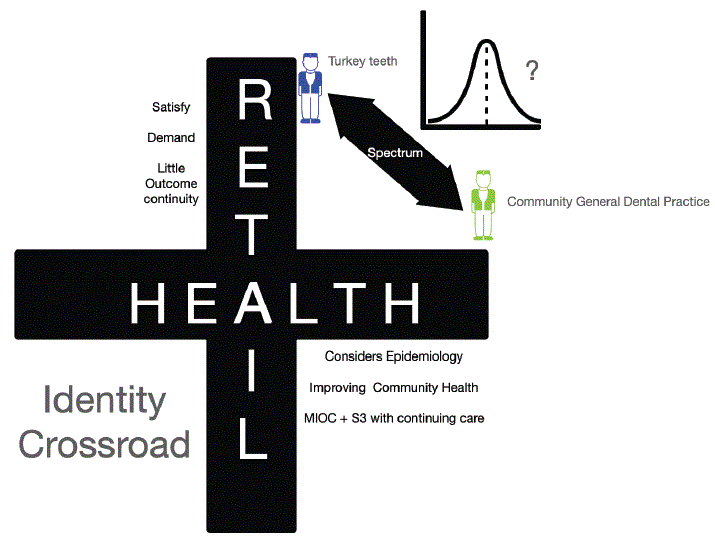
Figure 2: The Spectrum of Care delivered by Practitioners.
Any business decisions will consider opportunity costs where the costs and benefits of alternatives will be assessed. As self employed operators some GDPs will choose to modify practice profiles towards health if the financial viability will allow that to happen. Therefore, treating all GDPs the same will not facilitate change if some choose to continue on a model weighted on supply induced demand at the expense of those wishing to apply a health weighted model. Primary Care Organisations (PCOs), Local Health Boards (LHBs) in Wales, monitor the care delivered by GDPs and it will be necessary for LHBs to equalise the opportunity costs between models of care in order to achieve health gain. In this context consideration will need to be given to socio-demographic profiles as indicated by Richards, et al. [12].
In order to continue oral health improvements (caries free states) and improve oral health in diseased population sub-groups a proactive behaviour modification approach needs to be delivered. This will include using proactive Behaviour Management techniques to facilitate the creation of disease inactive oral environments in individuals.
Primary Dental Care theory identifies the need for appropriate: Access, Availability and Acceptablity of care [20]. Ashley, et al. stated "the better use of dental services" as one aim of dental health education [21]. The Scientific Basis of Oral Health Education [22] along with the Department of Health Toolkit [23] make attendance at the dentist a key issue for promotion. In order for oral health promoters to be realistic in promoting this message both access and availability of service are a given. Currently there is a mismatch between Dental Public Health (DPH) [promoting attendance], GDPs [providing access] and LHBs [enabling availability] [24].
Accessible successful primary preventive supervised toothbrushing programs (STP) have been driven by DPH [25,26]. Programmes are targeted towards the most in need and include multi-disciplinary personnel [27]. The most important aspect of these programmes is inclusiveness in that children from backgrounds, where parental support could be minimal, engage and behave positively. Filipponi, et al. highlighted the lack of parental responsibility in parenting as an issue where participation and inclusion in the STP Design to Smile (D2S) [26,27] made the child ‘pester’ the parent for consent into D2S [28]. Furthermore, the child who was difficult to motivate before D2S became a brusher at home. This is an example of policy and system enabling prevention through STPs and support of the key message of attendance.
Continued access to GDP is needed to cement primary prevention. The Steele review of 2009 describes pathways in GDP for both routine and urgent new patients [29]. The opportunity for urgent patients to become routine patients will depend on the behaviour management skills of the dental team. Then routine patients can receive an assessment of oral health, followed by disease prevention, and continuity of care and routine management. Clearly, effective prevention will result in low-risk patients with increased practice capacity. Patrick, et al. highlight that GDPs are able to risk patients effectively and suggest recall interval should be followed according to NICE guidelines with 2 year recalls for low risk patients [30]. Also it was reported that there was little evidence to support routine six monthly reviews to identify oral cancers. Routine scaling and polishing for periodontal health is not evidence based [31].
Urgent patients receive definitive pain relief with a recommendation for ongoing care and an oral health assessment. Whether the skill of the clinician is equal in providing technical process and behavioural process is debatable [32-35]. Björns, et al. concluded that guideline recommended behavioural and biological strategies were rarely recorded in dentists’ clinical notes in their Swedish study [36]. Legget, et al. published a scoping review of dental practitioners’ perspectives on perceived barriers and facilitators to preventive oral health care in GDP. The findings suggest that more work is needed to ensure dental professionals are knowledgeable, well-trained, up-to-date and confident in their abilities to deliver preventive oral healthcare to patients [37].
The acceptability of the care received, as has been suggested, will depend on the knowledge and skill in delivering behaviour management by the dental team. Stereotyping patients by dental personnel is found in academic literature regarding the provision of care [38]. Lower socio-economic sub-groups are often stereotyped as ‘not wanting to know’ about prevention and do not comply with advice provided, was voiced in a recent BDA webinar [39]. It should be noted that the correlation between deprivation and caries does not mean causation of disease. It is the behaviour of the sub-group that is the cause of the disease and that can be influenced by behaviour modification. Interestingly, a comparison of Welsh and Sri Lankan 12 year olds showed similar numbers of caries free children; however, in Sri Lanka the correlation with disease was affluence [40].
Ashley, et al. highlighted that a targeted approach to managing caries in populations comes with risks [21]. Disease risk can change according to behaviours, it is therefore critical that even low risk patients have a clear understanding of the correct message from oral health promoters in order to maintain the low risk status. Richards, et al. supported the need for a combination of community and targeted approach to care in order to improve oral health [41]. Splieth, et al. state “The current epidemiologic situation of a polarized caries distribution calls for two distinctly different approaches to primary caries prevention” [42]. The Common Risk Factor approach [43] will suffice for the majority of the population whereas there is an additional targeted need for a sub-group in the population [42]. Richard, et al. reported the lack of consistent clear messaging from care providers [44].
The availability of dental care will depend on the incentives valued by the commissioners of oral health services. A behavioural approach to care provision should focus primarily on creating caries/disease inactivity while providing restorative care incrementally according to a clear pathway as described by Milsom, et al. [45]. Thus the concept of ‘dental fitness’ and courses of treatment (COT) do not fit with a behavioural approach to care.
Unlike technical skill, which can be monitored by the number of successful fillings/treatments provided, behavioural skill can only be monitored by the number of individuals that change over a period of time [46-49]. That is measuring the change in individuals from a high risk caries/disease active state to a low risk caries/disease inactive state.
Practice monitoring therefore needs to change. Accepting that the time-frame for behaviour change will vary according to the individual needs to be acknowledged by LHBs.
• Does the practice reflect the area demographic? A practice profile that shows a bias towards the least deprived will be caring for a population with lower need and low risk patients. A practice that reflects area demographics will reflect area need.
• Does the practice apply NICE guidelines for recalling? NICE guideline compliance will see 4 low risk patients per 2 year period rather than 1 low risk patient 4 times.
• Does the practice retain its patients? A proxy measure for successful prevention. Converting irregular attenders into regular attenders with effective prevention resulting in low risk patients.
Analysis on these criteria by LHBs will illustrate the practices already achieving Practice B figure 3 profiles, currently outliers. Rewarding this model will incentivise others who choose to work towards the same goal. The combined affect of the above will result in increased capacity. Practice monitoring can then evolve incrementally along a pathway of change [50].
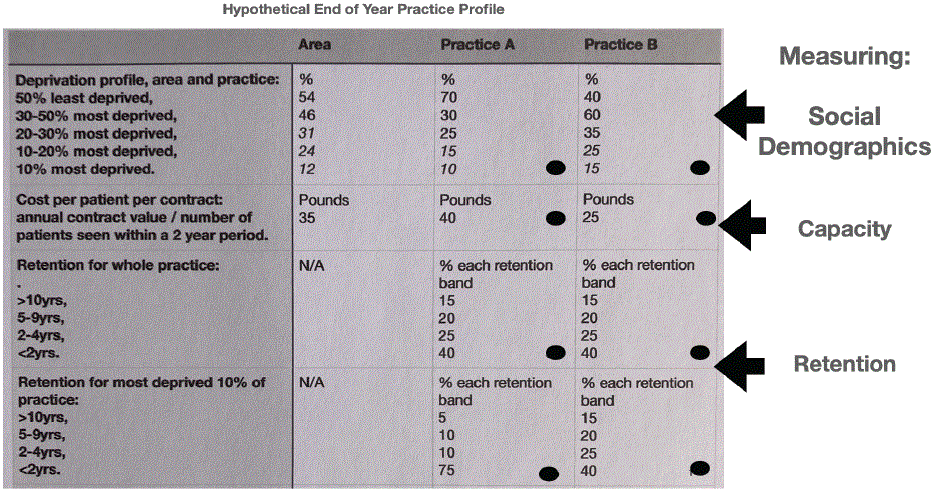
Figure 3: Proposed Practice Monitoring for PCOs.
In conjunction with these performance indicators Oral Health Related Quality of Life (OHQoL) measures could be used to measure health within and between dental practices [51-53].
In order for this to occur, GDP must have appropriate incentives through a contract that recognises outcomes in line with epidemiology and policy [54]. PCOs have had the authority to reward practices that generate appropriate outcomes from the 2006 dental contract [4]. Directives from health departments have focused on concepts of ‘dental fitness’ and COTs as outcome measures [55].
While the 2006 NHS contract provided commissioners with the authority to incentivise GDP towards improving oral health, this opportunity did not manifest in improved oral health. In reality increased inequality was the outcome along with dissatisfaction within the profession. The BDA continues to identify the problem as opposed to the solution. The solution posed by the establishment was another new contract without any constructive suggestions regarding the mechanics of that contract, other than increased funding.
A new contract was introduced in Wales in April 2026. The new 2026 Welsh contract is based on treatment bands that include COTs and implied ‘dental fitness’. This suggests that repair is synonymous with health, a reactive mind set. The percentage of contract funding towards prevention is 5% [56,57]. This decision does not reflect the narrative that the contract is about delivering a service focused on prevention. Current service delivery shows that most GDPs continue to provide 6 monthly recall appointments. There is little in the contract to incentivise GDPs to modify service delivery to engage long term with individuals with the greater need. Two patient behaviour changes in current service provision are needed, the first is to change the behaviour of regular patients to follow NICE guidelines, the second to change the behaviour of the irregular attender. The former is embodied into the contract. The latter is not considered. Early interpretations by GDPs already delivering NICE guidelines (outliers) are expected to see more patients without extra resources. Clearly this is not supporting those clinicians who are already delivering on policy
As has been identified and described earlier, historic levels of disease are mainly found in deprived sub-groups and for these groups accessible, available and acceptable services are currently unavailable. While policy systems may influence accessibility and availability whether the service is acceptable for the sub-group is questionable. This is particularly pertinent if oral health gain is an objective. Clearly oral health gain can only be achieved if successful conversions of irregular urgent service users, where most disease is found, are achieved. Therefore, the mindset and skill of those delivering the service will impact on outcomes.
An understanding of Behaviour change theory and practice is a prerequisite for effective practise. As cited earlier there are weaknesses in this department [32-37]. If correlation and causation are not addressed then there is a risk that GDPs could perceive that it is inevitable that the sub-groups will continue to live in a disease active state. While it is not possible to achieve total compliance for the individuals in populations, the application of effective techniques will maximise opportunities to equalise outcomes. If a practice reflects the social distribution of its area and outcomes show similar retention data for the whole social distribution of the practice, then this could be useful for the commissioning of services.
Changes in behaviour happen according to the individual making the change and may take different time frames. Therefore, from a behavioural perspective the concept of dental fitness is likely to be a barrier to successful change in individuals. Behaviour change is not only about verbal and non-verbal communication such as body language. Organisational systems and actions communicate loudly. For example putting fillings in a disease active mouth communicates a normality of disease activity with no personal responsibility. Smart and Ower regarding periodontal care state “Traditional dentistry has tended to focus on ‘operators efficiency’ and the need to intervene to achieve an outcome. Thus patients are often scaled at their first appointment ‘in order to facilitate cleaning measures’. Whilst often taught and practised, there can be a price to pay for such interference: patients tend to associate any improvements they experience with the intervention rather than their own efforts” [58]. A good example of how the action affects interpretation and understanding.
Richards described the use of a hand held patient record card based on improved patient communication regarding oral health, entitlement and responsibilities [49,59,60]. Opportunities for behaviour change, from irregularly attending patients, attending for urgent care have been described in the literature [45]. There is a mismatch between a reactive mind-set and a behavioural mindset regarding COTs. In the former all treatment needs to be completed in a COT, in the latter discomfort needs to be addressed and further treatment assessed on the ‘readiness of the patient’ and will vary with each patient. Richards highlighted the likelihood of increased oral health inequality through the interpretation of contract management from a dental fitness perspective [54]. A focus on disease inactivity through prevention needs to be communicated to the patient as one of their responsibilities of ongoing care. Once this reality is internalised by the patient, an understanding of why treatment outcomes will be successful in the future through experience.
Again it should be stressed that there is an additional targeted approach needed for the disease active sub-group in populations [41,42]. The population experiencing significant levels of the disease (multiple caries with disease active oral environments) will need more effective behavioural approaches for successful prevention.
The concept of concordance as opposed to compliance needs to be understood and practised in order to facilitate change in a behaviour [47]. Concordance refers the creation of an agreement that respects the beliefs and wishes of the patient. This fits neatly into the delivery of Motivational Interviewing which has been shown to be effective [61]. Furthermore it fits into the COM-B model often cited in dental literature [14].
A team approach to organisational delivery enables the team leader, the dentist, to delegate much of the preventive and restorative tasks to different team members. This will impact on workforce needs and therefore clinic structures and costings [62].
The answer to the title question is yes but there is a caveat. The past is influencing decision-making for the future. If the objective is to facilitate improvements in oral health in conjunction with a commodity route then services need to address primary care contract monitoring. Monitoring should be based on a mindset towards behaviour management. That mindset needs to be shared by dentists and commissioners. However, Government and professional advisers, through directives, will drive the actions of PCO commissioners of services.
While not all GDPs will choose to deliver a health driven model of care some will be happy to provide health driven care on the condition that financial incentives are equalised between the different approaches. All parties concerned could be winners with support towards appropriate care delivery. Then the aims of the Alliance for a Cavity Free Future could be met.
Download Provisional PDF Here
Article Type: REVIEW ARTICLE
Citation: Richards W (2026) Is Oral Health being Commodified in Wales and the United Kingdom? Int J Dent Oral Health 12(2): dx.doi. org/10.16966/2378-7090.443
Copyright: © 2026 Richards W. This is an open-access article distributed under the terms of the Creative Commons Attribution License, which permits unrestricted use, distribution, and reproduction in any medium, provided the original author and source are credited.
Publication history:
All Sci Forschen Journals are Open Access