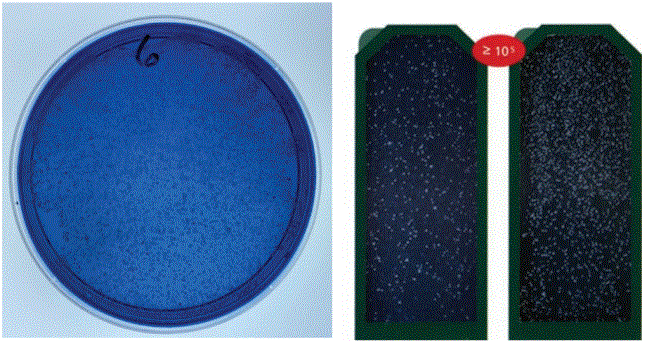
Figure 1: Saliva samples processed with CRT Bacteria® showing (>10^5 CFU/ml).

Ruben Sanchez Carrillo* Osvelia Esmeralda Rodriguez Luis Laura Elena Villarreal García Crystell Guadalupe Guzman Priego Sonia Martha Lopez Villarreal
Pediatric Dentistry Postgraduate Program, Universidad Autonoma de Nuevo Leon, Mexico*Corresponding author: Ruben Sanchez Carrillo, Pediatric Dentistry Postgraduate Program, Universidad Autonoma de Nuevo Leon, Mexico, E-mail: [email protected]
Introduction: Pregnancy is a dynamic state of physiological changes that significantly impact maternal health. During this period, hormonal fluctuations and dietary shifts alter the oral ecosystem, increasing the proliferation of pathogenic bacteria such as Streptococcus mutans. This biological environment increases the risk of caries, requiring rigorous medical and dental supervision to prevent complications that could affect both the mother and the developing baby.
Objective: To evaluate Streptococcus mutans bacterial load and salivary pH as predictive indicators of caries risk in pregnant patients.
Materials and Methods: 63 pregnant women were selected, and the salivary pH was measured, a saliva sample was collected for later analysis. All the saliva samples were processed using the CRT Bacteria® methodology and the number of CFU were obtained. The caries risk was determined by the number of CFU and salivary pH. Results were sent to each pregnant woman for them to know their caries risk.
Results: In the saliva samples processed, 90% of the participants exhibited a high caries risk, with Streptococcus mutans counts exceeding (>10^5 CFU/ml) while only 10% presented a low risk (<10^5 CFU/ml). Salivary pH testing revealed that the majority of the sample (73%) maintained a pH of 6, followed by 15% with a neutral pH of 7, and 12% presenting a more acidic environment with a pH of 5.
Conclusion: Elevated Streptococcus mutans counts and acidic salivary pH during pregnancy significantly correlate with increased caries susceptibility.
Pregnancy; Streptococcus mutans; Caries risk; Salivary pH; CRT Bacteria®
Pregnancy is the period from fertilization to birth, during which a woman experiences physical, hormonal, and emotional changes to develop a new being [1]. During pregnancy, it is extremely important for the mother to have good health, nutrition, and care to prevent complications during pregnancy or at birth [2].
Alterations in the oral microbiota during pregnancy are mainly linked to hormonal changes, specifically high levels of estrogen and progesterone [3]. These hormones increase gingival vascular permeability and alter the composition of the subgingival microbiota, favoring a state of dysbiosis characterized by a higher load of gramnegative anaerobic bacteria [4]. In the oral cavity during pregnancy, there are three microorganisms that have been reported to experience accelerated growth due to hormonal changes and hygiene habits: Poprhyromonas gingivalis, Aggregatibacter actinomycetemcomitans, and Streptococcus mutans [5]. The accelerated growth of these microorganisms can cause complications during pregnancy such as preeclampsia, premature birth and spontaneous abortions [6].
During pregnancy, especially in the second and third trimesters, salivary pH decreases, increasing oral acidity [7]. This process is intensified by gastroesophageal reflux, vomiting, and dietary changes [8]. This alteration weakens saliva's neutralizing capacity and reduces its protective function, promoting enamel demineralization and significantly increasing the risk of developing dental caries in pregnant women [9].
The Caries Risk Test was developed by Ivoclar Vivadent and is an in vitro diagnostic test used in dentistry to assess a patient's caries risk. Its main function is the semi-quantitative determination of the number of two types of cariogenic bacteria in saliva: Streptococcus mutans and Lactobacilli [10]. The kit consists of a tube with a holder containing two selective culture media called agar. One surface is blue agar for counting Streptococcus mutans and the other is green agar for counting lactobacilli [11]. The Streptococcus mutans and/or lactobacillus count is measured by the number of colony-forming units (CFU) present. More than 105 CFU/ml of saliva indicates a high risk of caries. Less than 105 CFU/ml of saliva indicates a low risk of caries [12].
Pregnancy causes hormonal changes that modify salivary pH and increase oral bacteria like Streptococcus mutans, raising the risk for dental caries and pregnancy complications. Tools like the Caries Risk Test are essential for measuring these bacterial levels to identify highrisk patients and ensure better health outcomes for both mother and child.
With the prior authorization of the institute's director, and the application of an informed consent, 63 pregnant women across all trimesters attending a prenatal course at a Child Development Center in the state of Nuevo León, México, were selected. A saliva sample was obtained from each woman, and the salivary pH was analyzed using pH strips [13]. Subsequently, another saliva sample was collected in a 1.5 ml Eppendorf tube and immediately processed at the Molecular Biology Laboratory of the Autonomous University of Nuevo León, Faculty of Dentistry. Following the CRT Bacteria® methodology, Mitis salivarius agar was used for the growth of Streptococcus mutans [14]. Each saliva sample was streaked onto petri dishes containing the agar and incubated for 24 hours at 37℃ [15].
Once bacterial growth occurred, the dishes were compared with the CRT Bacteria® standards to assess the concentration of Streptococcus mutans in each sample and determine caries risk [16]. Results were sent to each pregnant woman to inform them of their specific risk level.
IBM SPSS Statistics software (Version 28; IBM, NY, USA) was used to analyze the data. Frequency and percentages were used to display the descriptive statistics. Chi-Square test used to compare proportions. When the differences were at least p ≤0.05, they were deemed significant.
In the saliva samples processed following the CRT Bacteria® methodology, 90% of the participants exhibited a high caries risk, with Streptococcus mutans counts exceeding (>10^5 CFU/ml) (Figure 1 and Graph 1), while only 10% presented a low risk (<10^5 CFU/ml) (Figure 2 and Graph 1).
Figure 1: Saliva samples processed with CRT Bacteria® showing (>10^5 CFU/ml).
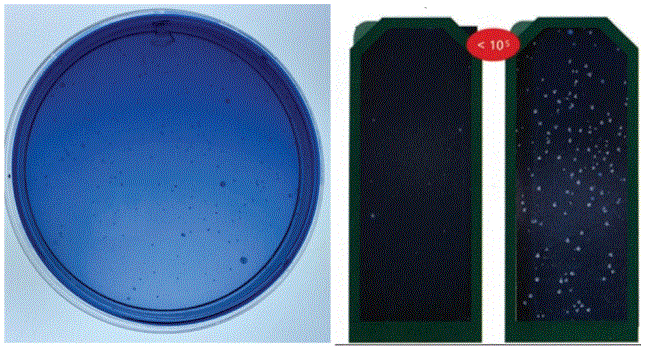
Figure 2: Saliva samples processed with CRT Bacteria® showing (<10^5 CFU/ml).
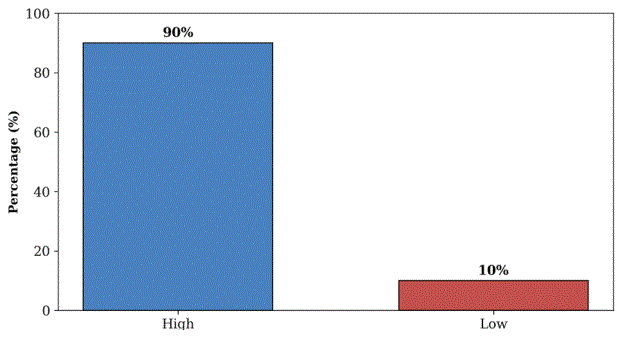
Graph 1: Distribution of caries risk by microbial load (CFU).
Salivary pH testing revealed that the majority of the sample (73%) maintained a pH of 6, followed by 15% with a neutral pH of 7, and 12% presenting a more acidic environment with a pH of 5. This latter group has a higher risk of developing caries (Graph 2).
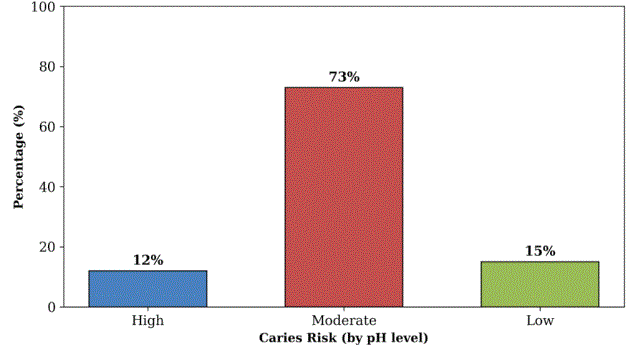
Graph 2: Distribution of caries risk by salivary pH.
In the present study, the analysis of salivary parameters revealed a high risk of caries in 90% of pregnant women, with 73% presenting a pH of 6. This risk is supported by the high levels of Streptococcus mutans observed. Latifi-Xhemajli et al., [17] identified that 90.3% of the mothers evaluated had high concentrations of Streptococcus mutans (>105 CFU), indicating a high risk of caries. The similarity in the percentage of high risk (90% in our study versus 90.3%) underscores the microbiological vulnerability of this population. Regarding pH, most of our samples had a pH of 6, a finding that contrasts with the study by Migliario, et al. [8] who reported a significant decrease in salivary pH, fluctuating around 5, considered acidic, during the first trimester. In contrast, only 12% of the pregnant women in the present study showed a pH of 5. This variation could be due to methodological or dietary differences, or to the predominant trimester in the sample.
Pregnancy increases the risk of caries due to higher Streptococcus mutans levels and increased salivary acidity. Salivary biomarkers are essential predictive tools for establishing early preventive care to protect both mother and infant.
No conflict of interests.
None.
Download Provisional PDF Here
Article Type: RESEARCH ARTICLE
Citation: Carrillo RS, Luis OER, Garcia LEV, Priego CGG, Villarreal SML (2026) Evaluation of Streptococcus mutans Bacterial Load and Salivary pH as Predictive Indicators of Caries Risk in Pregnant Patients. Int J Dent Oral Health 12(2): dx.doi.org/10.16966/2378-7090.442
Copyright: © 2026 Carrillo RS, et al. This is an open-access article distributed under the terms of the Creative Commons Attribution License, which permits unrestricted use, distribution, and reproduction in any medium, provided the original author and source are credited.
Publication history:
All Sci Forschen Journals are Open Access