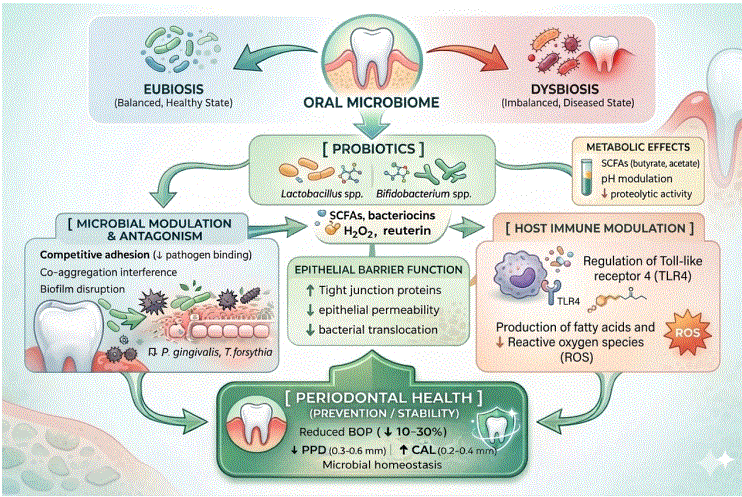
Figure 1: Mechanistic framework of probiotics in periodontal health.


Antonio Canabarro1,2* Marcus Heleno Borges Ribeiro1 Clara Thomas Andrade3 Fabio Cascardo Bilouro1 Marcia Rejane Thomas Canabarro Andrade4
1Veiga de Almeida University, Department of Periodontology, Rio de Janeiro, RJ, Brazil*Corresponding author: Antonio Canabarro, Veiga de Almeida University, Department of Periodontology, Rio de Janeiro, RJ, Brazil, E-mail: [email protected]
Periodontal diseases are among the most prevalent chronic inflammatory conditions worldwide and represent a significant public health burden. Increasing evidence suggests that periodontal pathogenesis is driven by microbial dysbiosis and host inflammatory dysregulation rather than by isolated pathogens. Within this ecological framework, probiotics have emerged as a potential strategy for modulating the oral microbiome and promoting microbial homeostasis. This short communication discusses current evidence regarding the potential preventive role of probiotics in periodontal health, focusing on biological mechanisms, clinical findings, and implications for preventive medicine. Clinical studies suggest that probiotic supplementation may influence inflammatory periodontal parameters and microbial composition. For example, randomized clinical trials have reported reductions in bleeding on probing ranging from approximately 10% to 30%, as well as modest decreases in probing depth (~0.3-0.6 mm) when probiotics are used as adjuncts to mechanical therapy. However, heterogeneity in probiotic strains, dosage regimens, and treatment protocols limit definitive conclusions. Although probiotics cannot yet be routinely recommended for periodontal prevention, microbiome-modulating approaches represent a promising direction for preventive oral health strategies. Further well-designed studies with standardized methodologies are required to clarify their preventive potential.
Probiotics; Periodontal disease; Prevention; Oral microbiome; Preventive medicine
Periodontal diseases are highly prevalent chronic inflammatory conditions affecting a large proportion of the global population. Periodontitis the most severe form of periodontal diseases represents a major cause of tooth loss in adults [1,2]. Beyond local effects, periodontal diseases have been increasingly linked to systemic inflammatory conditions, including cardiovascular diseases and diabetes mellitus, highlighting their importance in preventive medicine [3,4].
Traditional models of periodontal disease emphasized specific pathogenic bacteria as the primary drivers of tissue destruction. However, growing evidence supports the ecological dysbiosis model, in which disease results from disruption of the oral microbiome combined with an altered host response [5,6]. In this context, disease progression is driven by microbial imbalance rather than individual pathogens.
This paradigm shift has led to growing interest in therapeutic and preventive strategies aimed at restoring microbial balance within the oral ecosystem. Among these, probiotics defined as live microorganisms that provide health benefits to the host when administered in adequate amounts have been investigated as potential modulators of the oral microbiome [7].
Although probiotics have been widely explored as adjuncts to periodontal therapy, their role in prevention remains insufficiently defined. This short communication explores the preventive potential of probiotics in periodontal health, highlighting microbiome modulation as an emerging paradigm in periodontal care.
The preventive potential of probiotics in periodontal health is linked to multiple biological mechanisms, including microbial competition, antimicrobial activity, and host immune modulation.
One key mechanism is competitive exclusion, in which probiotic microorganisms compete with pathogenic bacteria for adhesion sites within the oral biofilm. By occupying ecological niches in the microbial community, probiotics may limit colonization by periodontal pathogens [8].
Probiotics can also produce antimicrobial substances, including bacteriocins, organic acids, and hydrogen peroxide, which inhibit the growth of pathogenic microorganisms within the oral cavity. These effects may help to reduce microbial virulence and maintain microbial balance.
In addition to direct microbial interactions, probiotics may exert immunomodulatory effects by influencing host inflammatory responses. Experimental and clinical studies suggest that probiotic strains regulate cytokine expression and modulate inflammatory pathways involved in periodontal tissue destruction [8]. Evidence suggests that the use of probiotics improves epithelial cell barrier function and helps downregulate the inflammation process through the regulation of toll-like receptor 4 (TLR4) and the production of fatty acid, decreasing production of reactive oxygen species (ROS) [9].
Within the ecological dysbiosis framework, these mechanisms support the role of probiotics in restoring microbial eubiosis, thereby helping to maintain periodontal health and potentially preventing disease progression (Figure 1).
Figure 1: Mechanistic framework of probiotics in periodontal health.
Probiotic microorganisms and their metabolites (e.g., bacteriocins, short-chain fatty acids, and hydrogen peroxide) modulate the oral microbiome through microbial competition and biofilm interference. Additionally, probiotics influence host immune responses by regulating key inflammatory pathways. Probiotics also enhance epithelial barrier integrity by regulating tight junction proteins and reducing bacterial translocation. These combined effects contribute to microbial homeostasis and improved periodontal clinical outcomes. Adapted from Deandra et al. [9].
Over the past decade, several clinical studies have investigated the use of probiotics as adjuncts to conventional periodontal therapy. Randomized clinical trials have reported improvements in clinical parameters such as plaque index, gingival inflammation, bleeding on probing (BOP), and probing pocket depth (PPD) when probiotics are used as adjuncts to mechanical periodontal treatment [10].
Quantitatively, reductions in BOP of approximately 10% to 30% have been described following probiotic supplementation, while decreases in PPD generally range from 0.3 to 0.6 mm when compared to control groups receiving mechanical therapy alone [9-11]. Recent systematic reviews and metanalysis confirmed statistically significant reductions in key clinical parameters, [12,13] although effect sizes remain modest and vary across studies [12,13], with greater efficacy observed in gingivitis and in short-term studies [12].
Among the probiotic strains studied, Lactobacillus reuteri has received particular attention due to its anti-inflammatory and antimicrobial effects in periodontal environments [12]. Clinical trials evaluating L. reuteri lozenges have demonstrated significant reductions in gingival inflammation and plaque accumulation after 4 to 12 weeks of use, along with detectable shifts in subgingival microbiota composition [10]. In addition, a randomized clinical trial with a 180-day follow-up using a probiotic milk drink reported sustained improvements in periodontal parameters, including reductions in gingival inflammation and stabilization of clinical attachment levels, suggesting potential longer-term benefits of probiotic administration [14].
However, despite these promising findings, the current body of evidence remains heterogeneous. Studies differ considerably regarding probiotic strains, dosage forms, treatment duration, and clinical endpoints evaluated.10 Such methodological variability limits the comparability of studies and hampers the establishment of definitive clinical recommendations. Consequently, current clinical guidelines, including those developed by the European Federation of Periodontology, do not recommend the routine use of probiotics as adjuncts to periodontal therapy due to insufficient and inconsistent evidence [3].
Maintaining microbial homeostasis represents a promising strategy to reduce the burden of periodontal disease. As microbial dysbiosis precedes the clinical manifestations of periodontal inflammation, interventions capable of modulating the oral microbiome may contribute to preventing disease onset or progression.
Probiotics represent one such strategy by targeting the microbial ecosystem rather than individual pathogens. This ecological approach is consistent with current perspectives in oral microbiology and preventive healthcare.
Furthermore, improving periodontal health has broader implications for systemic health. Chronic periodontal inflammation is associated with increased systemic inflammatory burden and may contribute to the pathogenesis of several systemic diseases [4]. Therefore, preventive strategies that reduce oral inflammation may also provide indirect systemic health benefits.
From a clinical perspective, probiotics may be considered as adjunctive agents in specific clinical scenarios, particularly in patients with gingivitis and early-stage periodontitis. Their use may also be relevant in supportive periodontal therapy and in individuals with limited response to conventional mechanical treatment [9-11]. Probiotic-based interventions offer practical advantages because they can be delivered through various vehicles, including tablets, lozenges, and functional foods [10]. Such delivery systems facilitate integration into routine preventive oral health strategies. However, before probiotics can be widely incorporated into preventive dentistry, well-designed clinical studies are needed to define optimal strains, dosage regimens, and long-term clinical outcomes [9-11]. Despite their potential, the clinical relevance of these interventions remains dependent on standardization and stronger long-term evidence.
Probiotics emerge as a promising microbiome-based strategy within the evolving field of preventive periodontal care. Current evidence indicates that probiotics can influence microbial composition and inflammatory responses in the periodontal environment. However, substantial heterogeneity across clinical studies limits definitive conclusions regarding their preventive effectiveness.
From a preventive perspective, microbiome modulation offers a potential strategy for maintaining periodontal health and reducing inflammatory burden. Future well-designed studies with standardized methodologies are necessary to clarify the preventive potential of probiotics and support their integration into evidence-based oral health strategies.
Antonio Canabarro: Conceptualization, writing original draft.
Marcus Heleno Borges: Validation, writing review and editing.
Clara Thomas-Andrade: Validation, writing review and editing.
Fabio Cascardo Bilouro: Validation, writing review and editing.
Marcia Rejane Thomas Canabarro Andrade: Validation, writing review and editing.
None.
None.
Artificial intelligence tools were used to assist in the creation of the figure. All content was reviewed, validated, and approved by the authors.
Download Provisional PDF Here
Article Type: SHORT COMMUNICATION
Citation: Canabarro A, Ribeiro MHB, Andrade CT, Bilouro FC, Andrade MRTC (2026) Probiotics and Periodontal Health: Implications for Preventive Medicine. Int J Dent Oral Health 12(1): dx.doi.org/10.16966/2378-7090.441
Copyright: © 2026 Canabarro A, et al. This is an open-access article distributed under the terms of the Creative Commons Attribution License, which permits unrestricted use, distribution, and reproduction in any medium, provided the original author and source are credited.
Publication history:
All Sci Forschen Journals are Open Access