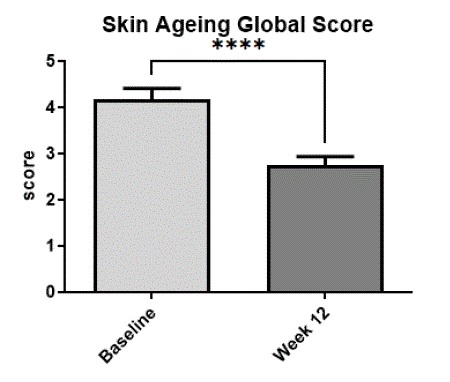
Figure 1: Evolution of Skin ageing Global score from baseline to week 12 (n=24; ****p=0.0001).


Elena Rossi1 Massimo Milani2,* Francesca Colombo2 Stefano Alfano2 Stefano Alfano3
1Skin Center Modena, Italy*Corresponding author: Massimo Milani, MD, PhD, Medical Department Cantabria Labs Difa Cooper, Caronno P (VA) Italy, E-mail: [email protected]
Background: Skin aging is a complex, multifactorial process driven by intrinsic biological mechanisms and extrinsic environmental factors, including ultraviolet radiation, oxidative stress, and lifestyle influences. Topical retinoids, particularly retinoic acid, are widely regarded as the gold standard for the treatment of both chrono-aging and photoaging due to their well-documented effects on collagen synthesis, epidermal turnover, and pigmentation. However, increasing attention has been directed toward systemic approaches that may complement topical therapies. Vitamin A, as a precursor of retinoids, plays a central role in skin homeostasis. The clinical relevance of its oral supplementation in combination with a topical retinoid remains insufficiently investigated, particularly in real-life clinical settings.
Objective: This study aimed to evaluate the clinical efficacy and tolerability of a combined “in-and-out” therapeutic strategy consisting of oral vitamin A supplementation and topical retinoic acid and glycolic acid gel in subjects with moderate-to-severe facial skin aging.
Methods: This was a prospective, assessor-blinded, single-arm pilot study conducted over 12 weeks. A total of 24 female subjects aged over 50 years, presenting with moderate-to-severe skin aging (Glogau score >2), were enrolled. Participants received a daily oral dose of vitamin A (50,000 IU) in combination with application of retinoic acid (0.02%) and glycolic acid 4% in gel formulation every other day at night. The primary outcome measure was the change in the Skin Ageing Global Score (SAGS), a composite clinical index that evaluates multiple parameters, including wrinkles, texture, pigmentation, elasticity, and pore appearance. Secondary endpoints included individual clinical parameters and instrumental measurements such as skin hydration, elasticity, and wrinkle dimensions. Statistical analysis was based on paired comparisons between baseline and week 12 values.
Results: At the end of the 12-week treatment period, a substantial improvement in the primary outcome was observed. The mean SAGS decreased from 4.21 ± 1.18 at baseline to 2.75 ± 0.90, corresponding to a mean absolute reduction of −1.46 points and a relative improvement of −34.7%. The reduction was consistent across the study population, with 65% of participants showing clinical improvement and no subjects experiencing worsening of the global score. Improvements were also observed in secondary endpoints, including reductions in wrinkle severity, improved skin texture, decreased pore visibility, and more uniform pigmentation. Instrumental assessments supported these findings, showing increased skin hydration and reductions in wrinkle dimensions, while skin elasticity remained stable. The treatment regimen was well tolerated, with no serious adverse events reported.
Conclusion: The results of this pilot study suggest that the combination of oral vitamin A supplementation and topical retinoic acid may provide clinically meaningful improvements in skin aging parameters. This “in-and-out” approach appears to be a promising strategy for enhancing antiaging outcomes. However, due to the study’s single-arm design and limited sample size, these findings should be interpreted with caution. Larger, randomized controlled trials are warranted to confirm efficacy and establish the causal contribution of oral vitamin A supplementation.
Vitamin A; Retinoic acid; Glycolic acid; Skin aging; Dermatology; Assessor blinded
Skin ageing is a complex and multifactorial biological process resulting from the interplay between intrinsic (chronological) and extrinsic (environmental) factors [1]. Intrinsic aging reflects the natural, genetically determined decline in cellular function over time, whereas extrinsic aging-commonly referred to as photoaging is primarily driven by environmental exposures such as ultraviolet (UV) radiation, air pollution, smoking, and diet [2]. Clinically, these processes manifest as wrinkles, loss of elasticity, pigmentation disorders, dryness, and textural irregularities, which can significantly impact both skin function and quality of life [3]. At the molecular level, oxidative stress plays a central role in skin aging. Reactive oxygen species (ROS), generated through cellular metabolism and external factors such as UV exposure, can overwhelm endogenous antioxidant defences, leading to damage of lipids, proteins, and DNA [4]. This oxidative imbalance promotes the activation of signalling pathways such as mitogen-activated protein kinases and transcription factors like AP-1, ultimately inducing the expression of matrix metalloproteinases (MMPs), which are responsible for collagen degradation [5]. The breakdown of dermal collagen and extracellular matrix components is a key driver of wrinkle formation and loss of skin firmness. In addition to oxidative damage, alterations in cellular homeostasis mechanisms such as autophagy have been increasingly recognized as contributors to skin aging [6]. Autophagy is a critical intracellular process responsible for the degradation and recycling of damaged cellular components [7]. Impairment of autophagic activity, particularly under chronic UV exposure, may lead to the accumulation of dysfunctional proteins and organelles, thereby accelerating cellular senescence and tissue aging [8]. These insights highlight that skin aging is not solely a structural phenomenon but also involves complex biochemical and cellular regulatory pathways. Among available therapeutic strategies, topical retinoids-particularly retinoic acid-are widely considered the gold standard for the treatment of both intrinsic aging and photoaging [9]. Retinoids exert multiple beneficial effects on the skin, including stimulation of collagen synthesis, inhibition of collagen degradation, normalization of keratinocyte differentiation, and improvement of pigmentation abnormalities. Moreover, emerging evidence suggests that retinoids may also influence autophagy-related pathways, further contributing to their anti-aging effects [10]. Beyond topical treatments, there is growing interest in systemic approaches aimed at enhancing skin health and counteracting aging processes. Nutritional factors, including vitamins, antioxidants, and other bioactive compounds, have been increasingly investigated for their role in skin physiology. Vitamin A (retinol), the metabolic precursor of retinoic acid, plays a fundamental role in epithelial cell growth, differentiation, and maintenance [11]. Retinoids derived from vitamin A are involved in regulating collagen metabolism and protecting against UV-induced damage, including the suppression of MMP activity and preservation of procollagen synthesis. Despite the well-established biological relevance of vitamin A, clinical evidence supporting the use of oral supplementation as an anti-aging intervention remains limited [12]. While several studies have explored the role of oral nutraceuticals such as collagen peptides or hyaluronic acid, data on vitamin-based supplementation-particularly vitamin A are comparatively scarce and often inconclusive. Furthermore, it has been hypothesized that combining systemic and topical approaches may provide additive or synergistic benefits by targeting multiple pathways involved in skin aging. In this context, the concept of an “in-and-out” strategy-integrating oral supplementation with topical treatment-has emerged as a potentially promising approach [13]. By simultaneously addressing internal biological processes such as oxidative stress and cellular metabolism, and external structural components such as epidermal turnover and dermal remodelling, this combined strategy may enhance overall therapeutic outcomes [14]. Previous randomized clinical evidence has suggested that the addition of oral vitamin A to topical retinoid and glycolic acid therapy may lead to superior improvements in skin aging parameters compared to topical treatment alone. Retinoic acid (tretinoin) at a concentration of 0.02% exerts its anti-ageing effects primarily through binding to nuclear Retinoic Acid Receptors (RARs) and Retinoid X Receptors (RXRs), thereby modulating gene transcription involved in keratinocyte differentiation and proliferation [15]. This leads to normalization of epidermal turnover, reduction of corneocyte cohesion, and improved epidermal thickness. At the dermal level, retinoic acid stimulates fibroblast activity, enhancing the synthesis of type I and III collagen while inhibiting matrix metalloproteinases (MMPs) induced by ultraviolet radiation, thus reducing collagen degradation. Additionally, it promotes angiogenesis and increases glycosaminoglycan production, improving skin hydration and elasticity. Glycolic acid, an AlphaHydroxy Acid (AHA) at 4%, acts predominantly through keratolytic and exfoliative mechanisms by decreasing corneocyte adhesion via disruption of ionic bonding in the stratum corneum [16]. This results in accelerated desquamation, improved skin texture, and increased epidermal renewal. Glycolic acid has also been shown to stimulate dermal remodelling by inducing collagen synthesis and increasing dermal glycosaminoglycans, contributing to enhanced skin firmness and hydration [17]. The rationale for combining retinoic acid 0.02% with glycolic acid 4% lies in their complementary and potentially synergistic mechanisms of action targeting both epidermal and dermal components of skin ageing. Glycolic acid facilitates enhanced penetration of retinoic acid by reducing stratum corneum thickness and improving drug bioavailability, while simultaneously providing rapid improvements in skin texture and radiance. The relatively low concentrations of both agents are strategically selected to balance efficacy with tolerability, minimizing irritation commonly associated with higher doses. This combination approach allows for both immediate cosmetic benefits and long-term correction of photoaging signs, including fine lines, dyschromia, and loss of elasticity, making it a rational and effective formulation for anti-ageing therapy. Realworld evidence supporting this combined approach remains limited. Therefore, further investigation is warranted to better define the clinical efficacy and tolerability of integrating oral vitamin A supplementation with topical retinoid therapy in subjects with moderate-to-severe skin aging.
This study was designed as a prospective, assessor-blinded, singlearm pilot clinical trial conducted over a 12-week period. The primary objective was to evaluate the clinical efficacy and tolerability of a combined “in-and-out” therapeutic approach integrating oral vitamin A supplementation with topical retinoic acid treatment in subjects with moderate-to-severe facial skin aging.
Given the exploratory nature of the study, a single-arm design was selected to generate preliminary evidence on treatment effectiveness in a real-world clinical setting. To reduce assessment bias, all clinical evaluations were performed by an independent investigator blinded to the study timeline (baseline vs. post-treatment assessments).
The study was conducted in accordance with the principles of Good Clinical Practice and the Declaration of Helsinki [18]. All participants provided written informed consent prior to enrolment.
A total of 24 female subjects were enrolled in the study. Inclusion criteria were age >50 years, presence of moderate-to-severe facial skin aging defined as a Glogau score >2, and willingness to comply with study procedures.
Exclusion criteria included pregnancy or breastfeeding; known hypersensitivity to retinoids or vitamin A; clinically significant hepatic disease; uncontrolled dyslipidaemia; use of systemic retinoids or other anti-aging treatments within the previous 3 months; and the presence of active dermatological conditions affecting the face that could interfere with study assessments.
Participants were recruited from outpatient dermatology clinics and were instructed to maintain their usual skincare routine while avoiding the introduction of new cosmetic or pharmacological treatments during the study period.
Participants received a combined treatment protocol consisting of oral vitamin A supplementation and topical retinoic acid application. The oral intervention consisted of vitamin A administered at a dose of 50,000 IU once daily throughout the 12-week study period.
The topical treatment consisted of retinoic acid 0.02% combined with glycolic acid 4%, formulated in a polyvinyl alcohol (PVA) gel, and applied to the face every two days in the evening.
Participants were instructed on proper application techniques, including the use of a standardized amount of topical product and avoidance of sensitive areas such as the periocular region. The use of a non-comedogenic moisturizer and sunscreen was permitted and recommended to minimize irritation and phototoxicity.
Treatment adherence was monitored through patient self-reporting at follow-up visits.
Primary outcome: The primary efficacy endpoint was the change in Skin Ageing Global Score (SAGS) [19] from baseline (T0) to week 12 (T1). The SAGS is a composite clinical score assessing multiple domains of skin aging, including wrinkles, texture, pigmentation, elasticity, erythema, and pore appearance. Each parameter is graded on a standardized scale, with higher scores indicating more severe aging.
Secondary outcomes: Secondary endpoints included both clinical and instrumental parameters
● Clinical assessments of individual components of skin aging, including wrinkle severity, skin texture irregularity, pore visibility, and pigmentation. The SAGS is a composite clinical score assessing multiple domains of skin aging, including wrinkles, texture, pigmentation, elasticity, erythema, and pore appearance. Each parameter is graded on a standardized scale, with higher scores indicating more severe aging, similar to other comprehensive dermatological assessment tools.
● Instrumental measurements, where available, including skin hydration, elasticity, and wrinkle dimensions. These instrumental assessments were conducted utilizing the Callegari Device (Soft FX™, Callegari 1930, Parma, Italy), providing quantitative data to complement the qualitative clinical evaluations of skin aging parameters. This device facilitated the precise quantification of various biophysical properties, including hydration and elasticity, thereby providing robust, objective data to substantiate the clinical observations.
● Investigator global assessment (IGA) score of improvement at week 12 using a 4-grade score (from 0, no improvement to 3, great improvement, calculated for 4 clinical parameters; range from 0, no effects to 12 great improvement).
Safety and tolerability were also evaluated throughout the study based on patient-reported outcomes and investigator assessment of adverse events. All clinical evaluations were performed under standardized lighting conditions and, when applicable, supported by photographic documentation.
Statistical analysis was performed using a paired design, comparing baseline (T0) and week 12 (T1) values for all continuous variables. Descriptive statistics were used to summarize data, including mean values, standard deviations, and percentage changes from baseline. The primary endpoint (change in SAGS) was analysed using a paired t-test or non-parametric equivalent (Wilcoxon test), depending on data distribution. Statistical significance was defined as a two-sided p-value <0.05. Given the exploratory nature of the study and the limited sample size, analyses were considered hypothesis-generating rather than confirmatory. No formal sample size calculation was performed, as this study was designed as a pilot trial to provide preliminary estimates of treatment effect and variability.
A total of 24 female subjects were enrolled in the study after providing written informed consent. The study was conducted from November 2025 to February 2026. All enrolled participants completed the study, with no dropouts.
Mean SAGS decreased from 4.21 ± 1.18 at baseline to 2.75 ± 0.90 at week 12 (p = 0.0001, Wilcoxon signed-rank test), corresponding to an absolute reduction of −1.46 and a relative decrease of −34.7%.
The effect size, calculated using Cohen’s d, was 1.3, indicating a large magnitude of effect.
Figure 1 illustrates the change in SAGS scores over time. Figure 2 presents representative clinical images of four participants at baseline and after treatment.
Figure 1: Evolution of Skin ageing Global score from baseline to week 12 (n=24; ****p=0.0001).
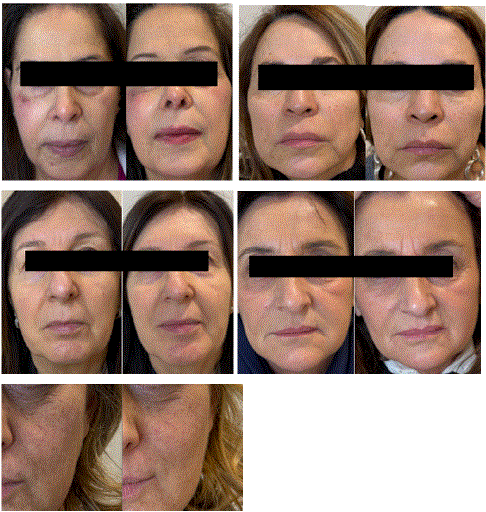
Figure 2: Colour pictures of the face of four subjects participating in the trial at baseline and at week 12.
The table reports the evolution of the 4 skin ageing signs evaluated instrumentally. All the parameters show a statistical and significant reduction at week 12 in comparison with baseline values.
| Parameter | Baseline | Week 12 |
| Wrinkles | 0.63 | 0.25 |
| Texture | 0.79 | 0.54 |
| Pores | 1.75 | 1.25 |
| Pigmentation | 0.96 | 0.63 |
At week 12 the mean IGA score was 6.9 (range from 1 to 10) with 15 (65%) subjects with an IGA score ≥ 7 (good or very great improvement) and 9 with moderate (24%) or no improvement (9%).
All the 24 subjects enrolled concluded the 12 weeks treatment period. No serious adverse events were reported. Treatment was well tolerated.
This prospective pilot study suggests that the combination of oral vitamin A supplementation and topical retinoic acid is associated with clinically meaningful improvements in skin aging parameters after 12 weeks of treatment. The observed reduction in the Skin Ageing Global Score (SAGS), together with consistent improvements across multiple clinical domains including wrinkles, skin texture, pores, and pigmentation, supports the potential benefit of a combined “in-andout” therapeutic strategy targeting both systemic and local pathways involved in skin aging.
The biological plausibility of this approach is supported by established mechanisms underlying skin aging. Retinoids modulate key processes, including stimulation of collagen synthesis, inhibition of matrix metalloproteinase-mediated degradation, and potential regulation of autophagy-related pathways [20]. In this context, oral vitamin A supplementation may provide a systemic reservoir of retinoid precursors, potentially enhancing or sustaining the biological activity of topical retinoic acid. Retinol plays a central role in epithelial cell differentiation and proliferation and has been shown to counteract ultraviolet-induced collagen degradation while promoting procollagen synthesis [21]. The integration of systemic and topical retinoid activity may therefore result in additive or potentially synergistic effects on skin remodeling.
The present findings are directionally consistent with those reported in a previous randomized, assessor-blinded trial, in which the combination of oral vitamin A supplementation and topical retinoic acid demonstrated greater efficacy than topical treatment alone, with improved global skin aging scores and clinical outcomes [13]. However, direct comparisons should be interpreted with caution due to differences in study design, population characteristics, and the absence of a control group in the current study.
Several limitations should be considered. Single-arm design precludes causal inference, as the observed improvements may be influenced by placebo effects, regression to the mean, or uncontrolled confounding factors. The relatively small sample size limits statistical precision and generalizability. In addition, the lack of objective, standardized instrumental assessments may introduce measurement variability. The absence of baseline assessment of vitamin A status represents a further source of potential heterogeneity in treatment response.
Despite these limitations, this study provides preliminary realworld evidence supporting the feasibility, tolerability, and potential clinical benefit of combining oral and topical retinoid therapies. This integrated approach may be particularly relevant in addressing the multifactorial nature of skin aging by concurrently targeting systemic biological processes and cutaneous structural changes.
Further randomized controlled trials with larger sample sizes, longer follow-up, and standardized objective outcome measures are required to confirm these findings and to better define the role, efficacy, and safety profile of oral vitamin A supplementation in dermatological anti-aging strategies.
The findings of this prospective pilot study provide additional clinical support for a combined “in-and-out” strategy integrating oral vitamin A supplementation with topical retinoic acid in the management of skin aging. The consistent improvement observed across both global and individual clinical parameters, together with good tolerability, supports the rationale for targeting both systemic and local pathways involved in the aging process.
These results are aligned with previous randomized evidence suggesting greater efficacy of the combined approach compared with topical treatment alone [13]. Taken together, the available data indicate that oral vitamin A supplementation may function as an adjuvant to topical retinoid and glycolic acid therapy, with the potential to enhance clinical outcomes through complementary mechanisms of action.
However, the absence of a control group and the pilot nature of the study preclude causal inference. Therefore, the observed effects should be interpreted cautiously despite their magnitude and consistency. Within these constraints, the present findings support the feasibility and potential clinical relevance of this combined therapeutic approach.
Further well-designed randomized controlled trials with larger sample sizes and standardized outcome measures are required to confirm these observations, optimising treatment protocols, and better define the role, efficacy, and safety profile of systemic vitamin A supplementation in dermatological practice.
Download Provisional PDF Here
Aritcle Type: RESEARCH ARTICLE
Citation: Rossi E, Milani M, Colombo F, Alfano S, Biglioli G (2026) Effect of Oral Vitamin A Supplementation Combined with Topical Retinoid and Glycolic Acid Treatment on Skin Aging: A Prospective, Assessor-Blinded Pilot Study. J Clin Cosmet Dermatol 10(1): dx.doi.org/10.16966/2576- 2826.191
Copyright: © 2026 Rossi E, et al. This is an open-access article distributed under the terms of the Creative Commons Attribution License, which permits unrestricted use, distribution, and reproduction in any medium, provided the original author and source are credited.
Publication history:
All Sci Forschen Journals are Open Access