

Full Text
Emily Soriano1* Agustin Miguel P Soriano2 Patricia T Tinio3
1Dermatology, Davao Medical School Foundation, Davao City, Philippines2Primary Investigator, Medical Officer III Department of Dermatology, Rizal Medical Center, Philippines
3Adviser, Medical Specialist III, Department of Dermatology, Rizal Medical Center, Philippines
*Corresponding author: Emily Soriano, Dermatology, Davao Medical School Foundation, Davao City, Philippines, E-mail: sorianoemily@ gmail.com
Background: Molluscum Contagiosum (MC) is a viral skin infection with predilection for the pediatric population. Numerous therapeutic options are available, each with its own advantages and disadvantages, to treat MC. At the time of writing, commercially-available 5% Potassium Hydroxide (5%KOH) is priced at PHP1, 150.00-PHP1, 500.00 (USD19.56 - USD25.52) while Clear Nail Polish (CNP) can be purchased as low as PHP35.00 (USD0.60). This preliminary study aims to compare the efficacy and safety of CNP as a low-cost alternative to commercially-available 5%KOH.
Methods: Participants aged 3-18 years old clinically diagnosed with MC were recruited over a two-month period until the minimum sample size of twenty-four participants was met. Participants were randomly assigned to CNP and 5%KOH intervention groups, and instructed to apply the intervention twice a day to two identified lesions until lesional erythema before discontinuing, or until a maximum application period of three weeks. The time to erythema and involution and treatment-related side-effects were recorded and reported to the assessor once-a-week during follow-up.
Results: Fourteen and twelve participants were assigned to the CNP and 5%KOH interventions, respectively. Lesional erythema and involution in the 5%KOH group was 5.5 and 6 days, respectively. This was significantly faster than the CNP group, with both the onset of both parameters averaging to 15.5 days (p<0.001). 85.71% of lesions in the CNP group achieved involution, compared with 100% of the 5%KOH group (p=0.483). Tolerable lesional pain was more seen in the CNP group (35.71%). The higher incidence of lesional pain in the CNP group might be attributed to the longer treatment duration.
Conclusion: Five percent KOH, compared to CNP, is the superior treatment of MC, achieving faster erythema, involution, and success rates. However, both interventions were found to be equally efficacious. Given the limitations of this preliminary study, these findings should be interpreted as exploratory and hypothesis-generating.
Molluscum Contagiosum; Clear Nail Polish; 5% Potassium Hydroxide
Background of the study
Molluscum Contagiosum (MC) is a self-limited viral infection of the skin caused by molluscum contagiosum virus (MCV) and frequently seen on the face, trunk, and extremities in the pediatric population. This is mainly transmitted by direct skin contact or autoinoculation and present as skin-colored smooth dome-shaped umbilicated papules [1].
Mechanical methods as a therapeutic option have been shown to be effective in removing MC [2]. However, such interventions induce anxiety and trauma in the pediatric population [3,4]. While numerous topical interventions have been established, other alternative remedies such as green tea extract and garlic have also been investigated [5,6].
Potassium Hydroxide (KOH) is a strong alkali capable of dissolving keratin. The solution penetrates into lesional skin, causing inflammation and activation of the innate immune system, leading to involution of the MC lesion [7]. 5%KOH is commercially available and priced at PHP1, 150-PHP1, 500 (USD19.56 - USD25.52) as of the time of writing. Its product information sheet recommends an application of 2 x/day for 2-10 days. Erythema is the end-point signaling to stop the application of 5% KOH.
In contrast, clear nail polish (CNP) has been implicated as a possible therapeutic option for the treatment of MC. In a case report published in the Journal of American Association for Pediatric Ophthalmology and Strabismus (AAPOS), Dr. Andaluz-Scher and colleagues successfully treated an 8-year-old girl with a singular MC on the eyelid using CNP. The hypothesized mechanism of action of CNP is said to be “direct toxicity to the virus, indirectly depriving the virus of resources needed for replication, and inducing a secondary inflammatory response to fully eradicate lesions” [8]. With regard to safety, a material safety data sheet lists clear nail polish as having a mild irritant and allergic potential when applied to the skin [9].
However, the lack of scientific studies or clinical trials brings to question the viability of CNP as a treatment option for MC.
Objective
To compare the efficacy and safety of clear nail polish with 5% potassium hydroxide solution in the treatment of Molluscum contagiosum in the pediatric population over a three-week intervention period.
Trial design
This was conducted as a preliminary study intended to assess the feasibility, safety, and efficacy of CNP as an alternative treatment to 5%KOH.
Eligible pediatric patients were randomly assigned to two intervention groups, the CNP and the 5%KOH groups. Both the participants and assessor were blinded to the intervention to account for the differences in physical characteristics of CNP and 5%KOH. The assessor was one doctor trained by the primary investigator on the parameters to evaluate the participants during each follow-up. Eligible participants were recruited until the minimum sample size was met.
Safety considerations
There exists a lack of literature establishing the long-term safety of CNP applied to the skin, as well as data on its absorption profile. Compounding this, the prevalence of MC is skewed towards the pediatric population. In prioritizing the safety the study participants, the application of intervention was limited to two lesions only. Areas of application were limited to non-intertriginous skin below the neck. All other lesions were treated with petroleum jelly throughout the duration of the study. At the end of the study, all remaining lesions were treated with the available standard-of-care modalities, as approved by the patient’s guardian.
Participants
This study included pediatric patients aged 3-18 years old clinically diagnosed with at least two lesions of molluscum contagiosum. Clinical diagnosis is made if the lesions satisfy the characteristic morphology of discrete firm, dome-shaped papules that may have central umbilication.
The presence of any medical conditions causing immunocompromised state (chronic steroid use, concomitant oncologic disease, etc), history of prior keloid formation, or current pregnancy or lactation excluded the participants from the study. Drop out was defined as participants who failed to comply with the assigned treatment, and compliance was defined as at least four days of applications per week to a non-involuted lesion. The participant and their appointed guardian were informed at the start of the study that they may withdraw their participation at any time.
Interventions
Two interventions were compared: commercially-available CNP and 5%KOH. In this study, CNP was composed of ethyl acetate, butyl acetate, phthalic anhydride/trimellitic anhydride/glycols copolymer, nitrocellulose, acetyl tributyl citrate, isopropyl alcohol, methyl ethyl ketone, and the colorants violet 2 and tartazine. Participants in each group were instructed to apply the intervention twice a day for up to three weeks and record the clinical outcomes.
Outcomes
Over a three-week period with weekly assessment, three outcomes were measured: average duration to erythema and involution of the two identified test lesions, and treatment-related side-effects (pruritus, erythema, papular rash, burning sensation, pain, discharge, and hyperor hypopigmentation).
Sample size
A minimum of 24 patients (12 per treatment group) was necessary to achieve a 95% level of confidence, calculated at a power of 80%, to compare the efficacy of 5%KOH and clear nail polish in treating Molluscum contagiosum. OpenEpi was used in computing for the sample size.
Randomization
A computer-based random number generator assigned a number to each, with no repeats. All even-numbered participants were assigned to the CNP group while odd-numbers were allocated to the 5%KOH group. The random number generation, enrollment, and allocation of each participant was conducted by the primary investigator.
Blinding
The participant, participant’s legal guardian, and assessor were blinded to the contents of the intervention solution. Despite this, while both interventions are clear fluids, CNP leaves a residue on the skill as well as emits a distinct odor. Thus, complete blinding of the intervention solutions cannot be achieved.
Statistical methods
As this was a preliminary study, no formal a priori power calculation for equivalence or non-inferiority was performed. The computed sample sized was based on the hospital’s census of pediatric patients diagnosed with MC.
Frequency distribution and descriptive statistics (mean SD, median range) were used to summarize demographic and clinical characteristics. The normality of continuous variables was assessed using the Shapiro-Wilk test, guiding the selection of subsequent statistical tests.
For group comparisons, Fisher’s exact test was employed for categorical variables, while the Independent t-Test and Mann-Whitney U-test were used for continuous variables depending on normality assumptions.
The data analysis for this study was conducted using IBM SPSS Statistics for Windows, Version 26.0 (IBM Corp., 2019). All analyses were conducted at a significance level of 0.05.
Participant flow
Recruitment
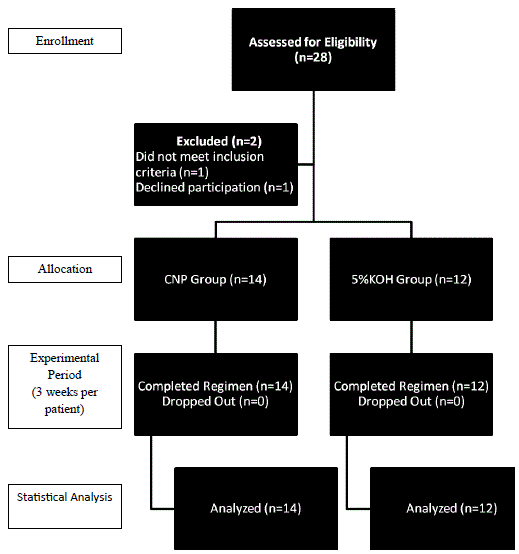
Twenty-eight participants were recruited over two months. Of these, one was initially clinically diagnosed to have MC, but was reassessed as non-MC on follow-up, while another declined inclusion in the study in favor of undergoing molluscum extraction. Fourteen and twelve participants were enrolled to the CNP- and 5%KOH- arm, respectively. Failure of involution was seen in two participants from the CNP arm.
Demographic data
The majority of participants in both groups were female (78.57% in the CNP group and 66.67% in the KOH group), with no statistically significant difference in sex distribution (p=0.665). The mean age was similar between groups (6.21 years in CNP and 6.50 years in KOH), with no statistically significant difference (p=0.724). These results indicate that the groups were demographically comparable for evaluating treatment outcomes (Table 1).
| Overall (n=26) | CNP (n=14) | 5%KOH (n=12) | P-value | |
| Sex | ||||
| Male | 7 (26.92) | 3 (21.43) | 4 (33.33) | 0.665 |
| Female | 19 (73.08) | 11 (78.57) | 8 (66.67) | |
| Age, years | 6.35 ± 2.00 | 6.21 ± 2.01 | 6.50 ± 2.07 | 0.724 |
Table 1: Patient Demographics between Clear Nail Polish and 5% Percent Potassium Hydroxide (KOH) Groups.
Time to involution
Lesion involution was achieved in 100% of patients treated with 5% KOH and 85.71% of those treated with CNP. Although the proportion of patients achieving lesion involution was slightly higher in the 5% KOH group, the difference was not statistically significant (p=0.483), suggesting that both treatments were comparably effective in this regard.
The median time to lesion involution was significantly (p<0.001) shorter in the 5% KOH group (6 days, range: 3-7 days) compared to the clear nail polish group (15.5 days, range: 3-19 days). These findings highlight that while both treatments were efficacious, 5%KOH led to more rapid lesion resolution, suggesting it may be the more efficient treatment option for MC (Table 2.1).
| CNP (n=14) | 5% KOH (n=12) | Test stat | p-value | |
| Number of patients with lesion involution; n (%) | 12 (85.71) | 12 (100.00) | 1.857 | 0.483 |
| Median time to lesion involution in days (range) | 15.5 [3, 19] | 6 [3, 7] | -3.816 | <0.001* |
Table 2.1: Comparison of Lesion Involution Outcomes between Clear Nail
Polish and 5% KOH treatments.
Statistical test used: Mann-Whitney U-test; *significant at alpha=0.05
Time to erythema
Erythema was reported in all patients treated with clear nail polish and 5% KOH, with a 100% incidence rate in both groups. This indicates that erythema was a universal outcome regardless of the treatment used. The median time to erythema onset was significantly shorter in the 5% KOH group (5.5 days, range: 3-6 days) compared to the clear nail polish group (15.5 days, range: 3-21 days), with p < 0.001. These results suggest that while both treatments resulted in erythema, 5% KOH induced this outcome more rapidly, possibly reflecting it’s more immediate impact on the treated lesions (Table 2.2).
| CNP (n=14) | 5% KOH (n=12) | Test stat | p-value | |
| Number of patients with erythema; n (%) | 14 (100.00) | 12 (100.00) |
- |
- |
| Median time to erythema onset in days (range) | 15.5 [3, 21] | 5.5 [3, 6] | -3.749 | <0.001* |
Table 2.2: Comparison of Erythema Outcomes between Clear Nail Polish
and 5% KOH treatments.
Statistical test used: Mann-Whitney U-test; *significant at alpha=0.05
Treatment outcomes
Patients in both treatment groups experienced a range of reactions, with varying frequencies observed. Tolerable pain was more frequently reported in the clear nail polish group (35.71%) compared to the 5% KOH group (8.33%). Pruritus was reported by a majority of patients in both groups, occurring in 64.29% of those treated with clear nail polish and 91.67% of those treated with 5% KOH.
Post-inflammatory hyperpigmentation was nearly universal, affecting 85.71% of patients in the clear nail polish group and 100% in the 5% KOH group. These findings indicate that both treatments were associated with notable side effects, though the types and frequencies of reactions varied. Clear nail polish was associated with higher frequency of tolerable pain, while pruritus was more common with 5% KOH (Table 3).
| CNP (n=14) | 5% KOH (n=12) | |
| Reactions | ||
| Pain | 5 (35.71) | 1 (8.33) |
| Pruritus | 9 (64.29) | 11 (91.67) |
| Post-Inflammatory Hyperpigmentation | 12 (85.71) | 12 (100.00) |
Table 3: Treatment-Related Reactions between Clear Nail Polish and 5% KOH.
Interpretation
This study should be interpreted as a preliminary randomized controlled trial designed to explore the feasibility of CNP as an alternative treatment to commercially available 5%KOH for the treatment of MC, and generate preliminary efficacy and safety data. While the findings suggest CNP offers statistically comparable efficacy to the control intervention, the limited sample size restricts definitive conclusions regarding equivalence or non-inferiority
Summary of findings
Twice daily application of CNP showed involution in 85.71% of participants, with an average time to erythema and involution of 15.5 days. This is in contrast to the case report by Andaluz-Scher and colleagues, who saw involution by the 25th day of intervention [8]. However, in their case report, CNP was applied sparingly for a total of 5 applications, which may account for this discrepancy. Informal observation by the participant’s guardian described a progression of initial increase in size of the lesion, then erythema, then involution, then crusting and hyperpigmentation, though this progression was not formally recorded.
Notably, this study was able to document tolerable pain which was seen more in the CNP group in contrast to the 5%KOH. This was unaccounted for in the aforementioned case report. It is possible that pain was more reported in the CNP group owing to the longer intervention duration, as pain is also a listed treatment-related outcome of commercially-available 5%KOH, and reported in one patient from the 5%KOH arm.
The evidence shows that 5%KOH is the superior treatment. There is notably faster time to erythema, time to involution, with all participants in the 5%KOH arm displaying lesional involution. Despite this, with a non-significant difference in number of lesions that exhibited involution (p=0.483), both interventions are comparably efficacious. No formal measure of lesional diameter was conducted. Wider lesional diameters have been associated with a weaker immune response [10,11]. While both immunocompromised and immunocompetent children are noted to have similar lesional diameter at 2-5mm, the primary author noted slower time to involution in larger lesions (Figures 1,2).
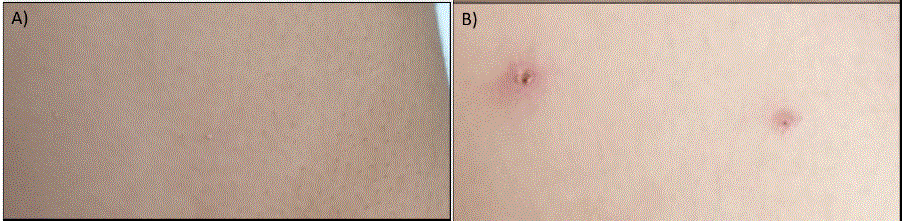
Figure 1: A six-year-old female given CNP. Baseline (A) showed discrete small, pearly white, dome-shaped papules on the left leg, which showed increase in size, with erythema, involution, and crusting (B) after two weeks.
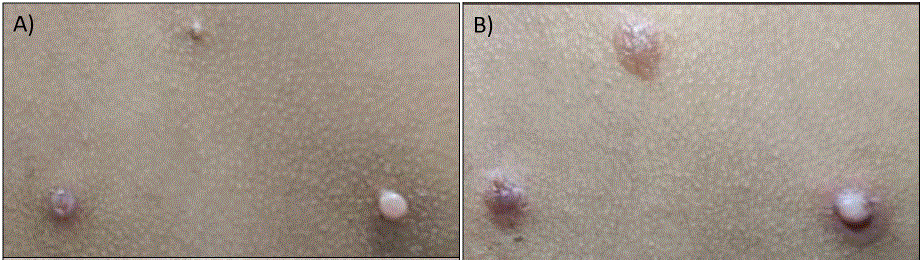
Figure 2: An eight-year-old female given CNP. Baseline (A) showed one small and two large lesions on the back. CNP was applied to the lesions, with the smallest lesion showing involution after three days, while the two test lesions showed no involution after twenty-one days (B), confirmed through serial dermoscopic evaluation. The patient subsequently underwent molluscum extraction.
Hypothesized mechanism of action
Table 4 summarizes the different compounds found in the intervention CNP. PubChem, an open chemistry database at the National Institutes of Health (NIH), was used to review each compound. Of note, majority of the ingredients found in the intervention CNP have irritant potential. Thus, it is hypothesized that the primary mechanism of action of CNP is to induce local irritation.
| Ingredient | Category | Details |
| Ethyl acetate | Irritant | Commonly used as a solvent in nail polish; mild skin irritants but not sensitizers to humans. |
| Butyl acetate | Irritant | Commonly used as a solvent in nail polish; mild skin irritants but not sensitizers to humans. |
| Phthalic anhydride/ Trimellitic anhydride/Glycols copolymer [11] | Allergen | Allergen and sensitizer. |
| Nitrocellulose |
Potential Irritant |
Generally considered safe for topical use but may cause mild irritation in sensitive individuals. |
| Acetyl tributyl citrate | Generally Safe | Plasticizer with a low irritation profile and low allergenic potential. |
| Isopropyl alcohol | Irritant | Known to cause skin and eye irritation; also dries out the skin with prolonged exposure. |
| Methyl ethyl ketone | Irritant | A solvent that may cause irritation to skin and mucous membranes. |
| Colorants (Violet 2 and Tartrazine) | Allergen | Synthetic dyes noted to have allergen potential. |
Table 4: Summary of ingredients found in intervention CNP using data from PubChem and accessed December.
While some compounds were listed as potential skin sensitizers, haptens, or allergens, immunostimulation through a delayed type hypersensitivity reaction as a possible mechanism cannot be ascertained without patch test confirmation.
The PubChem search showed that none of the ingredients have keratolytic potential. This lack of keratolytic property of CNP might also contribute to the faster time to involution between 5%KOH and CNP.
Limitations
As a preliminary study, the sample size was limited and may not provide adequate statistical power to detect small but clinically meaningful differences between the two intervention groups. This limits the interpretation of the non-significant statistical findings. Larger, adequately powered randomized trials are needed to validate these preliminary findings.
Due to the lack of literature evidence on the safety profile of CNP when applied to the skin, there was an emphasis on patient safety over scientific investigation. Consequently, the number of MC lesions tested per patient was limited.
The variability in distribution, number, and diameter of MC lesions per patient was unaccounted for. Objective measure of pain such as thru a visual pain scale was likewise unaccounted for.
Patient reported outcomes, including willingness to use the medication vis-à-vis cost, as a measure of preference were likewise not accounted. Further studies into the willingness to adhere to CNP for MC might yield valuable weight as to the preference to use CNP.
Generalizability
Participants of this study were freely given the test intervention, which removes cost as a limiting factor. In absence of this regard, CNP therefore becomes more widely available and readily accessible to all socioeconomic groups. Commercially available 5%KOH is priced at PHP1, 150.00-PHP1, 500.00 (USD19.56- USD25.52), while the intervention CNP was purchased at PHP35.00 (USD0.60).
The aforementioned limitations also make the overall generalizability of this study and adoption as a standard-of-care treatment alternative for MC placed under question. Though the minimum sample size was met, further studies into CNP that account for immune status, or extending the treatment duration, might shed light into the failure rate. In this vein, caution is still advised for the use of CNP in the treatment of MC.
Refinement of the methodology to account for the aforementioned limiting factors in subsequent studies may pave the way into incorporating CNP as an alternative therapy for MC.
The findings of this preliminary study show that 5%KOH, compared to CNP, is the statistically superior treatment of MC, achieving faster erythema, involution, and success rates. However, both interventions were found to be equally efficacious. The significantly lower cost of CNP may be the primary decision point in favor of its use in the treatment of MC.
Registration
This study was registered in the Health Research and Development Information Network (HERDIN), under the Philippine Council for Health Research and Development (DOST-PCHRD), with Registry ID PHRR241218-007840 and study title Clear Nail Polish as An Alternative Treatment for Molluscum Contagiosum in The Pediatric Population: A Randomized, Assessor-Blinded, Control Study.
Funding
This study, including the purchase of intervention solutions, was self-funded by the principal investigator. There were no external sources of funding such as the manufacturers of the interventions. No donations from the manufacturer or distributor of the intervention were given.
Disclosure
No potential conflicts of interest have been identified. The principal investigators and co-investigators report no disclosures.
Appendix A: CONSORT 2010 Checklist.
| Secti n/Topic | Item No | Checklist item | Reported on page No |
| Title and abstract | |||
| 1a | Identification as a randomised trial in the title | 1 | |
| 1b | Structured summary of trial design, methods, results, and conclusions (for specific guidance see CONSORT for abstracts) | 3 | |
| Introducti | |||
| Background and objecti es | 2a | Scientific background and explanation of rationale | 4 |
| 2b | Specific objectives or hypotheses | 5 | |
| Methods | |||
| Trial design | 3a | Description of trial design (such as parallel, factorial) including allocation ratio | 6 |
| 3b | Important changes to methods after trial commencement (such as eligibility criteria), with reasons | n/a | |
| Parti ts | 4a | Eligibility criteria for participants | 6 |
| 4b | Settings and locations where the data were collected | 6 | |
| Interventi | 5 | The interventions for each group with sufficient details to allow replication, including how and when they were actually administered | 7 |
| Outcomes | 6a | Completely defined pre-specified primary and secondary outcome measures, including how and when they were assessed | 7 |
| 6b | Any changes to trial outcomes after the trial commenced, with reasons | n/a | |
| Sample size | 7a | How sample size was determined | 7 |
| 7b | When applicable, explanation of any interim analyses and stopping guidelines | n/a | |
| Randomisati | |||
| Sequence generati | 8a | Method used to generate the random allocation sequence | 7 |
| 8b | Type of randomisation; details of any restriction (such as blocking and block size) | 7 | |
|
Allocati concealment mechanism |
9 | Mechanism used to implement the random allocation sequence (such as sequentially numbered containers), describing any steps taken to conceal the sequence until interventions were assigned | 7 |
| Implementati | 10 | Who generated the random allocation sequence, who enrolled participants, and who assigned participants to interventions | 7 |
| Blinding | 11a | If done, who was blinded after assignment to interventions (for example, participants, care providers, those assessing outcomes) and how | 7 |
| 11b | If relevant, description of the similarity of interventions | 7 | |
| Statistical methods | 12a | Statistical methods used to compare groups for primary and secondary outcomes | 8 |
| 12b | Methods for additional analyses, such as subgroup analyses and adjusted analyses | n/a | |
| Results | |||
| Participant flow (a diagram is strongly recommended) | 13a | For each group, the numbers of participants who were randomly 9 assigned, received intended treatment, and were analysed for the primary outcome |
9 |
| 13b | For each group, losses and exclusions after randomisation, together with reasons |
9 | |
| Recruitment | 14a | Dates defining the periods of recruitment and follow-up | 9 |
| 14b | Why the trial ended or was stopped | 9 | |
| Baseline data | 15 | A table showing baseline demographic and clinical characteristics for each group | 10 |
| Numbers analysed | 16 | For each group, number of participants (denominator) included in each analysis and whether the analysis was by original assigned groups |
10 |
| Outcomes and estimation | 17a | For each primary and secondary outcome, results for each group, and the estimated effect size and its precision (such as 95% confidence interval) | 10-12 |
| 17b | For each primary and secondary outcome, results for each group, and the estimated effect size and its precision (such as 95% confidence interval) | 10-12 | |
| Ancillary analyses | 18 | Results of any other analyses performed, including subgroup analyses and adjusted analyses, disti pre-specifi from exploratory |
n/a |
| Harms | 19 | All important harms or unintended effects in each group (for specific guidance see CONSORT for harms) | 12 |
| Discussion | |||
| Limitati | 20 | Trial limitations, addressing sources of potential bias, imprecision, and, if relevant, multiplicity of analyses | 16 |
| Generalisability | 21 | Generalisability (external validity, applicability) of the trial findings | 16 |
| Interpretati | 22 | Interpretation consistent with results, balancing benefits and harms, and considering other relevant evidence | 13 |
| Other information | |||
| Registrati | 23 | Registration number and name of trial registry | 17 |
| Protocol | 24 | Where the full trial protocol can be accessed, if available | 17 |
| Funding | 25 | Sources of funding and other support (such as supply of drugs), role of funders | 17 |
Appendix B: Normality test on values Between Clear Nail Polish and 5% KOH.
| Test statistic | p-value | |
| Involution - CNP | 0.821 | 0.017* |
| Involution - KOH | 0.903 | 0.172 |
| Erythema - CNP | 0.810 | 0.012* |
| Erythema - KOH | 0.764 | 0.004* |
Statistical test used: Shapiro-wilk test of normality *significant at alpha=0.05
- Meza-Romero R, Navarrete-Dechent C, Downey C (2019) Molluscum contagiosum: An update and review of new perspectives in etiology, diagnosis, and treatment. Clin Cosmet Investig Dermatol 12: 373- 381. [Ref.]
- van der Wouden JC, van der Sande R, Kruithof EJ, Sollie A, van Suijlekom-SmitLW, et al. (2017) Interventions for cutaneous molluscum contagiosum. Cochrane Database Syst Rev 5: CD004767. [Ref.]
- Lerwick JL (2016) Minimizing pediatric healthcare-induced anxiety and trauma. World J Clin Pediatr 5: 143. [Ref.]
- Orenius T, LicPsych, Säilä H, Mikola K, Ristolainen L (2018) Fear of Injections and Needle Phobia Among Children and Adolescents: An Overview of Psychological, Behavioral, and Contextual Factors. SAGE Open Nurs. [Ref.]
- Silverberg NB (2003) Pediatric Molluscum Contagiosum Optimal Treatment Strategies. Pediatr Drugs 5: 505-512. [Ref.]
- Cabillos MR, Verallo-Rowell VM, Leelin-Sarrosa DM (2003) Green Tea Extract in the Management of Molluscum Contagiosum - A Randomized Study. Makati Medical Center Proceedings 17: 3-8. [Ref.]
- Heo JY, Park TH, Kim W II (2022) The efficacy and safety of topical 10% potassium hydroxide for molluscumcontagiosum: a systematic review and meta-analysis. J Dermatolog Treat 33: 1682-1690. [Ref.]
- Andaluz-Scher LE, Nudelman NT, Storey NA, Barry GP (2023) Eyelid molluscum contagiosum lesion in a pediatric patient treated with topical nail polish. J AAPOS 27: 60-62. [Ref.]
- CNP (2023) Material Safety Data Sheet. [Ref.]
- Hebert AA, Bhatia N, Del Rosso JQ (2023) Molluscum Contagiosum: Epidemiology, Considerations, Treatment Options, and Therapeutic Gaps. J Clin Aesthet Dermatol 16: S4-S11. [Ref.]
- Moffitt DL, Sansom JE (2002) Allergic contact dermatitis from phthalic anhydride/trimellitic anhydride/glycols copolymer in nail varnish. Contact Dermatitis 46: 236-236. [Ref.]
Download Provisional PDF Here
Aritcle Type: RESEARCH ARTICLE
Citation: Soriano E, Soriano AMP, Tinio PT (2026) Clear Nail Polish as an Alternative Treatment for Molluscum Contagiosum in the Pediatric Population: A Randomized, Assessor-Blinded, Control Study. J Clin Cosmet Dermatol 10(1): dx.doi.org/10.16966/2576-2826.189
Copyright: © 2026 Soriano E, et al. This is an open-access article distributed under the terms of the Creative Commons Attribution License, which permits unrestricted use, distribution, and reproduction in any medium, provided the original author and source are credited.
Publication history:
SCI FORSCHEN JOURNALS
All Sci Forschen Journals are Open Access
New Journals
Best viewed in Google Chrome | Mozilla Firefox | Microsoft Edge
Copyright © 2024 Sci Forschen Inc., All Rights Reserved