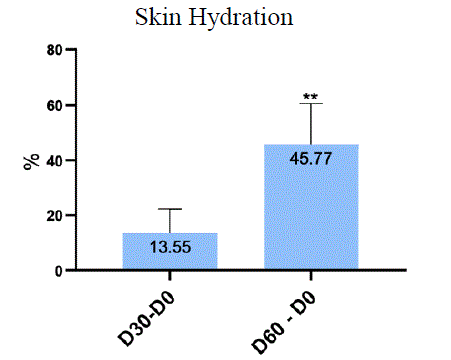
Figure 1: Vertical bar charts show that skin hydration increased since D30, reaching a significant increase in D60 ** p<0.01.


María Vitale1 María Teresa Truchuelo Díez2*
1Dermatologist, Medical affairs Department, Cantabria Labs, Madrid, Spain*Corresponding author: Maria Teresa Truchuelo Díez, Dermatology Department, San Rafael University Hospital, 28011 Madrid, Spain, E-mail: [email protected]
Background: Alpha Hydroxyacids (AHAs) stimulate epidermal renewal and secondarily promote cell regeneration. Different studies have suggested the Antiaging Power of Glycolic acid (GA) via several complementary mechanisms which facilitate cutaneous regeneration while diminishing agerelated changes.
Methods: An open-label, prospective clinical study was conducted in 20 Latina women aged 30–55 years presenting moderate wrinkles and hyperpigmented lesions (≥ 3 on the Rao-Goldman scale). The Glycoperfect treatment protocol lasted 60 days and consisted of morning cleansing with a Creamy Cleanser, daily photoprotection, and nighttime application of an Intensive Serum. The serum was used every other night during the first week and if no irritation was observed then nightly thereafter. All formulations were based on high concentration of Glycolic Acid (GA), azelaic acid encapsulated in nanovesicles and soothing ingredients. Clinical evaluations were scheduled at baseline (T0), 30 days (T30), and 60 days (T60). Instrumental assessments measured hydration, elasticity, firmness, radiance, pore characteristics, wrinkle parameters, roughness, and pigmentation contrast. A dermatologist also performed clinical evaluations, including tolerability, while participants completed a self-assessment questionnaire.
Results: At day 60, significant improvements were observed. Skin hydration increased by 45.8 ± 14.9%, and elasticity improved by 8.5 ± 2.3% (p<0.0089 and p<0.01, respectively). Spot contrast decreased by 20.3 ± 5.4% at T30 and 26.4 ± 4.2% at T60, indicating a more homogeneous complexion (p<0.01 and <0.0001). Pore area and number were reduced by 6.7 ± 3.6% and 5.5 ± 4.1%, respectively (p<0.05). Crow’s feet volume, area, and depth decreased by 9.9 ± 3.6%, 8.8 ± 3.4%, and 4.4 ± 1.8%, respectively (p<0.05).
Conclusions: The new AHAs formulation regimen demonstrated clinical efficacy, improving hydration, elasticity, pigmentation uniformity, pore size, and wrinkle parameters. The treatment was well tolerated, particularly with gradual serum introduction, and participants reported visible improvements in firmness, smoothness, and overall skin appearance.
Acne; Oral isotretinoin; Moisturizing cream; Tolerance; Side effects
Cutaneous aging is a complex, multifactorial process that progressively alters the structure and function of the skin. These alterations arise due to intrinsic factors-such as genetic predisposition, hormones and the natural passage of time-and extrinsic influences, including chronic sun exposure, tobacco use, and other lifestylerelated habits [1,2].
From a clinical perspective, aged skin often exhibits increased roughness, dryness, thinning of the epidermis, and dermal atrophy, along with a significantly impaired capacity for regeneration and wound healing [1,2].These changes are largely attributed to a decline in cellular turnover and the accumulation of corneocytes on the skin surface. In addition, a marked reduction in the synthesis of structural proteins like collagen and elastin, which are essential for maintaining firmness and elasticity, contributes to skin laxity, and the formation wrinkles [1,3,4]. Prolonged exposure to ultraviolet (UV) radiation but also other radiations (high energy visible light and infrared light), exacerbates these degenerative changes [5]. Understanding of the underlying mechanisms and clinical manifestations of cutaneous aging is critical for the development of effective preventive and therapeutic interventions aimed at preserving skin health and appearance over time [1,4].
Tretinoin is widely regarded as the gold standard for the treatment of photoaging; however, its clinical application is frequently limited by the poor patient tolerability. Another effective alternative for managing skin aging is AHAs. AHAs have demonstrated broad therapeutic utility through their keratolytic action and ability to stimulate DNA metabolism, glycosaminoglycans, collagen and elastic fiber production, while improving dermal hydration [6].Due to these properties, AHAs have long been utilized in dermatologic practice. These agents are commonly employed in superficial to mediumdepth chemical peels for conditions such as acne, scarring, melasma, hyperpigmentation, skin roughness, age spots, and seborrheic disorders. AHAs also contribute to the improvement of photoaged or wrinkled skin by promoting glycosaminoglycan synthesis and increasing epidermal and dermal thickness [7-12]. In addition, repeated chemical peels with 35% glycolic acid (GA), 30% salicylic acid, and 10% or 35% TCA helped prevent photocarcinogenesis in a mouse model by eliminating keratinocytes damaged by UV exposure [13].
Specifically, among the AHAs, we will focus on GA. At lower concentrations, GA decrease corneocyte adhesion, whereas at higher concentrations they can induce epidermolysis. GA is typically employed at concentrations between 20% and 70% for superficial chemical peeling. This level of peeling affects the epidermis and the epidermal-dermal junction, leading to a reduction in stratum corneum thickness and a more uniform melanin distribution [7].
GA treatment shows favorable effects on several skin-aging markers. Studies using 15% and 25% formulations for three to six months reported increases in epidermal thickness by 27% and approximately 25%, respectively, along with enhanced collagen density and improved quality of elastic fibers [13]. Creams with 5-10% concentrations yielded statistically significant improvements in texture and discoloration, with one vehicle-controlled study noting that 76% of participants achieved at least a one-grade improvement in photodamage [14].
Another vehicle-controlled study with seventy-five volunteers that applied either the 5% GA cream or the placebo cream to the face and neck for a period of 3 months showed that there were trends towards greater improvement or less worsening in the glycolic acid group for all clinical assessments for photoaging. There was statistically significant improvement favoring the active cream in general skin texture and discoloration and there was a trend favoring GA in reduction of wrinkles, but this did not achieve statistical significance [15].
High-concentration peels (50-70% GA) improve surface characteristics such as texture, fine wrinkling, and pigmentationwith one controlled study that showed significant gains in elasticity, hydration, and melanin distribution and histological changes such as thinning of the stratum corneum, granular layer enhancement, and epidermal thickening. Some specimens showed an increase in collagen thickness in the dermis [16].
Care must be taken regarding potential adverse effects associated with AHA use, such as erythema, edema, burning sensations, and itching. Because AHAs are small, polar molecules, they can interfere with corneocyte cohesion within the skin barrier, although their penetration into the dermis is not well understood. Numerous studies indicate that the activity of AHAs is influenced by factors such as pH level, concentration, and duration of exposure [6].
The purpose of this study was to assess the efficacy on facial aging and the tolerability of the regimen of a creamy cleanser and serum based in a new AHAs regimen formulated with high concentration of GA. Specifically, the formulations of the tested products were based on GA (18% in the Endocare Renewal Glycoperfect Serum and 12% in the Endocare Renewal Glycoperfect creamy cleanser). With the pH of the formula, a concentration of free GA close to 10% is achieved. The products also contained 2% of citric acid; an antioxidant and depigmenting system based on encapsulated azelaic acid nanovesicles and a moisturizing and calming system based on hyaluronic acid and anti-inflammatory actives such as calendula and bisabolol.
We performed an open-label, prospective study in 20 Latina women aged 30-55 years with all skin types and moderate wrinkles and dark spots (greater than or equal to 3 on the Rao-Goldman scale). Skin phototypes included: 30% skin type III, 60% skin type IV, and 10% skin type V. Inclusion criteria also included providing signed informed consent after demonstrating understanding of the study procedures. Exclusion criteria included allergy or sensitivity to the product or similar products, skin marks interfering with measurements, relevant ongoing pharmacological or hormonal treatments or skin diseases, pregnancy, breastfeeding, or plans for pregnancy as self-reported.
Cleansing with a creamy cleanser followed by the application of photoprotection in the morning. At night-time cleansing with a micellar lotion and subsequent application of the intensive serum, every other night for the first 7 days or until well tolerated and then every night thereafter.
T0 (baseline) T30 (30 days) T60 (60 days) and Instrumental evaluations were assessed to determine the following variables:
Skin hydration: Using a Corneometer® CM 825 (Courage + Khazaka electronic GmbH, Cologne, Germany)
Skin elasticity and firmness: Using a Cutometer® MPA 580 (Courage + Khazaka electronic GmbH, Cologne, Germany).
Skin radiance: Using a Colorimeter® CL 40. (Courage + Khazaka electronic GmbH, Cologne, Germany).
Pore assessment: 2D images with Visia-CR Primos technology (Visia-CRP-5).
Wrinkle and skin roughness: 3D images with Visia-CR Primos technology (Visia-CRP-5).
Spot contrast: Using Visia CR (VAM).
Digital Photography: Using Visia.
In addition, clinical evaluation was assessed by dermatologist including product tolerance. Subjective evaluation by volunteers was assessed with a questionnaire. Participants provided their opinions using a 5-point scale (1 = Strongly disagree, 2 = Disagree, 3 = Neutral, 4 = Agree, 5 = Strongly agree). For positive impressions, satisfaction was defined as a score of 4 or 5.
The study adhered to all international standards for human research, including the International Council for Harmonisation Good Clinical Practice (ICH-GCP) guidelines and the principles of the World Medical Association. It was conducted in accordance with the Declaration of Helsinki (1964).
Skin measurements using the Visia-CR system were performed by capturing multiple images, and an experimental value was obtained for the selected region of interest (ROI) at each time point. For other instruments, five repeated measurements were taken on the cheek of each volunteer at each time point. For statistical analysis, all data collected at baseline (D0) and after 30 (D30) and 60 days (D60) of treatment were first tested for normality using the Shapiro-Wilk method. Parametric variables were analyzed using paired t-tests, while non-parametric variables were assessed with the paired Wilcoxon test. Normalized data are reported as percentage changes relative to baseline, with error bars representing the Standard Error of the mean (SEM).
All the volunteers finished the study without tolerance issues.
Significant increase in Hydration of 46% after 60 days of treatment with the regimen was obtained (p<0.0089) (Figure 1).
Figure 1: Vertical bar charts show that skin hydration increased since D30, reaching a significant increase in D60 ** p<0.01.
The new AHAs regimen seemed to induce a more even skin tone as the contrast of visible spots with normal skin tone was significantly reduced by 20% at T30 and 26% at T60 (Figure 2).
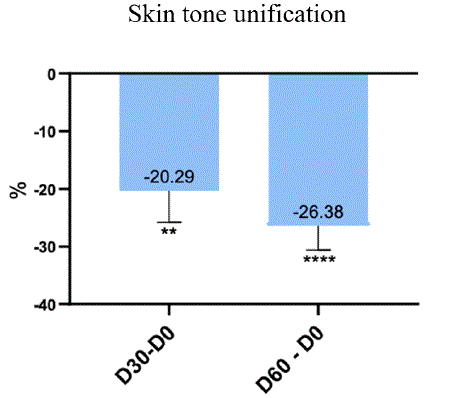
Figure 2: Significant decrease in skin contrast spots vs. normal skin since D30 (**p<0.01), which continued decreasing until the end of the study D60 (****p<0.0001).
All elasticity parameters increased significantly, highlighting that the Net elasticity value (which indicates how efficiently the skin returns to its original shape after mechanical stress) increased by 15% after the new AHAs regimen. No significant changes were observed in skin firmness (R0) (Figure 3).
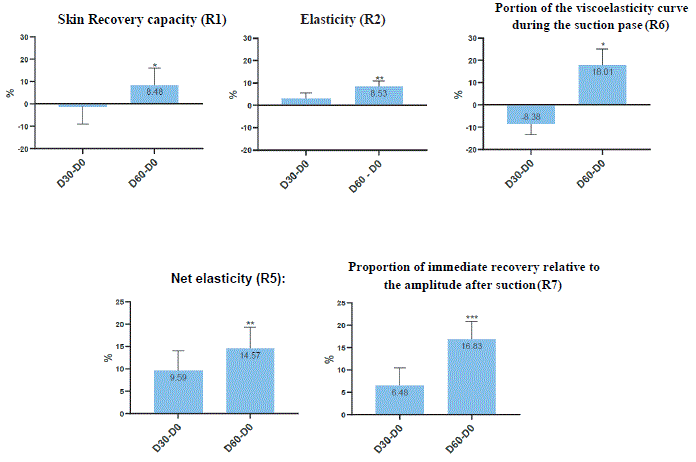
Figure 3: Vertical bar charts showing that a significant increase in different elasticity parameters was found in D60. *p<0.05, ** p<0.01, ***p<0.001.
Pores: The new AHAs regimen significantly decreased pore area and number by 7% and 5.5%, respectively, after 60 days of treatment versus baseline values (p<0.05) (Figures 4-6).
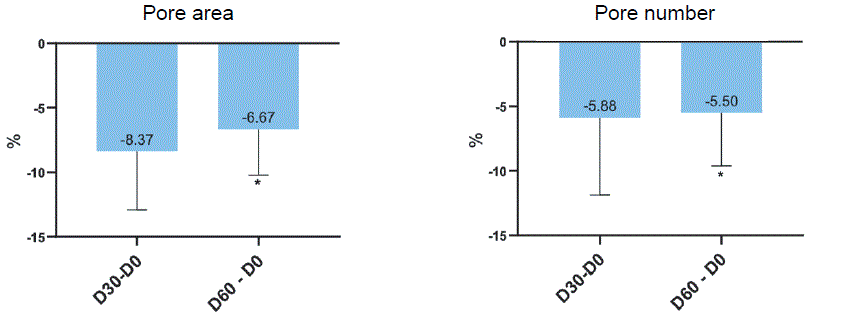
Figure 4: The vertical bar charts show a significant decrease in pore area and por number, p<0.05.
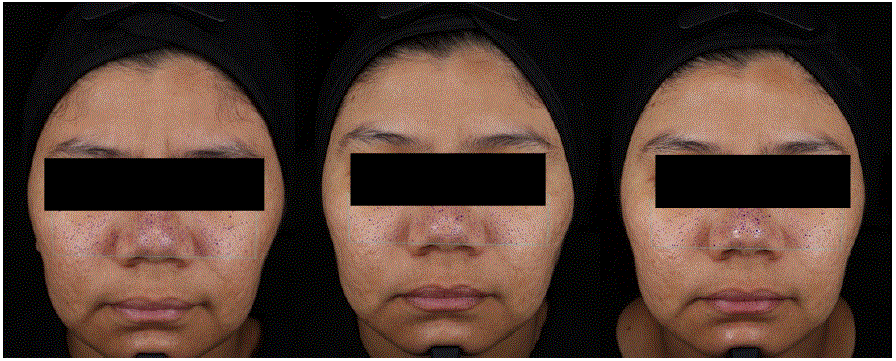
Figure 5: The image shows the evolution of pore area and pore number in patient #10, according to Visia CR detected at D60 as it is showed in the figure (* = p<0.05).
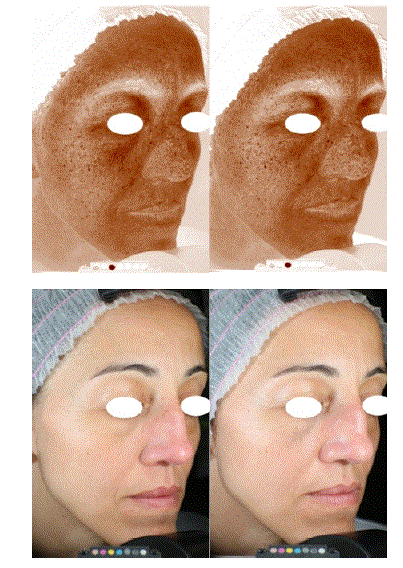
Figure 6: The image shows the evolution in skin tone and texture in a patient from basal (left side) to the end of the treatment (right side), according to Visia Evaluation.
Wrinkles: The new AHAs regimen significantly reduced the volume, area, and depth of deep wrinkles by 10%, 9%, and 4%, respectively, after 60 days of treatment compared to baseline values (p<0.05) (Figures 7,8).
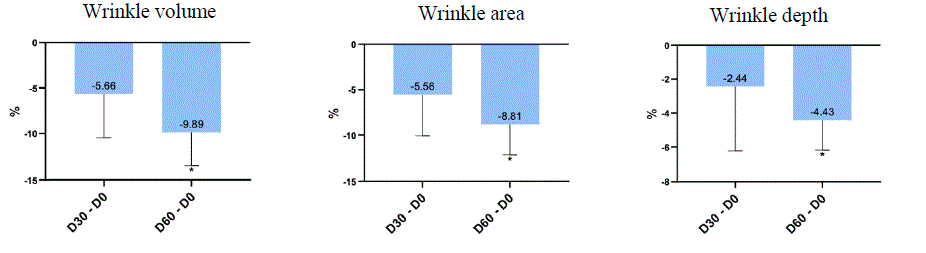
Figure 7: The bar charts show the significant improvement (* p<0.05) in all wrinkle parameters since D60.
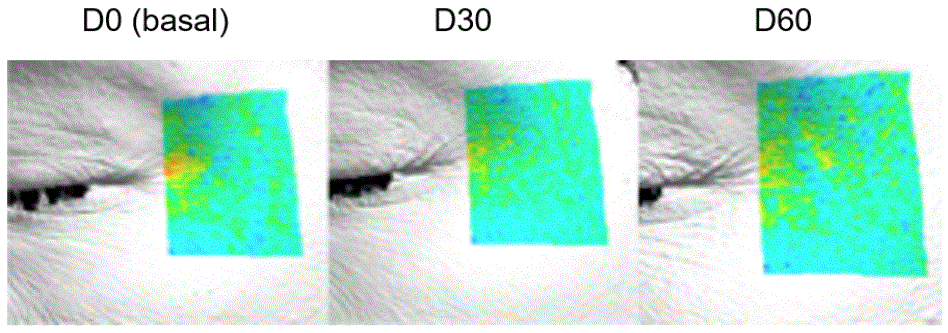
Figure 8: Anti-Aging Assessment Using Primos 3D Technology. V07. In this technology, warm colors like red, orange, and yellow indicate greater thickness, while cool, dark colors like blue and black indicate lesser thickness or thinner areas. We can appreciate warmer colours in D0 compared to the cool colours by the end of the study (D60).
The effectiveness of the treatment was subjectively evaluated using a self-assessment questionnaire (usage test). The mean overall acceptance rate of the regiment treatment was 83% at the end of treatment (D60).
Regarding the complete regimen up to 95% of subjects reported softer skin and improved skin appearance with the new AHAs regimen. Up to 85% of respondents felt their skin was more hydrated, radiant, and even after the AHAs regimen treatment. Globally, 90% reported healthier skin.
Up to 85% of volunteers reported the regimen was well tolerated. A few participants reported cutaneous reactions during the first week of treatment. Only one volunteer withdrew from the study, for personal reasons unrelated to the treatment.
In recent years, alpha-hydroxy acids (AHAs), particularly GA, have been extensively applied in dermatologic and cosmetic products. GA is positioned as a very interesting option in the treatment of photoaging. In experimental models, GA protected collagen and reduced matrix metalloproteinase-9 levels [17]. Clinical studies report that treatment with glycolic acid leads to measurable improvements in skin texture and photodamage [14]. These clinical effects can be justified by the structural changes induced by GA such exfoliation, thickening of both epidermis and dermis and enhanced skin barrier function [18]. Furthermore, this anti-aging effect could be explained because AHAs have been shown to induce apoptosis, or programmed cell death in skin cells [19]. In addition, low concentrations of GA has antiinflammatory and photoprotective effects against UVB-irradiation in keratinocytes [17].
The precise concentrations required to achieve maximal therapeutic benefit while minimizing adverse effects have not been fully established, highlighting the need for additional investigation [19].An increase in concentration and a decrease in pH are directly associated with stronger exfoliative activity, as well as enhanced cytotoxic and corrosive effects [18]. Formulations containing lower concentrations of AHAs, typically ranging from 5% to 20%, are designed for prepeeling regimens and for prolonged use in conditions such as acne, hyperkeratotic disorders, or photoaged skin [18]. The small size of the GA molecule allows a deeper skin penetration [19]. In addition, factors like concentrations, formulation with other actives and pH values may impact on the final efficacy.
In the products tested in this study, the use of previously validated effective concentrations of glycolic acid (GA), such as 18%, formulated at an optimal pH (3.8-4.2) which enhances efficacy, reaching free AG concentration up to 10%.
In addition, combination with 2% of citric acid (CA), could enhance the effect of GA, since CA has previously shown, with biopsy sections, to increase epidermal thickness and dermal glycosaminoglycans in treated skin [20,21]. CA belongs to AHAs family and naturally originates in citrus fruits associated with the function of reducing oxidative damage in the cells [21]. Evidence from animal experiments and clinical trials indicates that citric acid is linked to antioxidant and anti-inflammatory activity within cells [21].
In parallel, the combination with an antioxidant and depigmenting system based on azelaic acid strengthens the synergistic effect. Moreover, the incorporation of a moisturizing and soothing system accounts for the excellent tolerability observed in the study, particularly important for more sensitive skin, such as Latin skin.
In our study a significant increase in hydration was detected. In addition to the role of the hyaluronic acid-based hydration system, the GA can also contribute to this hydration increase. This was in accordance with previously published data that showed dermal hyaluronic acid gene expression increased in GA treated skin compared to vehicle treated controls [22]. GA has also shown to restore aquaporin-3 (AQP3) expression, which had been suppressed by UVB, and promoted a dose-dependent upregulation of its levels [14]. In addition, Fartasch M, et al. measured the Transepidermal Water Loss (TEWL) comparing GA 2-5% treated skin vs. vehicle treated skin and showed no significant alterations. Their study supported the barrier integrity in GA treated skin [23].
Our data also showed a significant increase in skin elasticity and a significant improve in wrinkles and are in accordance to those published by Bernstein EF, et al. who concluded that epidermal and dermal remodeling of the extracellular matrix resulted from GA treatment. In their study they detected an increase in mRNA measure indicating collagen deposition [22].
When applied at 2-5%, glycolic acid appears to progressively weaken the intercellular bonds of the Stratum Corneum (SC), thereby promoting even shedding of its superficial layer, the stratum disjunctum [22]. This could explain the improvement in skin luminosity that we objectivated as fast as D30 and since D60 for skin texture.
Certain patients may develop skin irritation, redness, or other unwanted effects, particularly when using higher concentrations of GA or when GA is combined with other skincare treatments. The skin tolerance to the regimen found in our study was very high. This could be explained by data published by Fartasch M, et al. who showed that in the SC, GA treatment induced a selective effect on desmosomal (corneodesmosomal) structures, enabling exfoliation while preserving barrier integrity. In their study, hystological ananlysis revealed enhanced degradation of desmosomes limited only to the stratum disjunctum, facilitating reduced cohesion and desquamation, whereas desmosomes within the stratum compactum remained intact. Treated regions exhibited a more compact SC structure [23].The combination of GA with other active ingredients such as hialuronic acid, calendula or bisabolol can help optimize its tolerance while obtaining other synergistic effects.
In addition, the good results obtained among the latina population included in our study confirmed the adaptability of GA to different skin types. AHAs, in proper formulations, can be applied without causing irritation or histologic signs of cellular inflammatory response [21]. The good tolerance of this new AHAs regimen, also protects against possible post-inflammatory hyperpigmentation of the skin in Latina women.
Limitations of the study would include the small number of patients and the design of the study, as it was not placebo-controlled or a double-blind study. Therefore, this consideration must be taken into account when interpreting the conclusions of the same.
As a future implication, we consider it important to identify antiaging active ingredients that are proven effective and good tolerated, specifically for more sensitive skin, skin that does not tolerate retinoids or is at risk of post-inflammatory hyperpigmentation. In the most sensitive skin, a process of “glycolization” or progressive adaptation to glycolic acid is essential.
The presented new AHAs regimen , combining Endocare Renewal Glycoperfect Serum with Endocare Renewal Glycoperfect creamy cleanser, demonstrated notable improvements in skin quality, evidenced by a significant increase in hydration after 60 days of use. Additionally, the treatment effectively reduced both the area and number of pores. Regarding its anti-aging properties, the regimen produced a significant decrease in wrinkle volume, depth, and area, while promoting a more even skin tone. Enhanced skin elasticity was also observed, with treated skin exhibiting a rapid return to baseline after deformation. Importantly, the regimen was well tolerated by all participants, particularly following the gradual introduction of the serum. After many years of using AHAs, they remain a safe and effective option for most skin types and ethnicities.
All authors have read and agreed to the published version of the manuscript.
This research was funded by Industrial Farmacéutica Cantabria SA.
Informed consent was obtained from all subjects involved in the study.
Dra Maria Vitale work in Medical Affairs and in the R&D department of Cantabrialabs. Dra Truchuelo works as occasional advisor for Cantabrialabs. The funders participated in the design of the study, as well as in the analyses and interpretation of data.
Download Provisional PDF Here
Aritcle Type: RESEARCH ARTICLE
Citation: Vitale M, Díez MTT (2026) Clinical and Instrumental Study for the Evaluation of the Efficacy of the Regimen with Endocare Renewal Glycoperfect Serum and Creamy Cleanser in Patients with Facial Photoaging. J Clin Cosmet Dermatol 10(1): dx.doi.org/10.16966/2576-2826.185
Copyright: © 2026 Vitale M, et al. This is an open-access article distributed under the terms of the Creative Commons Attribution License, which permits unrestricted use, distribution, and reproduction in any medium, provided the original author and source are credited.
Publication history:
All Sci Forschen Journals are Open Access