Introduction
In 2022, there were an estimated 20 million new cancer cases and 9.7 million deaths. Over 35 million new cancer cases are predicted in 2050, a 77% increase from 2022 [1]. About 40-50% of all cancer patients globally present in an advanced stage [1], and anticancer drugs are the main therapeutic strategy in this setting [2]. In early cancers/ locally advanced disease, systemic therapy is utilized in the adjuvant/ neoadjuvant setting [3]. About one-third of the cancer patients would receive curative or palliative chemotherapy [4] a proportion likely to increase with precision medicine and targeted therapies. Despite the improved survival rates and outcomes [5], anticancer agents come at a price with high financial burden (referred to as “financial toxicity”, discussed in literature, [6,7]) and adverse events (AEs, defined by US FDA as “any untoward medical occurrence associated with the use of a drug in humans, whether or not considered drug related”) impacting all organs, including the eyes [8]. The initial documentation of ocular toxicity of antineoplastic agents dates to the 40s [9]. Despite progress in reporting AEs over the past century, ocular AEs are still often misunderstood and under-reported [10]. In most cases, ocular AEs are easily manageable, but sometimes require specialized diagnostics and specific treatments. The topic of anticancer drug-associated ocular AE suffers from a paucity of practical consensus guidelines for busy oncologists, especially with reference to drug category versus severity versus ocular anatomy [11].
Oncologists managing ocular toxicities frequently encounter questions such as how to identify ocular emergencies, when to mandate baseline ocular testing and whether periodic eye checks should be integrated into cancer care despite added costs and complexities. They also need to know the onset of ocular toxicities for various anticancer drugs, the optimal timing for ophthalmologist referrals for blurred vision, and the warning signs for adjusting or halting drug doses. Additionally, they seek to understand which drugs cause more severe or unique ocular adverse effects and what preventive measures can minimize these effects. To answer these questions, we looked at USFDA-approved cancer? Drug labels and consolidated information on anticancer drug ocular toxicity, with a focus on developing algorithms for prevention, early identification, referral, and management in an easy-to-reference article.
Material and Methods
A list of all anticancer agents approved by the USFDA till December 2022 was collected from various websites. This list mentioned The European Medicines Agency (EMA) status, and this has been captured in our table; the EMA labels were not reviewed for ocular toxicity.
1. https://www.anticancerfund.org/en/cancerdrugs-db,
2.https://www.medicinescomplete.com/#/browse/martindale/ Antineoplastics-ms,
3. https://www.ncbi.nlm.nih.gov/pmc/articles/PMC5629554/, and
4. https://www.cancer.gov/about-cancer/treatment/drugs
(Includes duplications of brand name vs generic (e.g. Abiraterone & Zytiga). Includes acronyms e.g. ABVE).
Latest USFDA labels of each of these drugs were searched for information on ocular toxicities. It has been noted that there were more ocular toxicities mentioned in the newest FDA labels, hence the latest FDA labels were used for analysis.
Each drug was included only once, irrespective of the drug’s approval in multiple indications. Photosensitizers, radio-diagnostic agents, radiotherapeutic agents, drugs used to treat side effects of cancer treatment and cancer pain, were excluded. The drugs were classified according to the clinical category [12-15], (https://www. nature.com/articles/s41392-021-00572-w). The list of drug names and the list of categories were sorted alphabetically. In addition, the category as per the latest Medical Dictionary for Regulatory Activities (MedDRA) Version 25.0 was added.
If available in the label, descriptions of AEs, grading (as per various versions of CTCAE), incidence, severity, timeline, and reversibility were compiled. (CTCAE Versions 1, 2.0, 3.0, 4, 4.03 and 5.0) [15-20].
Figures and tables were designed based on eye anatomical structures from anterior to posterior and main signs or symptoms [21,22]. The lens and structures posterior to that were labelled as “posterior”, in keeping with ophthalmological conventions. Retinal AEs such as Central Serous Retinopathy (CSR), sub-retinal fluid, serous retinal detachment, detachment of Retinal Pigment Epithelium (RPED) have been considered an anatomical features of retinal edema located mainly in macula and for simplification are often mentioned as general term ‘macular edema’. For each anatomical structure the relevant ophthalmologic guidelines and literature reviews from PubMed and Google Scholar on the prevention and management strategies were identified [23]. Simplified algorithms were generated for each anatomical structure, based upon severity grading for prevention and treatment of these toxicities.
Results
We found 256 USFDA approved anticancer drugs until the end of July 2024. Of these, 147 (57,4%) drugs mentioned ocular toxicities in their labels.
The three major drug categories causing ocular toxicities were small molecules (55.1%; 81 out of 147), Monoclonal Antibodies (Mabs) (19.0%; 28 out of 147) and biologicals, Tyrosine Kinase Inhibitors (TKIs) (18.4%; 27 out of 147). Other categories included hormonal drugs (7.5%; 11 out of 147) and ADCs (6.8%; 10 out of 147). The drugs were further divided into various subcategories of drugs producing ocular toxicities. (Figure 1, Table 1).
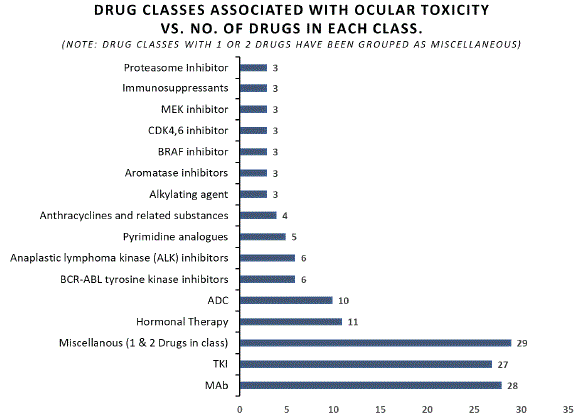
Figure 1: Drug categories associated with Ocular toxicity vs. no. of drugs in each category. The X-axis describes the number of drugs in each category.
Note: Drug categories with 1 or 2 drugs have been grouped as miscellaneous. All the drug label links are provided in the 102 supplementary file. ADC, antibody drug conjugate; BCR-ABL, breakpoint cluster region-ABL; BRAF, B-rapidly accelerated fibrosarcoma; CDK, cyclin-104 dependent kinase; MAb, monoclonal antibodies; MEK, mitogen-activated protein kinase; TKI, tyrosine kinase inhibitor.
| Number of Drugs |
Drug Category |
|
28 |
MAb (Including: Bispecific Antibody targeting c-Met/ EGFR, CD20 inhibitors, CD3 T-cell engagers, CD38 inhibitors, EGFR inhibitors, FDC Immunotherapy PD-1 inhibitor + LAG-3 Blockers, HER2 inhibitors,
ICI Immune Checkpoint Inhibitor CTLA-4 Inhibitors, ICI Immune Checkpoint Inhibitors anti-PD-L1, ICI Immune Checkpoint Inhibitor PD-1 Inhibitors, drugs affecting bone structure and mineralization, VEGF/ VEGFR inhibitors) |
|
27 |
TKI (Including: BTK inhibitors, EGFR inhibitors, FGFR TKI, HER1,2,4 inhibitors, JAK inhibitors, VEGFR inhibitors |
|
11 |
Hormonal Therapy (including antiandrogens, antiestrogens, estrogen, GnRH agonists, GnRH antagonists and LHRH agonists) |
| 10 |
ADC, (including ADC-HER2 inhibitors) |
| 6 |
BCR-ABL tyrosine kinase inhibitors |
| 6 |
Anaplastic lymphoma kinase (ALK) inhibitors |
| 5 |
Pyrimidine analogues |
| 4 |
Anthracyclines and related substances |
| 3 |
Alkylating agent |
| 3 |
Aromatase inhibitors |
| 3 |
BRAF inhibitor |
| 3 |
CDK4,6 inhibitor |
| 3 |
MEK inhibitor |
| 3 |
Immunosuppressants |
| 3 |
Proteasome Inhibitor |
|
29 |
Miscellaneous: Drug types where no more than two drugs are presenting ocular toxicity signs:
- Antibiotic
- Biological: CAR T-cell therapy: chimeric antigen receptor (CAR) T-cell therapy
- CD3 T-cell engager
- Cytotoxic agent
- Dihydrofolate reductase (DHFR) inhibitor
- Folic acid analogues
- Fusion Protein: Diphtheria toxin and IL-2
- Hedgehog pathway inhibitor
- Histone deacetylase (HDAC) inhibitors
- IDH1 inhibitors
- Interferons
- mTOR kinase inhibitor
- Nitrosoureas
- Oncolytic viral therapy
- Other antineoplastic agent
- Other drugs affecting bone structure and mineralization
- PARP inhibitor
- Platinum derivatives
- Purine analogues
- Retinoid
- Taxane
- VEGF binder
|
Table 1: Drug categories
The ocular side effects of FDA-approved anti-cancer drugs were further categorized based on their anatomical location in the eye and clinical manifestations:
1. Anterior segment of the eye: pupil, iris, lids, orbit, conjunctiva, extraocular muscles, and cornea.
2. Posterior segment of the eye: lens, vitreous body, retina, retinal vessels, optic nerve, choroid.
3. Intraocular pressure and visual field disturbances: indirectly reflect changes in the iridocorneal angle and advanced damage of optic nerve and/or retina.
4. CNS neuro-ophthalmological manifestations: ptosis, and strabismus, diplopia or loss of visual field, signify underlying neurological pathology (rather than ocular) and require immediate neurological examination.
Figures 2 & 3 depicts anatomical structures from anterior to posterior segments of the eye, serially numbered from 1 to 16 for easy visualization. Where more than one side effect was associated with a given anatomic structure, these were further sub-categorized alphabetically as A, B, C and so on. For example, structure number 2 refers to the iris; 2A represents iritis/uveitis, while 2B represents Vogt Koyanagi Harada syndrome. CTCAE Grading severity has been stated where available and stated as NM where not mentioned in the drug label. A detailed table listing associated ocular side effects by anticancer drug name and category follows each schematic.
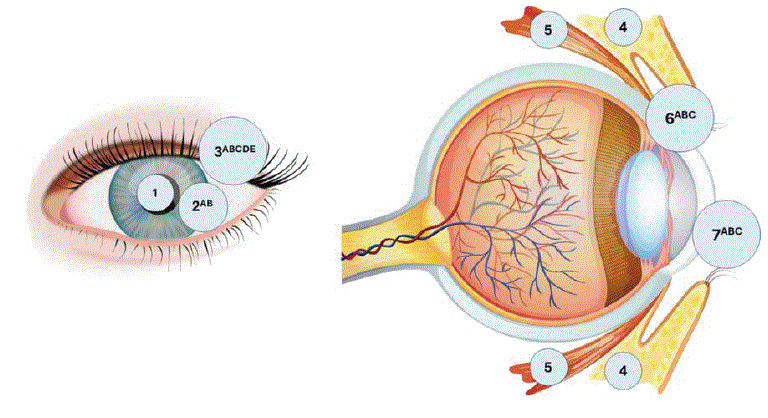
Figure 2: Anatomical structures in the anterior segment of the eye associated with ocular side effects of anticancer drugs.
These schematics depict anatomical structures from anterior segments of the eye, serially numbered from 1 to 7 for easy 125 visualization (1, pupil; 2, iris; 3, lids; 4, orbit; 5, extraocular muscles; 6, conjunctiva; 7, cornea). Where more than one side effect was 126 associated with a given anatomic structure, these were further sub-categorized alphabetically as A, B, C and so on.
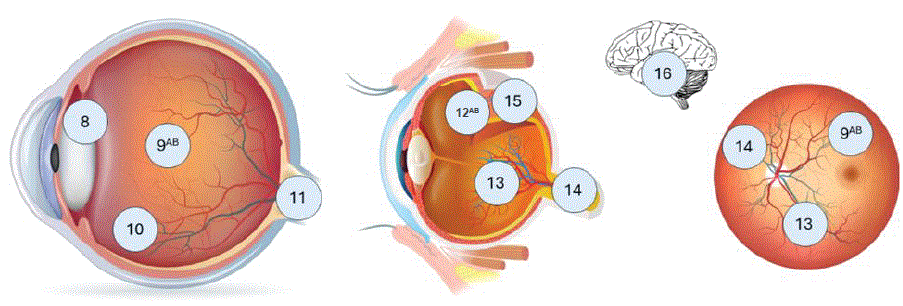
Figure 3: Anatomical structures in the posterior segment of the eye associated with ocular side effects of anticancer drugs.
These schematics depict anatomical structures from posterior segments of the eye, serially numbered from 8 to 16 for easy visualization (8, lens; 9, vitreous; 10, intraocular pressure; 11, visual field; 12, retina; 13, retinal vessels; 14, optic nerve; 15, choroid; 16, central nervous system). Where more than one side effect was associated with a given anatomic structure, these were further sub-categorized alphabetically as A, B, C and so on.
Summary of AEs of oncological drugs in the anterior segment of the eye
Drug-related toxicity seemed to be less severe in the anterior segment of the eye, compared to posterior segment.
Frequently seen aspects: The most common ocular toxicities were mild and manifested as visual disturbances and conjunctivitis. Other manifestations included dilated or unequal pupils presenting as blurred vision or photophobia, iritis or uveitis, trichiasis, trichomegaly, ptosis, edema of the lids or periorbital edema, dry eye of various intensity, conjunctival edema and hemorrhage, blepharitis, epiphora, and keratitis. Toxicity of the extraocular muscles manifested as ophthalmoplegia causing abnormal motility of the eyes, diplopia, and other signs of visual impairment (Table 2).
|
|
Structure/ Location |
Main Sign / Symptom |
Medra |
Drug Category |
Drug name |
Severity Grading |
CTCAE
Version |
| 1 |
A |
Pupil |
Dilated and unequal |
Other MAbs and ADC |
MAb |
Dinutuximab |
NM |
3.0 |
| Other MAbs and ADC |
MAb |
Naxitamab |
2-4 |
4.0; 5.0 |
|
2 |
A |
Iris |
Iritis/uveitis |
Anthracyclines and related substances |
Anthracyclines and related substances |
Daunorubicin, Cytarabine Liposome |
1-2 |
3.0. |
| Other MAbs and ADC |
ADC |
Mirvetuximab Soravtansine |
1-4 |
NM |
| BRAF inhibitor |
BRAF inhibitor |
Dabrafenib |
|
4.0 |
| BRAF inhibitor |
BRAF inhibitor |
Encorafenib |
|
4.03 |
| BRAF inhibitor |
BRAF inhibitor |
Vemurafenib |
2-3 |
4.0 |
| MEK inhibitor |
MEK inhibitor |
Binimetinib |
1-4 |
NM |
| MEK inhibitor |
MEK inhibitor |
Trametinib |
NM |
4.03 |
| Other MAbs and ADC |
MAb: Bispecific Antibody targeting c-Met/ EGFR |
Amivantamab |
1-2 |
4.0 |
| Other MAbs and ADC |
MAb: ICI: CTLA-4 Inhibitor |
Ipilimumab Yervoy |
1-4 |
NM |
| Other MAbs and ADC |
MAb: ICI: CTLA-4 Inhibitor |
Tremelimumab |
NM |
NM |
|
PD-1/PDL-1 inhibitors |
MAb FDC: Immunotherapy: PD-1 inhibitor + LAG-3 Blocker |
Nivolumab and relatlimab- rmbw Opdualag |
|
NM |
| PD-1/PDL-1 inhibitors |
MAb: ICI: CTLA-4 Inhibitor |
Atezolizumab Tecentriq |
1-4 |
4.0 |
| PD-1/PDL-1 inhibitors |
MAb: ICI: CTLA-4 Inhibitor |
Avelumab |
3-4 |
NM |
| PD-1/PDL-1 inhibitors |
MAb: ICI: CTLA-4 Inhibitor |
Durvalumab Imfinzi |
2-4 |
4.0 |
| PD-1/PDL-1 inhibitors |
MAb: ICI: CTLA-4 Inhibitor |
Cemiplimab |
1-4 |
4.0 |
| PD-1/PDL-1 inhibitors |
MAb: ICI: CTLA-4 Inhibitor |
Dostarlimab-gxly |
|
4.0 |
| PD-1/PDL-1 inhibitors |
MAb: ICI: CTLA-4 Inhibitor |
Nivolumab |
1-4 |
4.0 |
| PD-1/PDL-1 inhibitors |
MAb: ICI: CTLA-4 Inhibitor |
Pembrolizumab |
1-4 |
NM |
|
|
|
|
PD-1/PDL-1 inhibitors |
MAb: ICI: CTLA-4 Inhibitor |
Retifanlimab |
NM |
NM |
|
2 |
B |
Iris |
Vogt- Koyanagi- Harada syndrome |
Interferons |
Interferons |
Interferon Alfa-2b |
NM |
NM |
| Other antineoplastic agents |
Biological: Immunomodulatory agent |
Peginterferon Alfa-2b |
|
|
| Other MAbs and ADC |
MAb: ICI: CTLA-4 Inhibitor |
Ipilimumab Yervoy |
1-4 |
4.0 |
| Other MAbs and ADC |
MAb: ICI: CTLA-4 Inhibitor |
Tremelimumab |
NM |
NM |
| PD-1/PDL-1 inhibitors |
MAb FDC: Immunotherapy: PD-1 inhibitor + LAG-3 Blocker |
Nivolumab and relatlimab- rmbw Opdualag |
|
NM |
| PD-1/PDL-1 inhibitors |
MAb: ICI: anti-PD-L1 |
Atezolizumab Tecentriq |
1-4 |
4.0 |
| PD-1/PDL-1 inhibitors |
MAb: ICI: anti-PD-L1 |
Durvalumab Imfinzi |
2-4 |
4.0 |
| PD-1/PDL-1 inhibitors |
MAb: ICI: PD-1 Inhibitor |
Cemiplimab |
1-4 |
4.0 |
| PD-1/PDL-1 inhibitors |
MAb: ICI: PD-1 Inhibitor |
Dostarlimab-gxly |
|
NM |
| PD-1/PDL-1 inhibitors |
MAb: ICI: PD-1 Inhibitor |
Nivolumab |
1-4 |
5.0 |
| PD-1/PDL-1 inhibitors |
MAb: ICI: CTLA-4 Inhibitor |
Pembrolizumab |
1-4 |
NM |
|
|
|
|
PD-1/PDL-1 inhibitors |
MAb: ICI: CTLA-4 Inhibitor |
Retifanlimab |
NM |
NM |
|
3 |
A |
Lids |
Trichiasis/ Trichomegaly |
EGFR inhibitors |
MAb: EGFR inhibitor |
Panitumumab |
1-2 |
2.0; 3.0 |
| EGFR TKIs |
TKI: EGFR inhibitor |
Osimertinib |
1-2 |
4.0 |
| EGFR TKIs |
TKI: EGFR inhibitor |
Erlotinib |
NM |
3.0 |
| FGFR TKIs |
TKI: FGFR TKI |
Infigratinib |
1-2 |
4.03 |
| FGFR TKIs |
TKI: FGFR TKI |
Mobocertinib |
|
5.0 |
| Interferons |
Interferons |
Interferon Alfa-2b |
1-2 |
NM |
| Other MAbs and ADC |
ADC |
Tisotumab vedotin- |
1-2 |
NM |
|
3 |
B |
Lids |
Ptosis |
BCR-ABL TKIs |
BCR-ABL TKIs |
Ponatinib |
NM |
5.0 |
| Ethylene imines |
Alkylating agent |
Thiotepa |
|
NM |
| Other MAbs and ADC |
MAb |
Dinutuximab |
|
3.0 |
|
3 |
C |
Lids |
Edema |
ALK inhibitors |
ALK inhibitors |
Alectinib |
NA |
4.0 |
| ALK inhibitors |
ALK inhibitors |
Lorlatinib |
1-4 |
4.03 |
| ALK inhibitors |
ALK inhibitors |
Repotrectinib |
NM |
NM |
| Antineovascularisation agents |
VEGF binder |
Aflibercept |
NM |
NM |
| BCR-ABL TKIs |
BCR-ABL TKIs |
Imatinib |
NM |
NM |
| BCR-ABL TKIs |
BCR-ABL TKIs |
Bosutinib |
|
NM |
| Other antineoplastic agents |
Cytotoxic Agent |
Omacetaxine Mepesuccinate |
|
NM |
| Other protein kinase inhibitors |
TKI |
Avapritinib |
1-4 |
4.03;
5.0 |
| Other protein kinase inhibitors |
TKI |
Midostaurin |
2-3 |
3.0. |
| Other protein kinase inhibitors |
TKI |
Pralsetinib |
|
4.03 |
| Other protein kinase inhibitors |
TKI |
Sunitinib |
|
3.0. |
| PD-1/PDL-1 inhibitors |
MAb: ICI: CTLA-4 anti-PD-L1 |
Atezolizumab Tecentriq |
NM |
4.0 |
| CD38 inhibitors |
MAb: CD38 inhibitor |
Daratumumab |
NM |
NM |
| Platinum-compounds |
Platinum-Derivatives |
Oxaliplatin |
|
1.0 |
| Pyrimidine analogues |
Pyrimidine analogues |
Decitabine Cedazuridine FDC Inqovi |
1-2 |
NM |
| Selecti e immunosuppressants mTOR kinase inhibitors |
mTOR kinase inhibitor |
Everolimus (2nd Gen Sirolimus Der.) |
|
3.0 |
|
3 |
D |
Lids |
Blepharitis |
ALK inhibitors |
ALK inhibitors |
Repotrectinib |
NM |
NM |
| BCR-ABL TKIs |
BCR-ABL TKIs |
Nilotinib |
NM |
3.0 |
| EGFR inhibitors |
MAb: EGFR inhibitor |
Necitumumab |
1-2 |
NM |
| EGFR inhibitors |
MAb: EGFR inhibitor |
Cetuximab |
NM |
2.0. |
| EGFR TKIs |
TKI: EGFR inhibitor |
Osimertinib |
1-2 |
4.0 |
| FGFR TKIs |
TKI: FGFR TKI |
Infigratinib |
1-2 |
4.03 |
| FGFR TKIs |
TKI: FGFR TKI |
Mobocertinib |
|
5.0 |
| Other MAbs and ADC |
ADC |
Enfortumab vedotin-ejfv |
NM |
NM |
| Other MAbs and ADC |
ADC |
Tisotumab vedotin-tftv Tivdac |
1-2 |
NM |
| Other MAbs and ADC |
MAb: ICI: CTLA-4 Inhibitor |
Ipilimumab Yervoy |
|
4.0 |
| Retinoids for cancer treatment |
Retinoid Analogue |
Bexarotene |
NM |
NM |
|
3 |
E |
Lids |
Epiphora |
Anti-estrogens |
Hormonal: Anti-estrogens |
Fulvestrant |
|
NM |
| Anti ovascularisati agents |
VEGF binder |
Aflibercept |
NM |
NM |
| CDK inhibitors |
CDK4,6 inhibitor |
Palbociclib |
1-4 |
4.0 |
| EGFR inhibitors |
MAb: EGFR inhibitor |
Necitumumab |
1-2 |
NM |
| EGFR inhibitors |
MAb: EGFR inhibitor |
Panitumumab |
1-2 |
2.0; 3.0 |
| HER2 inhibitors |
MAb: HER2 inhibitors |
Pertuzumab (Perjeta) |
1-2 |
3.0 |
| Other MAbs and ADC |
MAb: Bispecific Antibody targeting c-Met/ EGFR |
Amivantamab |
1-2 |
NM |
| VEGF/VEGFR inhibitors |
MAb: VEGF/VEGFR inhibitor |
Ramucirumab |
1-4 |
4.0 |
| BTK inhibitors |
TKI: BTK inhibitor |
Ibrutinib |
1-2 |
NM |
| EGFR TKIs |
TKI: EGFR inhibitor |
Gefitinib |
NM |
4.0 |
| FGFR TKIs |
TKI: FGFR TKI |
Infigratinib |
1-2 |
4.03 |
| FGFR TKIs |
TKI: FGFR TKI |
Pemigatinib |
NM |
4.03 |
| FGFR TKIs |
TKI: FGFR TKI |
Futibatinib |
NM |
NM |
| Other protein kinase inhibitors |
TKI |
Avapritinib |
1-4 |
4.03;
5.0 |
| antibioacid analogues |
Folic acid analogues |
Pemetrexed |
1-2 |
3.0 |
| Other antineoplastic agents |
Cytotoxic Agent |
Omacetaxine Mepesuccinate |
|
NM |
| Other cytotoxic antibiotics |
Antibiotic |
Ixabepilone |
|
3.0 |
| Other MAbs and ADC |
ADC: HER2 inhibitors |
Trastuzumab emtansine (Kadcyla) |
1-2 |
3.0 |
| Pyrimidine analogues |
Pyrimidine analogues |
Capecitabine |
1-2 |
1.0 |
| Taxanes |
Taxane |
Docetaxel |
1-2 |
NM |
|
|
|
|
|
|
|
|
|
|
4 |
|
Orbit |
Periorbital edema |
ALK inhibitors |
ALK inhibitors |
Crizotinib |
NM |
4.0 |
| Anthracyclines and related substances |
Anthracyclines and related substances |
Daunorubicin, Cytarabine Liposome |
NM |
3.0. |
| Other antineoplastic agents |
Biological: CAR-T therapy |
Ciltacabtagene autoleucel |
NM |
NM |
| BCR-ABL TKIs |
BCR-ABL TKIs |
Imatinib |
NA |
CTC |
| BCR-ABL TKIs |
BCR-ABL TKIs |
Nilotinib |
1 |
3.0 |
| Other MAbs and ADC |
ADC |
Moxetumomab Pasudotox Lumoxiti |
NM |
4.03 |
| Other MAbs and ADC |
MAb |
Blinatumomab |
1-2 |
4.0 |
| Other MAbs and ADC |
MAb |
Naxitamab |
NM |
4.0; 5.0 |
| PD-1/PDL-1 inhibitors |
MAb: ICI; anti-PD-L1 |
Atezolizumab Tecentriq |
NM |
4.0 |
| PD-1/PDL-1 inhibitors |
MAb: ICI; PD-1 Inhibitor |
Nivolumab |
NM |
4.0; 5.0 |
| Other protein kinase inhibitors |
TKI |
Avapritinib |
NM |
4.03;
5.0 |
| Other protein kinase inhibitors |
TKI |
Pralsetinib |
|
4.03 |
| Other protein kinase inhibitors |
TKI |
Sunitinib |
|
3.0. |
| Other protein kinase inhibitors |
TKI |
Tepotinib |
|
NM |
|
5 |
|
Extraocular
muscles |
Ophthalmoplegia, abnormal motility |
ALK inhibitors |
ALK inhibitors |
Alectinib |
|
4.0 |
| ALK inhibitors |
ALK inhibitors |
Brigatinib |
1-2 |
4.0 |
| ALK inhibitors |
ALK inhibitors |
Crizotinib |
1-4 |
4.0 |
| ALK inhibitors |
ALK inhibitors |
Repotrectinib |
NM |
NM |
| Anti-estrogens |
Hormonal: Anti-estrogens |
Toremifene |
|
NM |
| Anti-GnRH |
Hormonal: LHRH agonist |
Goserelin |
|
NM |
| BCR-ABL TKIs |
BCR-ABL TKIs |
Nilotinib |
|
3.0 |
| BCR-ABL TKIs |
BCR-ABL TKIs |
Ponatinib |
|
5.0 |
| Ethylene imines |
Alkylating agent |
Thiotepa |
|
NM |
| GnRH analogues |
Hormonal Therapy: GnRH Analogues |
Histrelin |
|
NM |
| Interferons |
Interferons |
Interferon Alfa-2b |
|
NM |
| JAK inhibitors |
TKI: JAK inhibitor |
Fedratinib |
|
NM |
| Other protein kinase inhibitors |
TKI |
Entrectinib |
1-3 |
4.0. |
| Other antineoplastic agents |
Biological: CAR-T therapy |
Ciltacabtagene autoleucel |
NM |
NM |
|
Other antineoplastic agents |
Cytotoxic Agent |
Omacetaxine Mepesuccinate |
|
NM |
| Other antineoplastic agents |
Fusion Protein: Diphtheria toxin and IL-2 |
Denileukin Diftitox |
|
NM |
| Other MAbs and ADC |
MAb |
Alemtuzumab |
|
NM |
| Other MAbs and ADC |
MAb: ICI: CTLA-4 Inhibitor |
Ipilimumab Yervoy |
1-4 |
4.0 |
| EGFR inhibitors |
MAb: EGFR inhibitor |
Panitumumab |
|
2.0; 3.0 |
| PD-1/PDL-1 inhibitors |
MAb FDC: Immunotherapy: PD-1 inhibitor + LAG-3 Blocker |
Nivolumab and relatlimab-rmbw Opdualag |
|
NM |
| PD-1/PDL-1 inhibitors |
MAb: ICI; anti-PD-L1 |
Atezolizumab Tecentriq |
|
4.0 |
| PD-1/PDL-1 inhibitors |
MAb: ICI; anti-PD-L1 |
Durvalumab Imfinzi |
|
4.0 |
| PD-1/PDL-1 inhibitors |
MAb: ICI; anti-PD-L1 |
Dostarlimab-gxly |
|
NM |
| PD-1/PDL-1 inhibitors |
MAb: ICI; anti-PD-L1 |
Nivolumab |
|
4.0; 5.0 |
| PD-1/PDL-1 inhibitors |
MAb: ICI; anti-PD-L1 |
Pembrolizumab |
|
4.03 |
| Proteasome Inhibitor |
Proteasome Inhibitor |
Bortezomib |
|
4.0 |
|
|
|
|
|
|
|
|
|
|
6 |
A |
Conjunctiva |
Conjunctivitis |
ALK inhibitors |
ALK inhibitors |
Repotrectinib |
NM |
NM |
| Anthracyclines and related substances |
Anthracyclines and related substances |
Daunorubicin, Cytarabine Liposome |
NM |
3.0. |
| Anthracyclines and related substances |
Anthracyclines and related substances |
Doxorubicin Liposome |
NM |
NM |
| Anthracyclines and related substances |
Anthracyclines and related substances |
Epirubicin |
1-2 |
NM |
| Anthracyclines and related substances |
Anthracyclines and related substances |
Mitoxantrone |
NM |
NM |
| Anti-estrogens |
Hormonal: Anti-estrogens |
Fulvestrant |
|
NM |
| Anti-estrogens |
Hormonal: GnRH agonist |
Triptorelin |
|
NM |
| BCR-ABL TKIs |
BCR-ABL TKIs |
Dasatinib |
2-3 |
NM |
| BCR-ABL TKIs |
BCR-ABL TKIs |
Imatinib |
NM |
NM |
| BCR-ABL TKIs |
BCR-ABL TKIs |
Nilotinib |
NM |
3.0 |
| CDK inhibitors |
CDK4,6 inhibitor |
Palbociclib |
1-4 |
4.0 |
| CDK inhibitors |
CDK4,6 inhibitor |
Ribociclib |
|
NM |
| EGFR TKIs |
TKI: EGFR inhibitor |
Dacomitinib |
1-2 |
4.03. |
| EGFR TKIs |
TKI: EGFR inhibitor |
Gefitinib |
1-2 |
4.0 |
| EGFR TKIs |
TKI: EGFR inhibitor |
Osimertinib |
1-2 |
4.0 |
| EGFR TKIs |
TKI: EGFR inhibitor |
Erlotinib |
3 |
3.0 |
| EGFR TKIs |
TKI: HER1,2,4 inhibitor |
Aftanib |
1-2 |
3.0 |
| Folic acid analogues |
Folic acid analogues |
Pemetrexed |
1-2 |
3.0 |
| Ethylene imines |
Alkylating agent |
Thiotepa |
|
NM |
| Nitrogen mustard analogues |
Alkylating agent |
Cyclophosphamide |
|
NM |
| Nitrogen mustard analogues |
Alkylating agent |
Ifosfamide |
NM |
NM |
| Other antineoplastic agents |
Biological: Immunomodulatory agent |
Peginterferon Alfa-2b |
|
NM |
| Other antineoplastic agents Other immunosuppressants |
Other antineoplastic agents Other immunosuppressants |
Thalidomide |
NM |
NM |
| Other immunosuppressants Folic acid analogue |
Dihydrofolate reductase (DHFR) inhibitor |
Methotrexate |
NM |
NM |
| Other MAbs and ADC |
ADC |
Enfortumab vedotin-ejfv |
1-3 |
NM |
| Other MAbs and ADC |
ADC |
Tisotumab vedotin-tftv Tivdac |
1-3 |
NM |
| Other MAbs and ADC |
ADC |
Moxetumomab Pasudotox Lumoxiti |
NM |
4.03 |
| Other MAbs and ADC |
ADC: HER2 inhibitors |
Trastuzumab emtansine (Kadcyla) |
1-2 |
3.0 |
| Other MAbs and ADC |
MAb |
Mogamulizumab |
NM |
NM |
| Other MAbs and ADC |
MAb: Bispecific Antibody targeting c-Met/ EGFR |
Amivantamab |
1-2 |
NM |
| Other MAbs and ADC |
MAb: ICI: CTLA-4 Inhibitor |
Ipilimumab Yervoy |
1-2 |
4.0 |
| EGFR inhibitors |
MAb: EGFR inhibitor |
Necitumumab |
2-4 |
NM |
| EGFR inhibitors |
MAb: EGFR inhibitor |
Cetuximab |
1-2 |
2.0. |
| EGFR inhibitors |
MAb: EGFR inhibitor |
Panitumumab |
1-2 |
2.0; 3.0 |
| Proteasome Inhibitor |
Proteasome Inhibitor |
Bortezomib |
NM |
4.0 |
| Proteasome Inhibitor |
Proteasome Inhibitor |
Ixazomib |
3 |
4.03 |
| Pyrimidine analogues |
Pyrimidine analogues |
Capecitabine |
1-4 |
1.0 |
| Retinoids for cancer treatment |
Retinoid Analogue |
Bexarotene |
NM |
NM |
| Selective immunosuppressants mTOR kinase inhibitors |
mTOR kinase inhibitor |
Everolimus (2nd Gen Sirolimus Der.) |
|
3.0 |
| Taxanes |
Taxane |
Docetaxel |
1-2 |
NM |
| Taxanes |
Taxane |
Nab-Paclitaxel |
NM |
NM |
|
6 |
B |
Conjunctiva |
Dry eye |
ALK inhibitors |
ALK inhibitors |
Repotrectinib |
NM |
NM |
| Anthracyclines and related substances |
Anthracyclines and related substances |
Daunorubicin, Cytarabine Liposome |
NM |
3.0. |
| Anthracyclines and related substances |
Anthracyclines and related substances |
Doxorubicin Liposome |
NM |
NM |
| Anti-estrogens |
Hormonal: Anti-estrogens |
Fulvestrant |
|
NM |
| Anti-estrogens |
Hormonal: Anti-estrogens |
Toremifene |
|
NM |
| Anti-GnRH |
Hormonal: LHRH agonist |
Goserelin |
|
NM |
| BCR-ABL TKIs |
BCR-ABL TKIs |
Asciminib |
|
4.03 |
| BCR-ABL TKIs |
BCR-ABL TKIs |
Dasatinib |
2-3 |
NM |
| BCR-ABL TKIs |
BCR-ABL TKIs |
Imatinib |
NM |
NM |
| BCR-ABL TKIs |
BCR-ABL TKIs |
Nilotinib |
NM |
3.0 |
| BCR-ABL TKIs |
BCR-ABL TKIs |
Ponatinib |
NM |
5.0 |
| CDK inhibitors |
CDK4,6 inhibitor |
Palbociclib |
1-4 |
4.0 |
| CDK inhibitors |
CDK4,6 inhibitor |
Ribociclib |
|
NM |
| BTK inhibitors |
TKI: BTK inhibitor |
Ibrutinib |
1-2 |
NM |
| EGFR TKIs |
TKI: EGFR inhibitor |
Gefitinib |
1-2 |
4.0 |
| EGFR TKIs |
TKI: EGFR inhibitor |
Osimertinib |
1-2 |
4.0 |
| FGFR TKIs |
TKI: FGFR TKI |
Infigratinib |
1-2 |
4.03 |
| FGFR TKIs |
TKI: FGFR TKI |
Mobocertinib |
|
5.0 |
| FGFR TKIs |
TKI: FGFR TKI |
Erdafitinib |
2-3 |
4.03 |
| FGFR TKIs |
TKI: FGFR TKI |
Pemigatinib |
3-4 |
4.03 |
| FGFR TKIs |
TKI: FGFR TKI |
Futibatinib |
NM |
NM |
| Interferons |
Interferons |
Interferon Alfa-2b |
NM |
NM |
| MEK inhibitor |
MEK inhibitor |
Trametinib |
NM |
4.0 |
| Other antineoplastic agents |
Cytotoxic Agent |
Omacetaxine Mepesuccinate |
|
NM |
| Other antineoplastic agents |
Other antineoplastic agent |
Arsenic Trioxide |
NM |
NM |
| Other MAbs and ADC |
ADC |
Belantamab mafodotin |
1-4 |
NM |
| Other MAbs and ADC |
ADC |
Enfortumab vedotin-ejfv |
1-3 |
NM |
| Other MAbs and ADC |
ADC |
Tisotumab vedotin-tftv Tivdac |
1-3 |
NM |
| Other MAbs and ADC |
ADC |
Moxetumomab Pasudotox Lumoxiti |
NM |
4.03 |
| Other MAbs and ADC |
ADC |
Mirvetuximab Soravtansine |
1-4 |
NM |
| Other MAbs and ADC |
ADC: HER2 inhibitors |
Trastuzumab deruxtecan-nxki (Enhertu) |
1-4 |
4.03 |
| Other MAbs and ADC |
ADC: HER2 inhibitors |
Trastuzumab emtansine (Kadcyla) |
1-2 |
3.0 |
| Other MAbs and ADC |
MAb |
Olaratumab |
1-2 |
NM |
| Other MAbs and ADC |
MAb: Bispecific Antibody targeting c-Met/ EGFR |
Amivantamab |
1-2 |
NM |
| Proteasome Inhibitor |
Proteasome Inhibitor |
Ixazomib |
3 |
4.03 |
| Retinoids for cancer treatment |
Retinoid Analogue |
Bexarotene |
NM |
NM |
|
6 |
C |
Conjunctiva |
Edema/ hemorrhage |
ALK inhibitors |
ALK inhibitors |
Repotrectinib |
NM |
NM |
| Anthracyclines and related substances |
Anthracyclines and related substances |
Daunorubicin, Cytarabine Liposome |
NM |
3.0. |
| Antineovascularisation agents |
VEGF binder |
Aflibercept |
NM |
NM |
| BCR-ABL TKIs |
BCR-ABL TKIs |
Dasatinib |
2-3 |
NM |
| BCR-ABL TKIs |
BCR-ABL TKIs |
Imatinib |
NM |
NM |
| BCR-ABL TKIs |
BCR-ABL TKIs |
Nilotinib |
NM |
3.0 |
| BTK inhibitors |
TKI: BTK inhibitor |
Zanubrutinib |
|
NM |
| FGFR TKIs |
TKI: FGFR TKI |
Mobocertinib |
|
5.0 |
| Other protein kinase inhibitors |
TKI |
Avapritinib |
NM |
4.03; 5.0 |
| Other protein kinase inhibitors |
TKI |
Lenvatinib |
|
4.03 |
| EGFR inhibitors |
MAb: EGFR inhibitor |
Necitumumab |
2-4 |
NM |
| Hedgehog pathway inhibitors |
Hedgehog pathway inhibitor |
Glasdegib |
1-4 |
4.0 |
| BINIMETINIB inhibitor |
MEK inhibitor |
Cobimetinib |
NM |
3.0 ; 4.0 |
| MEK inhibitor |
MEK inhibitor |
Trametinib |
NM |
4.0 |
| Nitrosoureas |
Nitrosoureas |
Carmustine |
|
NM |
| Other antineoplastic agents |
Biological: CAR-T therapy |
Ciltacabtagene autoleucel |
NM |
NM |
| Other antineoplastic agents |
Cytotoxic Agent |
Omacetaxine Mepesuccinate |
|
NM |
| Other MAbs and ADC |
ADC |
Tisotumab vedotin-tftv Tivdac |
1-3 |
NM |
| Other MAbs and ADC |
ADC |
Inotuzumab Ozogamicin Besponsa |
1-4 |
3.0 |
| Other MAbs and ADC |
ADC |
Moxetumomab Pasudotox Lumoxiti |
NM |
4.03 |
| Pyrimidine analogues |
Pyrimidine analogues |
Decitabine Cedazuridine FDC Inqovi |
1-2 |
NM |
|
7 |
A |
Cornea |
Keratitis |
ALK inhibitors |
ALK inhibitors |
Repotrectinib |
NM |
NM |
| Anthracyclines and related substances |
Anthracyclines and related substances |
Daunorubicin, Cytarabine Liposome |
NM |
3.0. |
| EGFR inhibitors |
MAb: EGFR inhibitor |
Cetuximab |
NM |
2.0 |
| EGFR inhibitors |
MAb: EGFR inhibitor |
Panitumumab |
NA |
2.0; 3.0 |
| Other MAbs and ADC |
MAb: Bispecific Antibody targeting c-Met/ EGFR |
Amivantamab |
1-2 |
NM |
| PD-1/PDL-1 inhibitors |
MAb: ICI; anti-PD-L1 |
Durvalumab Imfinzi |
NM |
4.0 |
| EGFR TKIs |
TKI: EGFR inhibitor |
Osimertinib |
NM |
4.0 |
| EGFR TKIs |
TKI: HER1,2,4 inhibitor |
Aftanib |
3 |
3.0 |
| EGFR TKIs |
TKI: EGFR inhibitor |
Erlotinib |
1-3 |
3.0 |
| FGFR TKIs |
TKI: FGFR TKI |
Infigratinib |
1-2 |
4.03 |
| FGFR TKIs |
TKI: FGFR TKI |
Erdafitinib |
2 |
4.03 |
| FGFR TKIs |
TKI: FGFR TKI |
Pemigatinib |
NM |
4.03. |
| FGFR TKIs |
TKI: FGFR TKI |
Futibatinib |
NM |
NM |
| Other antineoplastic agents |
Oncolytic viral therapy |
Talimogene Laherparepvec |
|
NM |
| Other MAbs and ADC |
ADC |
Enfortumab vedotin-ejfv |
1-2 |
NM |
| Other MAbs and ADC |
ADC |
Tisotumab vedotin-tftv Tivdac |
1-4 |
NM |
| Other MAbs and ADC |
ADC |
Mirvetuximab Soravtansine |
1-4 |
NM |
| Pyrimidine analogues |
Pyrimidine analogues |
Capecitabine |
1-4 |
1.0 |
| Retinoids for cancer treatment |
Retinoid Analogue |
Bexarotene |
NM |
NM |
| Taxanes |
Taxane |
Nab-Paclitaxel |
|
NM |
|
7 |
B |
Cornea |
Erosions/ ulcer |
Antineovascularisation agents |
VEGF binder |
Aflibercept |
|
NM |
| EGFR inhibitors |
MAb: EGFR inhibitor |
Panitumumab |
NA |
2.0; 3.0 |
| EGFR TKIs |
TKI: EGFR inhibitor |
Gefitinib |
2-4 |
4.0 |
| EGFR TKIs |
TKI: EGFR inhibitor |
Osimertinib |
NM |
4.0 |
| EGFR TKIs |
TKI: EGFR inhibitor |
Erlotinib |
1-3 |
3.0 |
| FGFR TKIs |
TKI: FGFR TKI |
Erdafitinib |
2 |
4.03 |
| FGFR TKIs |
TKI: FGFR TKI |
Futibatinib |
NM |
NM |
| Other protein kinase inhibitors |
TKI |
Entrectinib |
NM |
4.0. |
| Other MAbs and ADC |
ADC |
Mirvetuximab Soravtansine |
1-4 |
NM |
| Other MAbs and ADC |
ADC |
Tisotumab vedotin-tftv Tivdac |
1-4 |
NM |
|
7 |
C |
Cornea |
Keratopathy/ deposits |
Anti-estrogens |
Hormonal: Anti-estrogens |
Tamoxifen |
NM |
NM |
| Other MAbs and ADC |
ADC |
Belantamab mafodotin |
1-4 |
NM |
| Other MAbs and ADC |
ADC |
Enfortumab vedotin-ejfv |
1-2 |
NM |
| Other MAbs and ADC |
ADC |
Tisotumab vedotin-tftv Tivdac |
1-4 |
NM |
| Other MAbs and ADC |
ADC |
Mirvetuximab Soravtansine |
1-4 |
NM |
| Other protein kinase inhibitors |
TKI |
Vandetanib |
NM |
3.0 |
Table 2: Ocular side effects of anticancer drugs in the anterior segment of the eye, with drug name, category, and severity grading
Severity aspects: Severe toxicity may manifest as corneal erosions or ulceration, potentially leading to perforation, and corneal keratopathy with deposits. In rare cases, the iris may present with Vogt-Koyanagi-Harada (VKH) syndrome manifested as bilateral, diffuse granulomatous uveitis, often associated with poliosis, vitiligo, alopecia, and central nervous system and auditory signs, with potential for irreversible loss of vision due to complications from cataract, glaucoma, or chronic recurrent intraocular inflammations.
Relationships with groups of drugs: The most common groups of drugs implicated in toxicities of the anterior eye segment are TKIs, MAbs, ADCs, and BCR-ABL TKIs. TKIs are associated with mild to moderate conjunctivitis (which may lead to edema and hemorrhage), dry eyes (may lead to keratitis, progressing to erosions and even ulcerations), edema or hemorrhage of variable severity. Ophthalmoplegia, edema of the lids, blepharitis, trichiasis / trichomegaly, epiphora, and periorbital edema which maybe severe in some cases have been observed. MAbs are most commonly associated with mild to moderate edema, epiphora and blepharitis of the lids. Moderate to severe dry-eyes, conjunctival edema and/or hemorrhage, and mild conjunctivitis may occur. Some MAbs may cause periorbital edema, ophthalmoplegia, keratitis, and corneal erosions and ulceration. Iritis/uveitis ranging from Grade 1-4 was associated with nearly half of the MAbs included in this review. ADCs (including HER2 inhibitors) may cause iritis/uveitis, periorbital edema, blepharitis and epiphora, conjunctivitis, and rarely trichiasis or trichomegaly. All ADCs had some degree of conjunctival toxicity, most commonly dry eye, and conjunctivitis, ranging in severity from Grade 1-4. Toxicity of the cornea was fairly common with ADCs, manifesting as erosions/ ulcerations, keratopathy/deposits, and keratitis of Grade 1-4 severity. BCR-ABL TKIs mostly affect the conjunctiva and lids (ptosis and blepharitis). Moderate to severe dry eyes, conjunctivitis, edema, and hemorrhage are common with most BCR-ABL TKIs. Periorbital edema is less common, but maybe seen with some drugs (Table 2).
Other drugs causing toxicities of the anterior segment of the eye include interferons (trichiasis, abnormal motility of extraocular muscles, dry eyes and VKH syndrome of the iris), MEK inhibitors (dry eye, conjunctival edema and hemorrhage, more severe iritis/ uveitis), anthracyclines and related substances (periorbital edema, conjunctivitis, dry eye, conjunctival edema with hemorrhage, keratitis and iritis/uveitis), retinoid analogs (blepharitis, epiphora, conjunctivitis, dry eye syndrome, keratitis), BRAF inhibitors (iritis/ uveitis), immunomodulatory agents (conjunctivitis and VKH syndrome of the iris), alkylating agents (ptosis of lids, ophthalmoplegia and conjunctivitis), ALK inhibitors (periorbital edema, ophthalmoplegia , edema of lids), VEGF binders (epiphora, conjunctival edema and/or hemorrhage, corneal erosions up to ulcer development), cytotoxic agents (ophthalmoplegia, lids edema, epiphora, dry eye, conjunctival edema and/or hemorrhage), platinum derivatives (lids edema), Pyrimidine analogues (lids edema, epiphora, conjunctivitis, conjunctival edema and/or hemorrhage, keratitis), mTOR kinase inhibitors (edema of the lids and conjunctivitis), Anti-estrogens (ophthalmoplegia, epiphora, conjunctivitis , dry eye, keratopathy including corneal deposits), LHRH agonists (ophthalmoplegia, dry eye), GnRH Analogues (ophthalmoplegia), cyclin-dependent kinases CDK 4,6 inhibitors (epiphora, conjunctivitis, dry eye), folic acid analogues (epiphora, conjunctivitis), antibiotics (epiphora), taxanes (epiphora, conjunctivitis, keratitis), fusion proteins (ophthalmoplegia), proteasome inhibitors (ophthalmoplegia, conjunctivitis, dry eye), other immunosuppressants (conjunctivitis), dihydrofolate reductase (DHFR) inhibitors (conjunctivitis), other antineoplastic agent (dry eye), Hedgehog pathway inhibitor (conjunctival edema and/ or hemorrhage) and nitrosoureas (conjunctival edema and or hemorrhage).
Summary of AEs of oncological drugs in the posterior segment of the eye
The number of oncological drugs causing posterior segment complications is much lower than that for the anterior segment, but the severity is higher and with irreversible sequelae, often requiring discontinuation of anticancer therapy. Drug-related toxicity seemed to be more severe in the posterior segment of the eye, compared to anterior segment, and hence may result in treatment interruptions (Figure 3, Table 3).
|
|
Structure/ Location |
Main Sign/ Symptom |
MedDra |
Drug Category |
Drug name |
Severity Grading |
CTCAE
Version |
|
8 |
|
Lens |
Cataract |
ALK inhibitors |
ALK inhibitors |
Brigatinib |
NA |
4.0 |
| ALK inhibitors |
ALK inhibitors |
Repotrectinib |
NM |
NM |
| Anti-androgens |
Hormonal: antiandrogens |
Bicalutamide |
NM |
NM |
| Anti-androgens |
Hormonal: antiandrogens |
Nilutamide |
NA |
NM |
| Anti-estrogens |
Hormonal: Anti-estrogens |
Tamoxifen |
NM |
NM |
| Anti-estrogens |
ADC |
Toremifene |
|
NM |
| Other MAbs and ADC |
ADC |
Moxetumomab Pasudotox Lumoxiti |
NM |
4.03 |
| Other MAbs and ADC |
ADC |
Mirvetuximab Soravtansine |
1-4 |
NM |
| Antineovascularisation agents |
VEGF binder |
Aflibercept |
NM |
NM |
| Aromatase inhibitors |
Aromatase inhibitors |
Letrozole |
|
3.0 |
| BCR-ABL TKIs |
BCR-ABL TKIs |
Imatinib |
NM |
NM |
| FGFR TKI |
TKI: FGFR TKI |
Infigratinib |
NM |
4.03 |
| Other protein kinase inhibitors |
TKI |
Entrectinib |
1-3 |
4.0 |
| Other antineoplastic agent |
Other antineoplastic agent |
Selinexor |
|
NM |
| Other antineoplastic agents |
Cytotoxic Agent |
Omacetaxine Mepesuccinate |
|
NM |
| Other antineoplastic agents Other immunosuppressants |
Other antineoplastic agents Other immunosuppressants |
Lenalidomide |
|
NM |
| Other drugs affecting bone structure and mineralization |
Other drugs affecting bone structure and mineralization |
Denosumab |
NM |
NM |
| Proteasome inhibitor |
Proteasome inhibitor |
Carfilzomib |
|
NM |
| Retinoids for cancer treatment |
Retinoid Analogue |
Bexarotene |
NM |
NM |
|
9 |
A |
Vitreous |
Floaters |
ALK inhibitors |
ALK inhibitors |
Alectinib |
NM |
4.0 |
| ALK inhibitors |
ALK inhibitors |
Brigatinib |
NM |
4.0 |
| ALK inhibitors |
ALK inhibitors |
Ceritinib |
|
NM |
| ALK inhibitors |
ALK inhibitors |
Crizotinib |
NM |
4.0 |
| ALK inhibitors |
ALK inhibitors |
Lorlatinib |
NM |
4.03 |
| ALK inhibitors |
ALK inhibitors |
Repotrectinib |
NM |
NM |
| Anthracyclines and related substances |
Anthracyclines and related substances |
Daunorubicin, Cytarabine Liposome |
NM |
3.0. |
| Antineovascularization agents |
VEGF binder |
Aflibercept |
NM |
NM |
| BCR-ABL TKIs |
BCR-ABL TKIs |
Ponatinib |
NM |
5.0 |
| FGFR TKI |
TKI: FGFR TKI |
Mobocertinib |
|
5.0 |
| Other protein kinase inhibitors |
TKI |
Entrectinib |
NM |
4.0 |
| MEK inhibitor |
MEK inhibitor |
Trametinib |
1-2 |
4.0 |
|
9 |
B |
Vitreous |
Hemorrhage |
Anthracyclines and related substances |
Anthracyclines and related substances |
Daunorubicin, Cytarabine Liposome |
NM |
3.0 |
| Other protein kinase inhibitors |
TKI |
Selpercatinib |
3 |
NM |
|
10 |
|
Intraocular pressure |
Glaucoma or increased IOP |
ALK inhibitors |
ALK inhibitors |
Brigatinib |
|
4.0 |
| ALK inhibitors |
ALK inhibitors |
Repotrectinib |
NM |
NM |
| Anti-estrogens |
Hormonal: Anti-estrogens |
Toremifene |
|
NM |
| Antineovascularization agents |
VEGF binder |
Aflibercept |
|
NM |
| BCR-ABL TKIs |
BCR-ABL TKIs |
Imatinib |
|
NM |
| BRAF inhibitor |
BRAF inhibitor |
Dabrafenib |
|
4.0 |
| MEK inhibitor |
MEK inhibitor |
Trametinib |
|
4.0 |
| Other MAbs and ADC |
MAb: ICI: CTLA-4 Inhibitor |
Ipilimumab Yervoy |
|
4.0 |
|
11 |
|
Visual field |
VF defects, VF cuts |
ALK inhibitors |
ALK inhibitors |
Brigatinib |
|
4.0 |
| ALK inhibitors |
ALK inhibitors |
Crizotinib |
|
4.0 |
| ALK inhibitors |
ALK inhibitors |
Repotrectinib |
NM |
NM |
| Anti-estrogens |
Hormonal: Anti-estrogens |
Toremifene |
|
NM |
| MEK inhibitor |
MEK inhibitor |
Cobimetinib |
|
3.0 ; 4.0 |
| PD-1/PDL-1 inhibitors |
MAb: ICI anti-PD-L1 |
Atezolizumab Tecentriq |
|
4.0 |
| PD-1/PDL-1 inhibitors |
MAb: ICI anti-PD-L1 |
Avelumab |
|
4.0 |
| PD-1/PDL-1 inhibitors |
MAb: ICI anti-PD-L1 |
Durvalumab Imfinzi |
|
4.0 |
| PD-1/PDL-1 inhibitors |
MAb: ICI anti-PD-L1 |
Cemiplimab |
|
4.0 |
| PD-1/PDL-1 inhibitors |
MAb: ICI anti-PD-L1 |
Nivolumab |
|
4.0; 5.0 |
| PD-1/PDL-1 inhibitors |
MAb: ICI anti-PD-L1 |
Pembrolizumab |
|
4.03 |
| Platinum-compounds |
Platinum-Derivatives |
Oxaliplatin |
|
1.0 |
| Retinoids for cancer treatment |
Retinoid Analogue |
Bexarotene |
|
NM |
|
12 |
A |
Retina |
Macular edema/ Pigment Epithelial detachment |
Antineovascularisation agents |
VEGF binder |
Aflibercept |
NM |
NM |
| BCR-ABL TKIs |
BCR-ABL TKIs |
Imatinib |
NM |
NM |
| BCR-ABL TKIs |
BCR-ABL TKIs |
Ponatinib |
1-4 |
5.0 |
| BRAF inhibitor |
BRAF inhibitor |
Dabrafenib |
NM |
4.0 |
| FGFR TKIs |
TKI: FGFR TKI |
Infigratinib |
NM |
4.03 |
| FGFR TKIs |
TKI: FGFR TKI |
Erdafitinib |
NM |
4.03 |
| FGFR TKIs |
TKI: FGFR TKI |
Pemigatinib |
1-4 |
4.03 |
| FGFR TKIs |
TKI: FGFR TKI |
Futibatinib |
NM |
NM |
| Interferons |
Interferons |
Interferon Alfa-2b |
NM |
NM |
| MEK inhibitor |
MEK inhibitor |
Binimetinib |
NA |
4.03 |
| MEK inhibitor |
MEK inhibitor |
Cobimetinib |
1-4 |
3.0 ;4.0 |
| MEK inhibitor |
MEK inhibitor |
Trametinib |
3-4 |
4.0 |
| Other antineoplastic agents |
Biological: Immunomodulatory agent |
Peginterferon Alfa-2b |
|
NM |
| Taxanes |
Taxane |
Docetaxel |
|
NM |
| Taxanes |
Taxane |
Nab-Paclitaxel |
NM |
NM |
|
12 |
B |
Retina |
Retinal detachment/ hemorrhage |
Anthracyclines and related substances |
Anthracyclines and related substances |
Daunorubicin, Cytarabine Liposome |
NM |
3.0 |
| BCR-ABL TKIs |
BCR-ABL TKIs |
Imatinib |
NM |
NM |
| BCR-ABL TKIs |
BCR-ABL TKIs |
Ponatinib |
1-4 |
5.0 |
| Hedgehog pathway inhibitors |
Hedgehog pathway inhibitor |
Glasdegib |
1-4 |
4.0 |
| MEK inhibitor |
MEK inhibitor |
Cobimetinib |
1-4 |
3.0 ; 4.0 |
| MEK inhibitor |
MEK inhibitor |
Trametinib |
3-4 |
4.0 |
| Other antineoplastic agents |
Biological: Immunomodulatory agent |
Peginterferon Alfa-2b |
|
NM |
| BTK inhibitor |
TKI: BTK inhibitor |
Zanubrutinib |
|
NM |
| Other protein kinase inhibitors |
TKI |
Entrectinib |
NM |
4.0. |
| Other protein kinase inhibitors |
TKI |
Selpercatinib |
3 |
NM |
| Other MAbs and ADC |
MAb: ICI: CTLA-4 Inhibitor |
Ipilimumab Yervoy |
3-4 |
4.0 |
| Other MAbs and ADC |
MAb: ICI: CTLA-4 Inhibitor |
Tremelimumab |
NM |
NM |
| PD-1/PDL-1 inhibitors |
MAb: ICI; anti-PD-L1 |
Atezolizumab Tecentriq |
3-4 |
4.0 |
| PD-1/PDL-1 inhibitors |
MAb: ICI; anti-PD-L1 |
Durvalumab Imfinzi |
NM |
4.0 |
| PD-1/PDL-1 inhibitors |
MAb: ICI; anti-PD-L1 |
Dostarlimab-gxly |
|
NM |
| PD-1/PDL-1 inhibitors |
MAb: ICI; anti-PD-L1 |
Nivolumab |
3-4 |
4.0; 5.0 |
| PD-1/PDL-1 inhibitors |
MAb: ICI; anti-PD-L1 |
Pembrolizumab |
NM |
4.03 |
| PD-1/PDL-1 inhibitors |
MAb: ICI: CTLA-4 Inhibitor |
Retifanlimab |
NM |
NM |
| Pyrimidine analogues |
Pyrimidine analogues |
Decitabine Cedazuridine FDC Inqovi |
1-2 |
NM |
|
13 |
|
Retinal vessels |
Retinal Vein Occlusion (RVO) |
Anti-estrogens |
Hormonal: Anti-estrogens |
Tamoxifen |
NM |
NM |
| Aromatase inhibitors |
Aromatase inhibitors |
Anastrozole |
|
NM |
| BCR-ABL TKIs |
BCR-ABL TKIs |
Ponatinib |
1-4 |
5.0 |
| BRAF inhibitor |
BRAF inhibitor |
Dabrafenib |
NM |
4.0 |
| BRAF inhibitor |
BRAF inhibitor |
Encorafenib |
|
4.03 |
| BRAF inhibitor |
BRAF inhibitor |
Vemurafenib |
3-4 |
4.0 |
| MEK inhibitor |
MEK inhibitor |
Binimetinib |
NM |
4.03 |
| MEK inhibitor |
MEK inhibitor |
Cobimetinib |
1-4 |
3.0 ; 4.0 |
| MEK inhibitor |
MEK inhibitor |
Trametinib |
3-4 |
4.0 |
| Other antineoplastic agents |
Biological: Immunomodulatory agent |
Peginterferon Alfa-2b |
|
NM |
Other immunosuppressants
/Folic acid analogue |
DHFR inhibitor |
Methotrexate |
NA |
NM |
|
14 |
|
Optic nerve |
Papilloedema/Optic neuritis |
ALK inhibitors |
ALK inhibitors |
Brigatinib |
NA |
4.0 |
| Anti-estrogens |
Hormonal: Anti-estrogens |
Tamoxifen |
NM |
NM |
| GnRH analogues |
Hormonal Therapy: GnRH Analogues |
Histrelin |
|
NM |
| BCR-ABL TKIs |
BCR-ABL TKIs |
Imatinib |
NM |
NM |
| BCR-ABL TKIs |
BCR-ABL TKIs |
Nilotinib |
NM |
3.0 |
| Ethylene imines |
Alkylating agent |
Thiotepa |
|
NM |
| Other antineoplastic agents |
Biological: Immunomodulatory agent |
Peginterferon Alfa-2b |
|
NM |
| Other immunosuppressants Folic acid analogue |
DHFR inhibitor |
Methotrexate |
NA |
NM |
| Other MAbs and ADC |
MAb |
Dinutuximab |
|
3.0 |
| Platinum-compounds |
Platinum-Derivatives |
Cisplatin |
3-4 |
NM |
| Platinum-compounds |
Platinum-Derivatives |
Oxaliplatin |
|
1.0 |
|
15 |
|
Choroid |
Chorioretinopathy/ neovascularization |
BCR-ABL TKIs |
BCR-ABL TKIs |
Nilotinib |
NM |
3.0 |
| MEK inhibitor |
MEK inhibitor |
Cobimetinib |
1-4 |
3.0 ; 4.0 |
| MEK inhibitor |
MEK inhibitor |
Trametinib |
3-4 |
4.0 |
|
16 |
|
CNS |
Vision decreased or vision loss due to neurological reasons |
BCR-ABL TKIs |
BCR-ABL TKIs |
Ponatinib |
|
5.0 |
| CD20 inhibitors |
MAb: CD20 Inhibitor |
Rituximab |
NM |
NM |
| Other MAbs and ADC |
MAb |
Dinutuximab |
|
NM |
| Other MAbs and ADC |
MAb |
Naxitamab |
2-4 |
4.0; 5.0 |
| Other MAbs and ADC |
CD3 T-cell engager |
Teclistamab |
NM |
NM |
| Other protein kinase inhibitors |
TKI |
Vandetanib |
1-2 |
NM |
| Platinum-compounds |
Platinum-Derivatives |
Cisplatin |
NM |
NM |
| Pyrimidine analogues |
Pyrimidine analogues |
Gemcitabine |
NM |
2.0 |
Table 3: Ocular side effects of anticancer drugs in the posterior segment of the eye, with drug category, type, and severity grading.
Frequently seen aspects: Retinal vascular occlusion, optic neuritis, and even cortical blindness were commonly reported. Cataract from toxicity affecting the lens, floaters in the vitreous body and intravitreal hemorrhage, macular edema, pigment epithelial detachments, retinal detachments with or without retinal hemorrhage, retinal vascular occlusion, papilledema, optic neuritis, chorioretinopathy, choroidal neovascularization can afflict the posterior segment of the eye. Increased Intra-ocular pressure, IOP leading to glaucoma and visual field defects, mainly visual field cuts may occur. CNS neuro ophthalmological manifestations include decreased vision or vision loss due to undetermined or neurological reasons.
Relationships with groups of drugs: The most common groups of drugs implicated in toxicities of the posterior eye segment are MAbs, TKI small molecules, MEK inhibitors, ALK inhibitors and platinum derivatives. MAbs may cause visual field defects or cuts, but severity for most is unknown. Moderate to severe retinal detachment and hemorrhage seem to be common with MAbs. Papilledema and neuroophthalmological events causing decrease in or loss of vision have been reported in some instances. TKI small molecules are associated with variable grade macular edema and detachment of Retinal Pigment Epithelium (RPED). Floaters and hemorrhage of the vitreous may occur. Less common symptoms include cataracts and decreased vision due to neuro-ophthalmological events. MEK inhibitors almost always affect the retina and retinal vessels, causing moderate to severe macular edema, RPED, hemorrhage, and occlusion. Other symptoms that have been associated with MEK inhibitors include mild vitreous floaters, increased IOP and glaucoma, visual field defects, and moderate to severe chorioretinopathy with neovascularization. ALK inhibitors are all linked to vitreous floaters. Visual field defects related to optic nerve papilledema or optic neuritis are common, followed by papilledema, increased IOP and glaucoma, and cataracts. Platinum derivatives use is linked to severe visual field defects that may be related to optic nerve papilledema and / or neuritis, as well as other neuroophthalmological events manifested by various visual functions defects (Table 3).
Other drug categories expected to cause posterior eye segment toxicity include antiandrogens (lens cataract), antiestrogens (lens cataract, raised IOP or glaucoma development, changes in the visual field, optic nerve papilledema and/or neuritis and RVO), GnRH analogs (optic nerve papilledema and / or neuritis, ADCs (lens cataract), VEGF binders (cataract, vitreous floaters, increased IOP up to glaucoma development, macular edema, RPED), aromatase inhibitors (cataract, RVO), BCR-ABL TKIs (cataracts, vitreous floaters, increased IOP up to glaucoma development, macular edema, RPED, retinal detachment, retinal hemorrhages, RVO, optic nerve papilledema and / or neuritis, chorioretinopathy with neovascularization, and also other neuroophthalmological events manifested by various visual functions defects), other antineoplastic agents, cytotoxic agents, other immunosuppressants, other drugs affecting bone structure and mineralization, and proteasome inhibitors (cataract), retinoid analogs (cataract, visual field defects), anthracyclines and related substances (vitreous floaters , vitreous hemorrhages, retinal detachment and retinal hemorrhages), BRAF inhibitors ((increased intraocular pressure up to glaucoma development, macular edema, RPED and RVO), interferons (macular edema , RPED), immunomodulatory agents (macular edema, RPED, retinal detachment and retinal hemorrhages, RVO and optic nerve papilledema and/or neuritis), taxanes (macular edema, RPED), Hedgehog pathway inhibitors (retinal detachment and retinal hemorrhages), pyrimidine analogues (retinal detachment, retinal hemorrhages, neuroophthalmological events manifested by various visual functions defects), dihydrofolate reductase (DHFR) inhibitor (RVO, optic nerve papilledema and/or neuritis) and alkylating agents (optic nerve papilledema and/or neuritis) (Table 3).
Our review clearly indicates that each category of drugs has a distinct ocular toxicity pattern, including the precise segment of the eye involved, severity and pattern of manifestation. Molecular-pathwayspecific toxicity patterns were noted. For e.g., EGFR inhibitors were associated with corneal-ulceration and microcysts. MEK inhibitors (e.g. trametinib) increase the risk of retinal detachment and retinal vascular occlusion and MEK inhibitor-associated retinopathy (MEKAR) has been documented. Monoclonal antibodies (e.g. cetuximab) seem to be associated with less severe adverse events compared to small molecules (e.g. gefitinib) having similar pathways of action. ADCs are known to affect various ocular tissues, commonly involving the ocular surface with some intra-category differences.
Treatment Algorithms
Treatment algorithms presented here for the prevention and management of ocular toxicities of specific anatomical locations have been adapted from recent literature and treatment guidelines (Figure 4). Ocular signs and symptoms have been stratified between mild to moderate (Grade 1-2) and moderate to severe (Grade 3-4), though there is often a continuum of severity as the toxicities evolve. They have been arranged to simply and clearly depict specialist diagnostic tools, topical therapy and systemic/surgical treatment modalities available for management. They highlight the need for a multimodal approach and collaboration between the oncology and the ophthalmology specialties. Certain manifestations may require referral to neurologists, as the primary underlying pathology is neurological, rather than ocular (e.g., ptosis and strabismus) and may require immediate neurological examination [24-39].
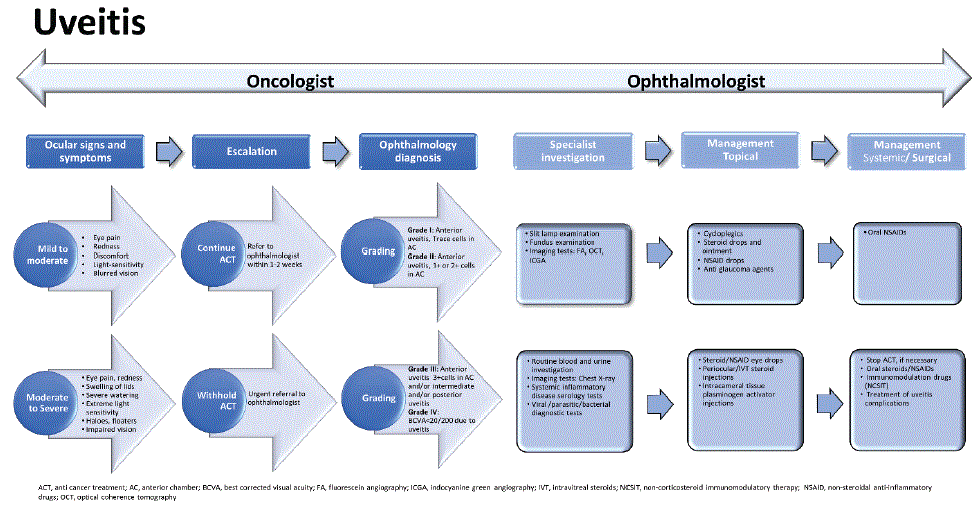
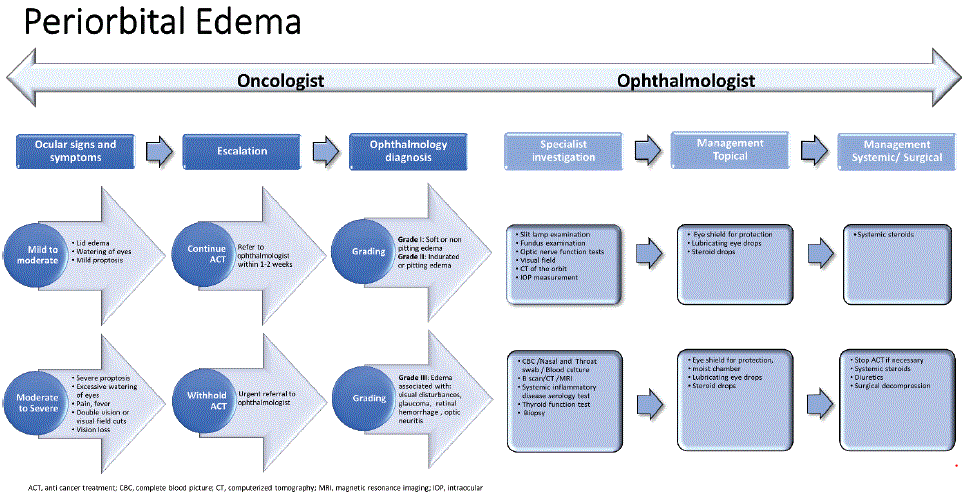
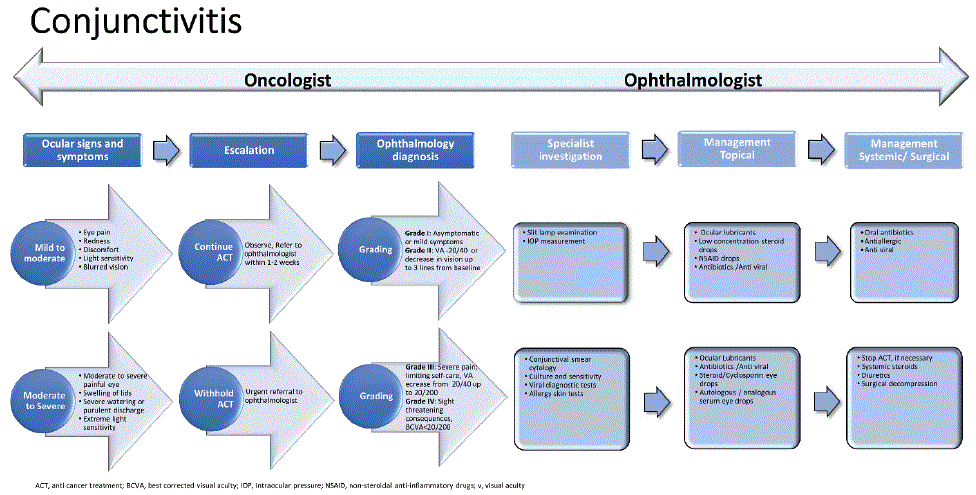
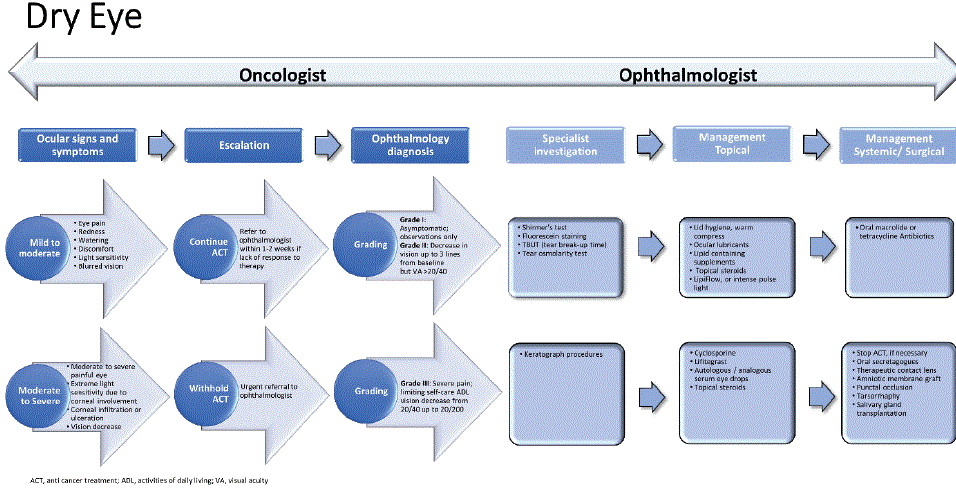
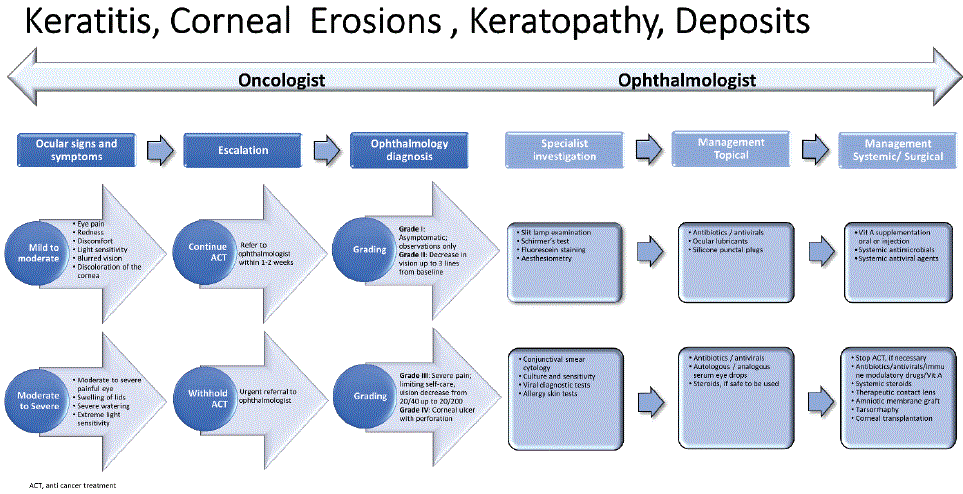
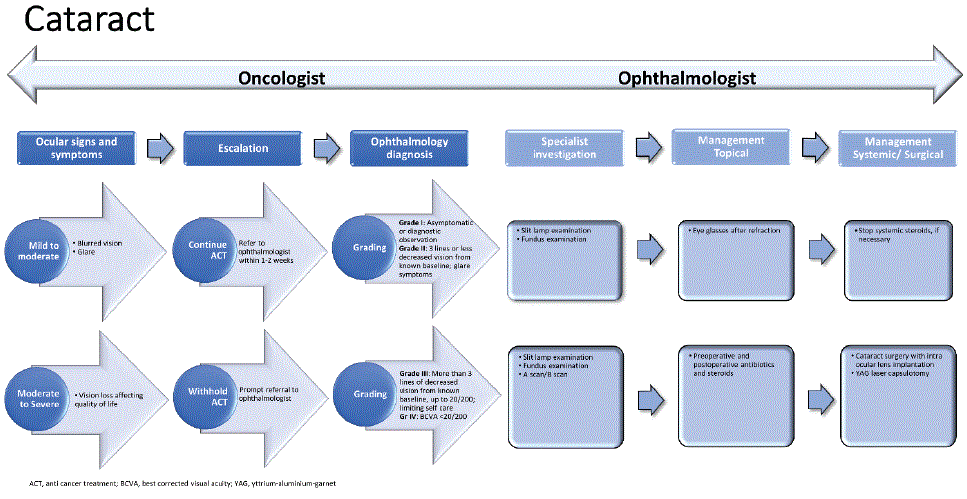
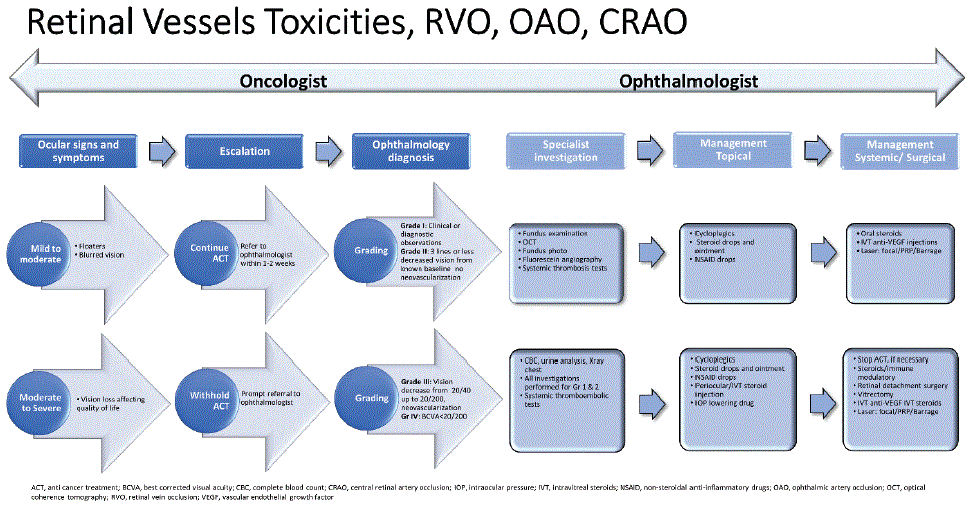
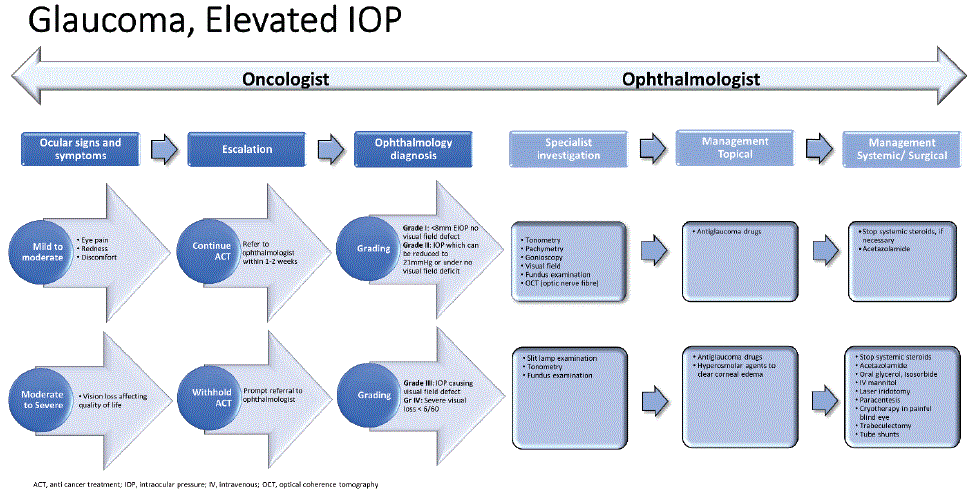
Figure 4: Treatment algorithms [24-39].
Discussion
Ocular adverse events from anticancer drugs are an increasingly common concern, and yet they continue to be under-reported by oncologists. The acceptable risk-benefit ratio is typically much higher for lifesaving, anticancer drugs, and may explain this blind spot. Toxicity profiles of older anticancer drugs mainly manifested in the anterior segment of the eye, and were generally mild, warranting fewer referrals to ophthalmologists. However, ocular adverse events from novel anticancer drugs and targeted therapeutics are increasingly common and often manifest as retinal and optic nerve damage, leading to irreversible sight threatening events [40-43]. This is evident in recent versions of the CTCAE and labels of medications registered in recent years.
With increasing awareness, ocular adverse events are now being diagnosed and documented more frequently by oncologists, however, patients are less commonly evaluated and treated by ophthalmology specialists. This trend may be country-specific, but in general, oncology and ophthalmology departments are seldom located in the same hospital or center, and it is not usual for an oncology ward to have a permanent ophthalmology consultant on their staff. Thus, access to ophthalmology specialists is neither immediate nor easy
This manuscript provides visuals and tables to help oncologists identify medications with a high risk of ocular toxicity, recognize ocular warning signs, and make decisions about ophthalmological consultation and treatment continuation, modification, or cessation. Simplified algorithms based on American Academy of Ophthalmology guidelines are provided for common ocular side effects, indicating when specialized care is necessary. The treatment algorithms included in our article are based mainly on the Ophthalmology treatment guidelines provided by the The American Academy of Ophthalmology (AAO). There is a high level of consistency between the AAO and the National Comprehensive Cancer Network (NCCN) guidelines, as many inflammatory processes located in the ocular tissues are primarily of immunological nature and are treated with immunosuppressive medications. However, our article also provides an insight into additional diagnostic tests/assessments and supportive non-medical treatments/procedures which may be easily adopted by oncologists and their teams even before the ophthalmological consultation is provided.
There is merit in having an assessment of baseline ophthalmic health by an ophthalmologist before commencement of treatment, so as to effectively monitor the progression of signs and symptoms over the course of treatment. Baseline screening may be focused on specific regions of the eye that may be affected by certain anticancer drugs.
While development of the CTCAE system has improved the reporting of ocular AEs of anticancer therapy, it may be limited in its relevance to ocular adverse events (for e.g., Grade 4 or “lifethreatening” consequences are rare with respect to ocular toxicity). When interpreting our data, readers may bear in mind that CTCAE versions have changed and evolved over time, so there may be some inconsistencies in reporting severity of adverse events; but the mild, moderate, and severe AEs categorization would be broadly similar.
Strengths and Limitations
Our study has several strengths. We have included a comprehensive list of all anticancer agents approved by the USFDA until December 2022 and used the most recent labels including all ocular toxicities, for analyses. The extensive data collected has been simplified and presented in a visual and easy-to-use format. Prevention and management strategies have been derived from widely trusted guidelines and presented as easy-to-understand visual algorithms.
Study limitations that need to be acknowledged are inclusion of only USFDA-approved anticancer drugs, making our data predominantly US-centric. Drugs approved in the EU and rest of the world have not been included, and patterns of care and accessibility to care differ widely across the world. Lack of awareness may lead to underreporting of ocular adverse events in real-world settings, leading to underestimation of the prevalence of these events.
Conclusions
Future improvements should focus on increasing awareness about better reporting and documentation in the real world. Conducting remote eye examinations via specialized cameras and even smartphones applications are now technically feasible. Where regular review by an ophthalmologist is not feasible, optometrists and nurses may be educated about prevention and treatment of ocular adverse events.
Cancer care comes with a lot of financial, psychological, and pragmatic constraints for the patient and their caregivers. Incorporating regular ophthalmology checkups may have financial and logistical implications but may be a worthwhile investment when compared against the burden imposed by a visually challenged patient on caregivers and society. Patients and caregivers must be educated about the need to be alert to signs and symptoms of ocular adverse events and seek early referral. Policy makers need to be made aware of the importance of improving access to eye checkups. Drug developers and clinical researchers need to work on minimizing the risks of ocular toxicity and help drive reductions in the percentages of patients developing ocular adverse events, thus creating an impactful ecosystem of care for ocular adverse events resulting from treatment with anticancer agents.
This article is a revised and expanded version of a paper entitled Ocular toxicities associated with anticancer therapies: Are we missing something in the blind spot?, which was presented at 2022 ASCO Annual Meeting, Chicago, IL [44].
Conflicts of Interest
Authors have no conflicts of interest to declare.
Ethical Statement & Consent
According to the manuscripts of the trials included in our paper, all patients signed a consent form for trial participation. In our current review, as there were no patient data, an ethics committee approval was not required.
Funding
There was no funding involved in the development of this review.